en
en  English
 中文简体
中文简体 Español
 عربى
عربى

Product Consultation
Your email address will not be published. Required fields are marked *
A hygiene converter running 400,000 units per day cannot afford to guess which side of a bicomponent fiber should face the skin. The choice between hydrophilic and hydrophobic PE/PET or PE/PP bicomponent fibers changes strike-through curves, rewet values, and the absorbency rating your customer's lab will verify at incoming inspection. Get it wrong, and a diaper line that passed your internal specification may fail qualification at a major brand. Jiaxing Fuda Chemical Fibre Factory works with converters across the hygiene supply chain, and the same question returns every season: which side of the fiber should do the work? This article breaks down the functional difference, the measurable impact on absorbency and comfort, and the specification details that prevent costly rework.
Hydrophilic and hydrophobic bicomponent fibers differ in surface chemistry, and that difference is measured by contact angle: hydrophilic fibers have a contact angle below 90 degrees and pull liquid into the structure, while hydrophobic fibers exceed 90 degrees and resist liquid.
Every bicomponent fiber in this category uses a sheath-core architecture. The core polymer, PET or PP, provides tensile strength and thermal bonding behavior. The sheath polymer, typically PE or a copolyester, carries the surface chemistry that determines wettability. In a hydrophilic fiber, the sheath is treated with a wetting finish during production. In a hydrophobic fiber, the sheath is left untreated or coated with a release agent during the spinning step.
The polymer pair itself also matters. PE/PET and PE/PP bicomponent fibers have different crystallinity and surface energy profiles, which is why manufacturers publish dedicated research on characterization of PE/PP bicomponent fiber as a separate technical topic. But the finish is what makes the practical difference between a fiber that wets instantly and one that repels drops on contact.
Contact angle ranges measured on PE/PET and PE/PP bicomponent fibers with different finishing chemistries.
Contact angle is the angle formed between a liquid droplet and a solid surface at the three-phase boundary. Angles below 90 degrees indicate wetting; angles above 90 degrees indicate liquid repellency.
Wettability controls three measurable outcomes in hygiene products: strike-through speed, rewet value, and post-compression dryness.
Strike-through speed is the time it takes for a controlled volume of liquid to pass through a nonwoven. Hydrophilic fibers in the absorbent core reduce strike-through time, which keeps the top sheet dry and minimizes the feeling of wetness. Rewet is measured differently: it simulates pressure applied by a baby sitting on a saturated diaper, and it quantifies how much liquid is forced back toward the skin. Hydrophobic fibers in the barrier layer keep rewet values low. Between those two layers, a bicomponent fiber with controlled hydrophilicity handles fluid distribution across the absorbent core.
The performance gap is not theoretical. In a controlled test, a nonwoven made from single-hydrophilic PE/PET bicomponent fiber at 1.5D x 38mm absorbed a 5 ml saline dose 40 percent faster than the same construction using a water-repellent finish. That speed difference changes how the absorbent core distributes liquid, which in turn changes the rewet number that a converter must report to a brand owner.
Each hygiene format needs a specific wettability profile: absorbent cores want hydrophilic fibers, top sheets want controlled hydrophilic behavior, and barrier layers want hydrophobic fibers.
In a baby diaper, the layer that touches the skin is not the same as the layer that captures liquid. The absorbent core benefits from multi-hydrophilic fiber because it pulls fluid fast and holds it in the structure. The top sheet, however, needs a balance: it must allow fluid to pass through but leave minimal residue on the skin. Converters often choose a slightly hydrophilic or single-hydrophilic fiber for this layer.
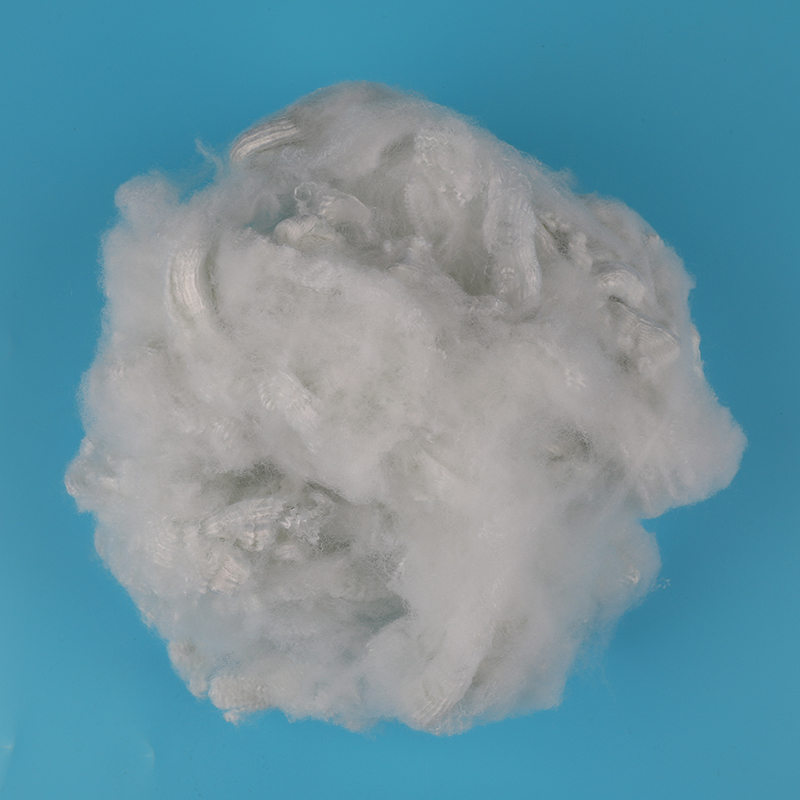
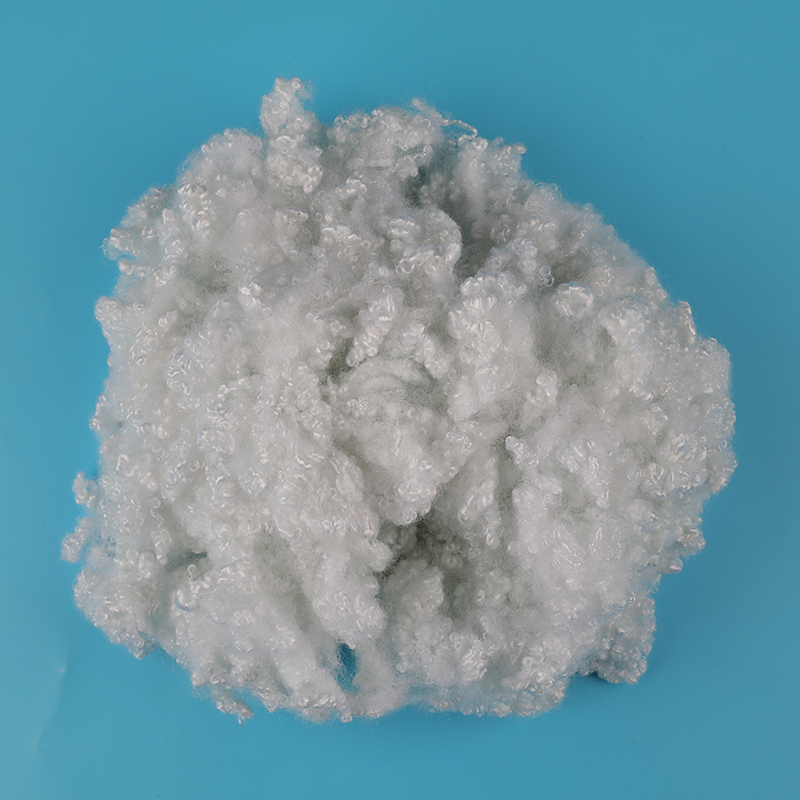
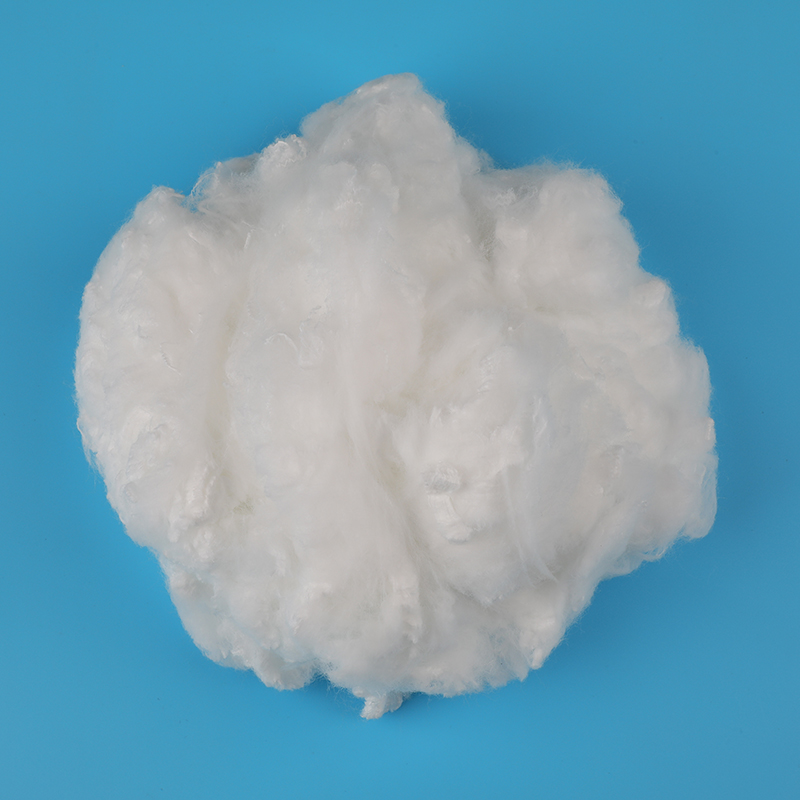 PE/PET Single Hydrophilic White 1.5D×38 Bi-Component FiberInquiry Please fill in carefully, it will help us all!View Product →
For barrier layers, a water-repellent fiber creates a physical resistance to liquid penetration. This matters in the leg cuff and the acquisition layer edges of a diaper, where leakage most often starts. A PE/PET water-repellent bicomponent fiber with a 1.5D or 2D denier and 38mm cut length provides good processability in carded thermal-bonded lines.
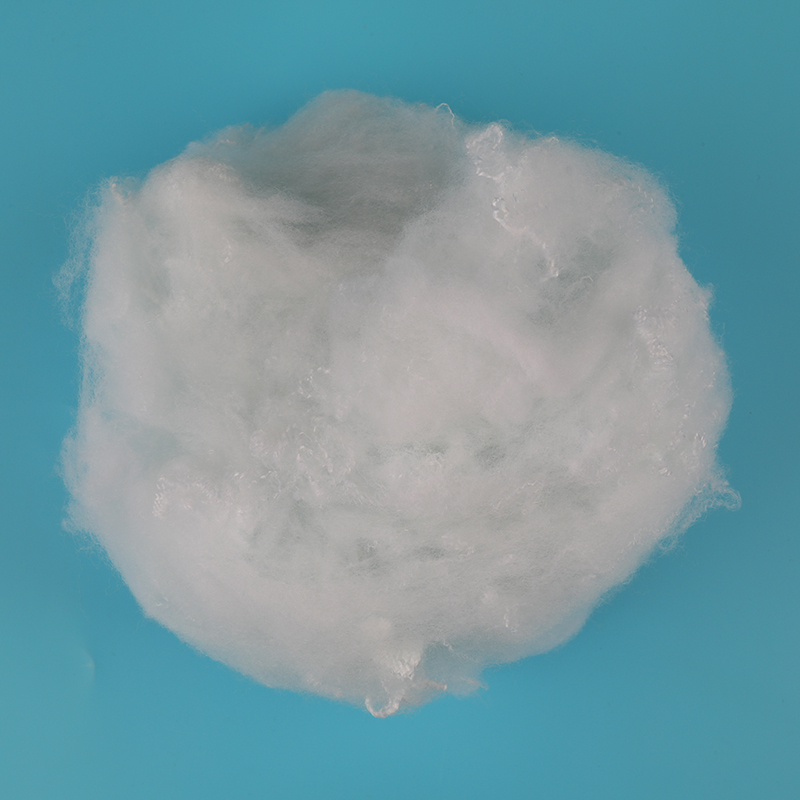
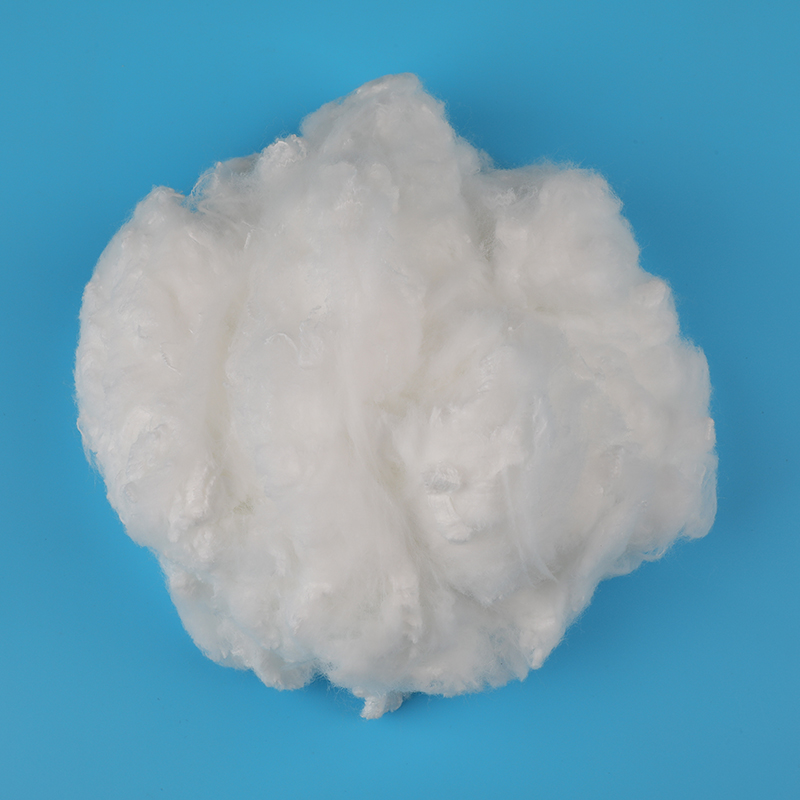 PE/PET Water-Repellent Whitening 1.5D×38 Bicomponent FiberInquiry Please fill in carefully, it will help us all!View Product →
Feminine hygiene pads follow a similar logic but with lower fluid volumes and faster absorption expectations. A multi-hydrophilic fiber in the core handles the initial strike-through, while a hydrophobic or slightly hydrophilic fiber in the wings prevents side leakage. Wet wipes sit on the opposite end of the spectrum: the substrate itself must be hydrophilic to hold moisture and release it evenly during use.
| Hygiene Layer | Recommended Finish | Primary Performance Metric |
| Absorbent core | Multi-hydrophilic | Fast strike-through, high absorbency |
| Top sheet | Single or slightly hydrophilic | Low rewet, dry feel |
| Acquisition layer | Slightly hydrophilic | Fluid distribution |
| Barrier layer / leg cuff | Water-repellent | Leak prevention |
Buyers should verify four parameters before approving a bicomponent fiber: denier, cut length, finish chemistry, and contact angle after at least one processing cycle.
Denier determines fiber stiffness and the caliper of the web. Cut length determines how the fiber behaves during carding and how it bonds in the thermal calendar. Finish chemistry is the variable that most frequently causes incoming quality claims: a supplier may label a fiber as hydrophilic based on the finish applied at the spinning stage, but if the finish is not durable to the carding process, the contact angle will drift.
Jiaxing Fuda Chemical Fibre Factory produces PE/PET and PE/PP bicomponent fibers in 1.5D to 6D with cut lengths from 38mm to 51mm. The product range includes single hydrophilic, multi-hydrophilic, slightly hydrophilic, and water-repellent variants, which gives converters a way to match fiber behavior to a specific hygiene layer without changing production lines.
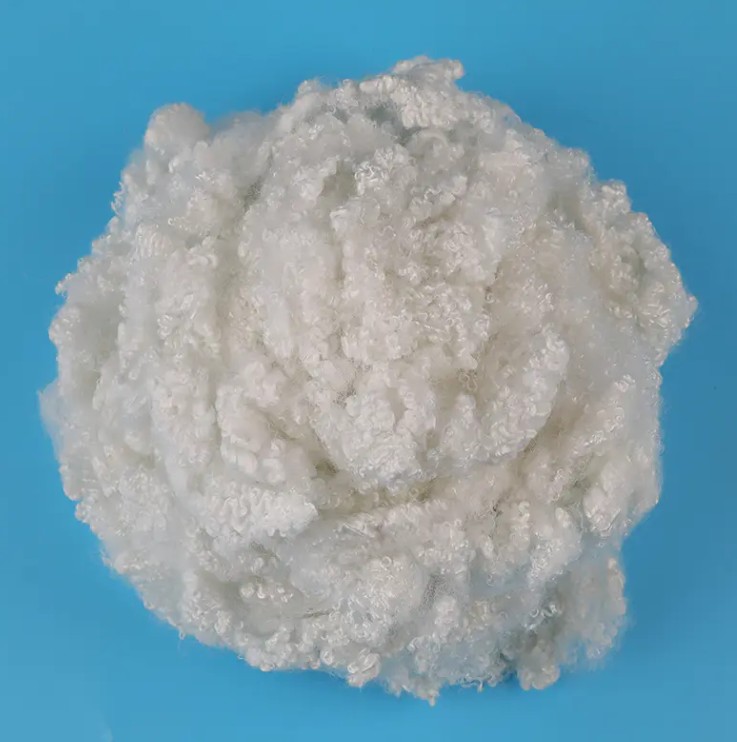
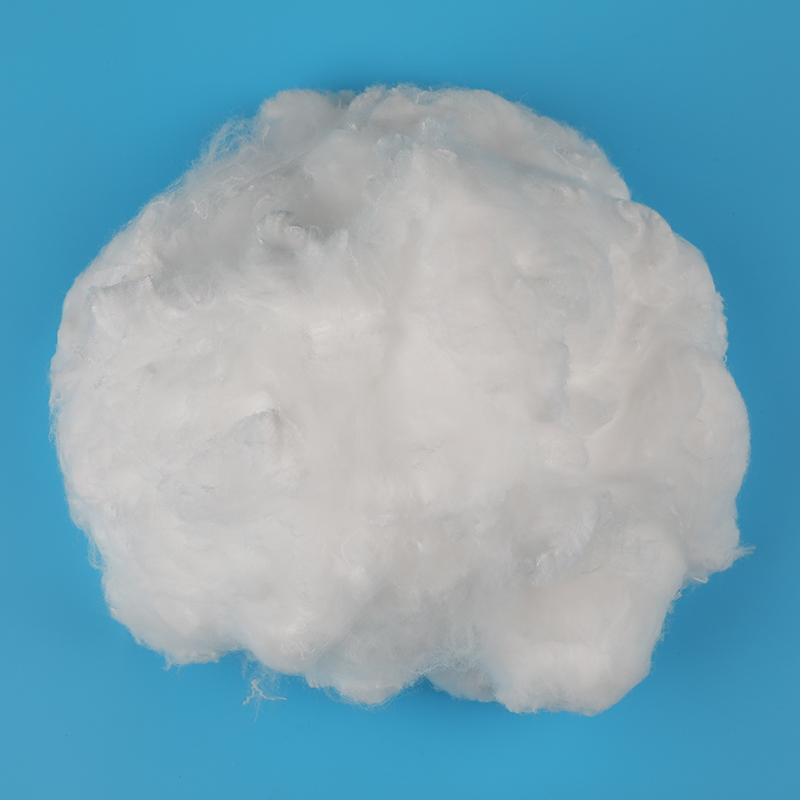 PE/PP Multi-Hydrophilic White 2D×38 Bi-Component FiberInquiry Please fill in carefully, it will help us all!View Product →
Procurement risk is highest when a converter changes fiber suppliers without re-qualifying the contact angle after processing. A fiber from a different production line may have the same nominal denier and cut length but a different finish formulation that behaves differently in the calendar. Asking for a lot-specific contact angle certificate is the cheapest way to avoid this failure.
| Parameter | Typical Range | Why It Matters |
| Denier | 1.5D to 3.0D | Controls fiber stiffness and web caliper |
| Cut length | 38mm to 51mm | Affects carding and thermal bonding |
| Contact angle | 0 to 115 degrees | Defines fluid handling behavior |
| Finish durability | Must survive carding | Prevents wettability drift in production |
Incoming fiber testing should measure contact angle after carding and thermal bonding, not just on the virgin sample, because processing redistributes the surface finish.
Many quality disputes start because the converter tests fiber from the bale, while the fiber manufacturer tests the freshly spun filament. Between those two points, the fiber passes through carding, where mechanical forces can remove part of the finish, and thermal bonding, where heat can change the surface energy of the sheath polymer.
A practical approach is to establish a two-point testing protocol:
Ask your supplier for contact angle data measured after fiber processing, not just on the virgin filament. A fiber that shows a 25 degree contact angle on the bale can shift above 70 degrees after carding if the finish is not durable.
Multi-hydrophilic PE/PET bicomponent fiber is the standard choice for the absorbent core because it achieves rapid strike-through and holds liquid in the structure. A 1.5D x 38mm fiber with a multi-hydrophilic finish is a common starting point for carded thermal-bonded cores.
Hydrophobic fiber is usually not recommended for the top sheet because the top sheet must allow fluid to pass through into the absorbent core. However, a controlled water-repellent finish can be used in the surrounding edges of the top sheet to reduce liquid migration near the leg cuffs.
Yes, to a limited degree. PE/PP bicomponent fibers tend to have a different surface energy than PE/PET fibers because PP has a lower surface energy than PET. But the finish applied during fiber production remains the dominant factor in determining the final contact angle.
Request a contact angle measurement from an independent lab on the as-received fiber and on a carded web sample after processing. Compare those values against the performance requirement for your layer. This is the most reliable way to verify a hydrophilic claim from any fiber supplier.
Your email address will not be published. Required fields are marked *

Focusing to the research and production of differentiated fiber. Applying recycle-material processing scientifically.
 86-18457317878
Zhulinjizhen, Xinfeng Town, Jiaxing City, Zhejiang Province
Copyright @ 2023 Jiaxing Fuda Chemical Fibre Factory All rights reserved
Polyester Staple Fiber Manufacturers

Friendship link - Anhui Fulin Environmental Protection Technology Co., Ltd.:https://www.ahflhb.com