en
en  English
 中文简体
中文简体 Español
 عربى
عربى
Product Consultation
Your email address will not be published. Required fields are marked *
Bottom line: Recycling non-woven fibers is not only technically feasible — it is rapidly becoming a strategic necessity for the textile and industrial sectors. Through mechanical, thermo-mechanical, and chemical routes, non-woven materials can re-enter supply chains, reducing virgin polymer consumption and cutting carbon footprints. A well-established tiered recycling system already enables pre-consumer waste and selected post-consumer products to be turned into acoustic insulation, fillers, geotextiles, and new non-woven goods. The keys to closing the loop: design for mono-materiality, improved sorting, and building stable, high-quality markets for recycled fibers.
Global non-woven production continues to grow, exceeding 17 million tonnes in 2023, with around 65% used in single-use products (wipes, diapers, medical protection). Traditional incineration or landfilling wastes resources and generates significant carbon emissions. Recycling non-woven fibers can cut the carbon footprint of each tonne of material by 40%–60%, while reducing dependence on petrochemical feedstocks. With the EU Waste Framework Directive and extended producer responsibility schemes gaining traction, non-woven recycling has shifted from a “green initiative” to a “compliance imperative”.
Key Industry estimates show that if 30% of global non-woven waste were effectively recycled, we could save approximately 5.4 million tonnes of polymers annually, equivalent to cutting 12 million tonnes of CO₂ equivalent.
Non-woven fiber recycling can be classified into three main categories, depending on the contamination level of the feedstock and the intended end-use. The table below compares the main processes:
| Process type | Suitable feedstock | Output form | Fiber strength retention |
|---|---|---|---|
| Mechanical | Clean edge trim, uncoloured PP/PE | Staple fibers, fillers, acoustic felt | Retains 70-80% of original strength |
| Thermo-mechanical | Thermoplastic non-wovens (PP, PET) | Pellets, re-extruded fibers, moulded parts | Retains 50-65% of original strength |
| Chemical (depolymerisation) | Mixed waste, contaminated PET/PA | Monomers, oligomers, high-purity chips | Fully depolymerised, strength close to virgin |
Lowest cost, suitable for single-material and clean waste. Through shredding, opening, and carding, it can produce recycled wadding or automotive soundproofing. However, fiber length shortens by about 20% per cycle, so it is often blended with virgin fiber.
Can handle mixed fibers or contaminated waste, converting polymers into monomers via hydrolysis, glycolysis or pyrolysis, then re-polymerising. Energy intensity is higher, but it enables “fiber-to-fiber” closed-loop recycling with properties rivaling virgin materials.
Despite clear benefits, several obstacles limit large-scale adoption. The most critical issues include:
Bottleneck: Currently, less than 12% of non-woven waste is effectively recycled globally, while over 70% still ends up in landfills or incineration. The gap is a call for systemic change.
Recycled non-woven fibers are already being used in a variety of industrial and consumer products. The following examples demonstrate the diversity of applications:
| Product category | Typical recycled content | Main polymer |
|---|---|---|
| Automotive acoustic mats | 25 – 40% | PP / PET |
| Building insulation | 30 – 50% | PET / glass-fiber blend |
| Agricultural ground covers | 20 – 35% | PP |
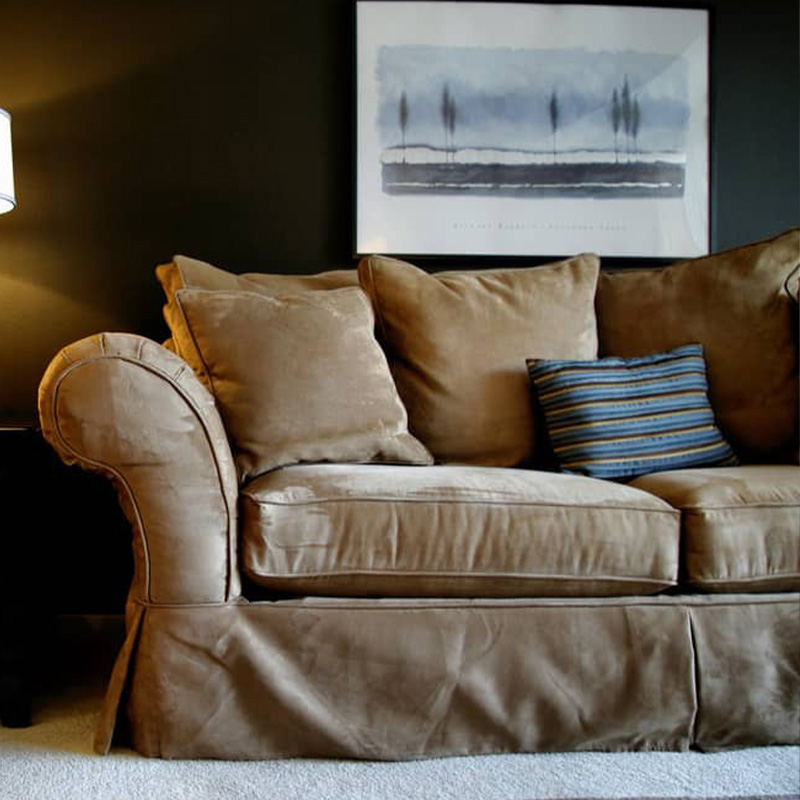
| Furniture cushioning | 15 – 30% | PET / blended |
The next generation of non-woven recycling will depend on upstream design choices. Design for recyclability is gaining traction through three main principles:
Emerging technologies like near-infrared (NIR) sorting and AI-based robotic picking are improving the purity of recovered fractions. Pilot projects in Europe and Asia show that NIR sorting can achieve 95%+ polymer identification accuracy for non-woven streams, making large-scale post-consumer recycling economically viable.
Major brand commitments (not named here) are driving demand for recycled non-wovens. The market for recycled non-woven fibers is projected to grow at ~11% CAGR through 2030, with the automotive and construction sectors leading.
Regulations such as the EU Ecodesign for Sustainable Products Regulation (ESPR) and minimum recycled content mandates will force manufacturers to integrate recycled non-wovens into their supply chains sooner than expected.
For organisations looking to close the loop on non-woven waste, a phased approach yields the best results:
Early adopters have reported that a systematic recycling program can reduce raw material costs by 8–12% while enhancing brand reputation and regulatory readiness. The key is to treat recycled non-wovens not as a compromise, but as a performance-optimised resource.
"
Low-denier vs. high-denier fiber: what are their application differences?
2026-08-03
What Are the Key Differences Between Virgin and Recycled Polyester Staple Fiber?
2026-08-17Your email address will not be published. Required fields are marked *

Focusing to the research and production of differentiated fiber. Applying recycle-material processing scientifically.
 86-18457317878
Zhulinjizhen, Xinfeng Town, Jiaxing City, Zhejiang Province
Copyright @ 2023 Jiaxing Fuda Chemical Fibre Factory All rights reserved
Polyester Staple Fiber Manufacturers

Friendship link - Anhui Fulin Environmental Protection Technology Co., Ltd.:https://www.ahflhb.com