en
 English
 中文简体
 Español
 عربى

Product Consultation
Your email address will not be published. Required fields are marked *
Replacing solid polyester staple fiber with a hollow version at the same denier typically cuts 15 to 25 percent off the fill weight needed to reach a target thermal resistance. On a bedding line that consumes 30 tonnes of fill a month, that is a five-tonne decision, and it happens without changing the shell fabric, the quilt pattern, or the wash-care label.
That single number explains most of the movement in the market. Quilt, pillow, mattress topper, and cushion producers are not switching because hollow polyester staple fiber reads better in a catalogue. They are switching because it converts directly into warmth per kilogram, and warmth per kilogram sets fill cost, freight cost, and the finished thickness of the product.
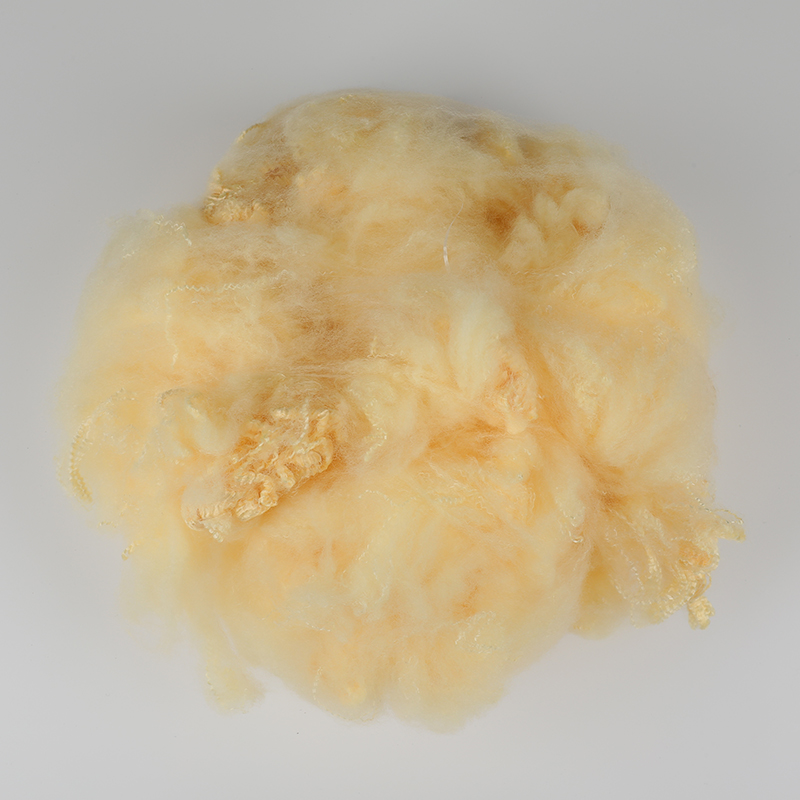
Jiaxing Fuda Chemical Fibre Factory, a polyester staple fiber producer based in Jiaxing, Zhejiang, has run hollow, bicomponent, and nonwoven staple fiber lines since 1995. Its catalogue reflects what home textile buyers now ask for: hollow deniers from 1.8D to 25D, cut lengths from 25 mm to 64 mm, and both siliconized and non-siliconized finishes.
15 to 25 percent: the usual fill weight reduction when a solid PSF filling is replaced by siliconized hollow PSF of the same denier.
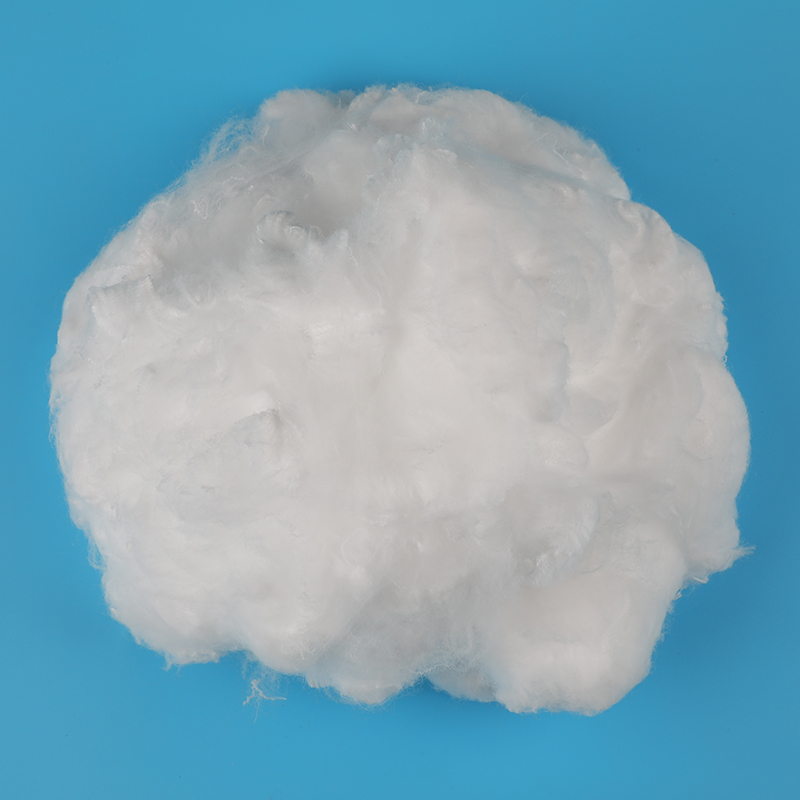
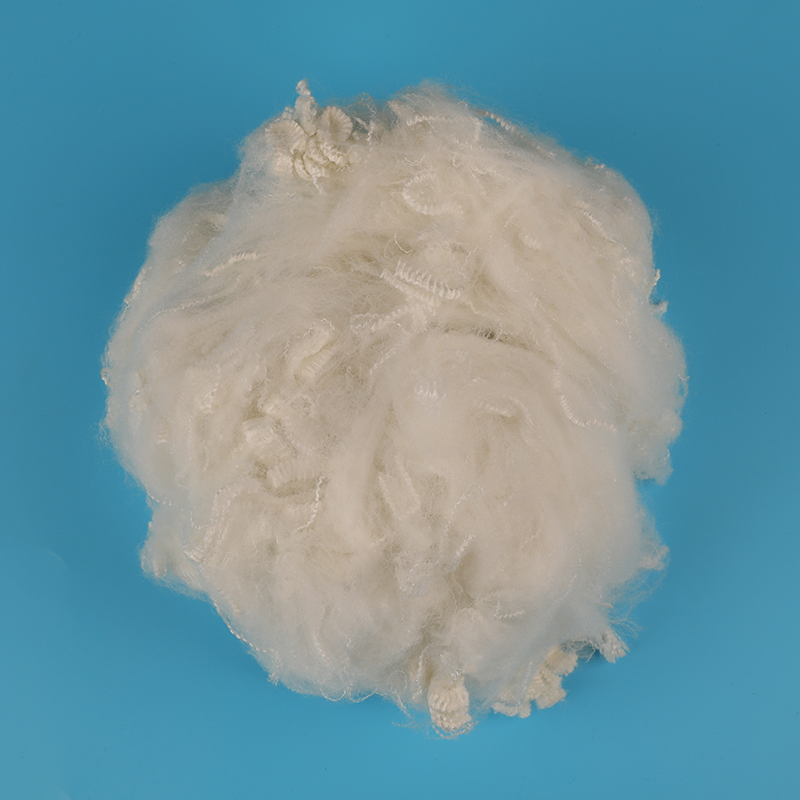
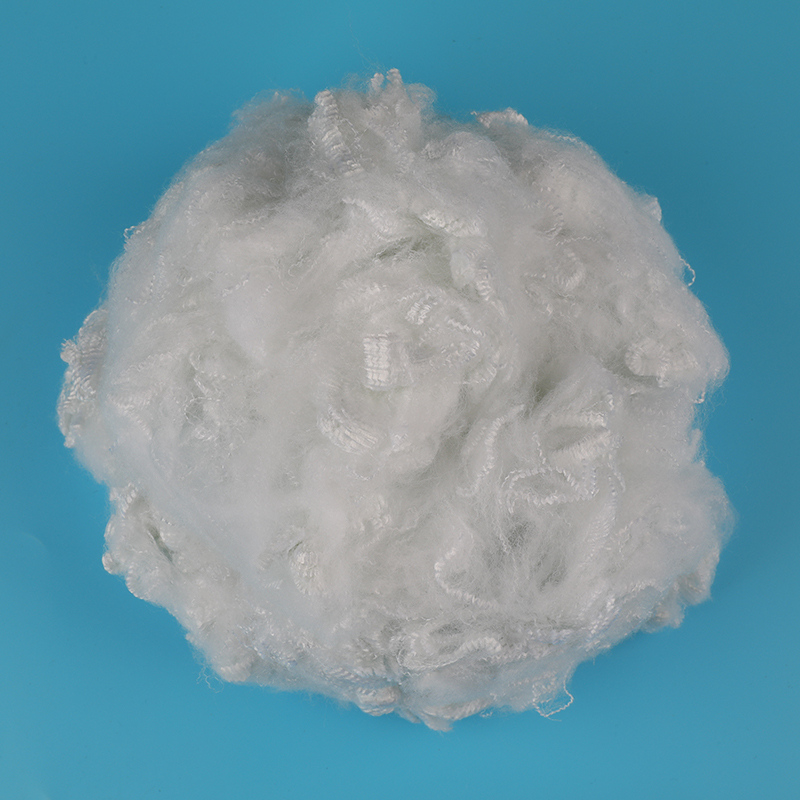
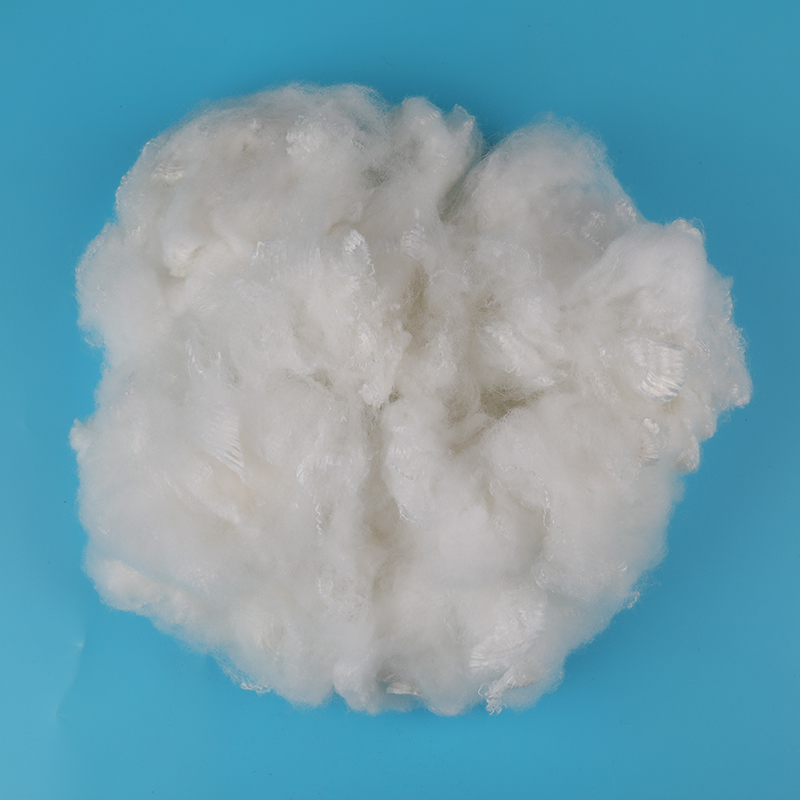
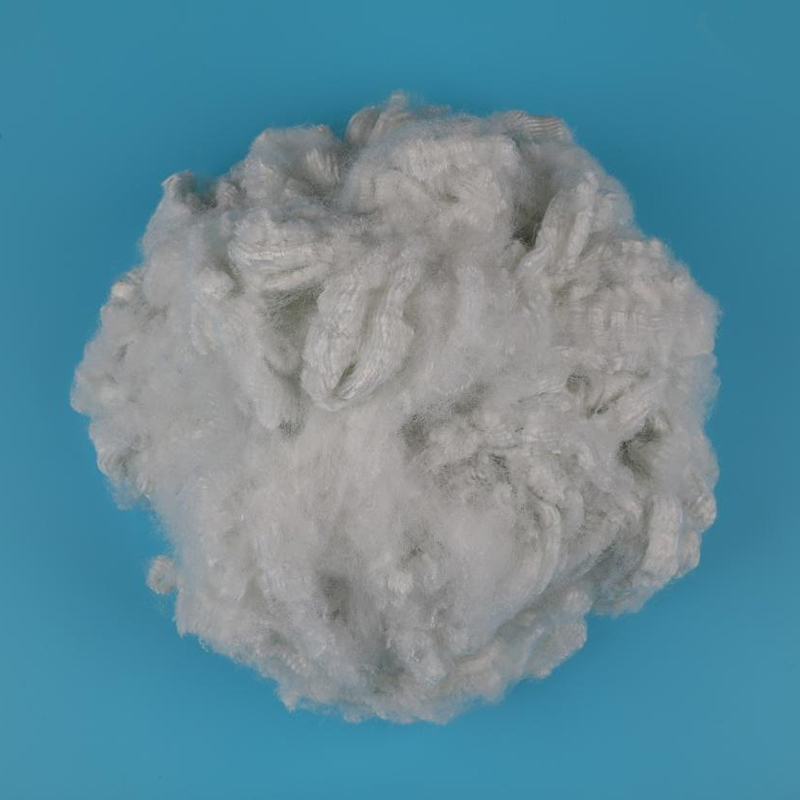
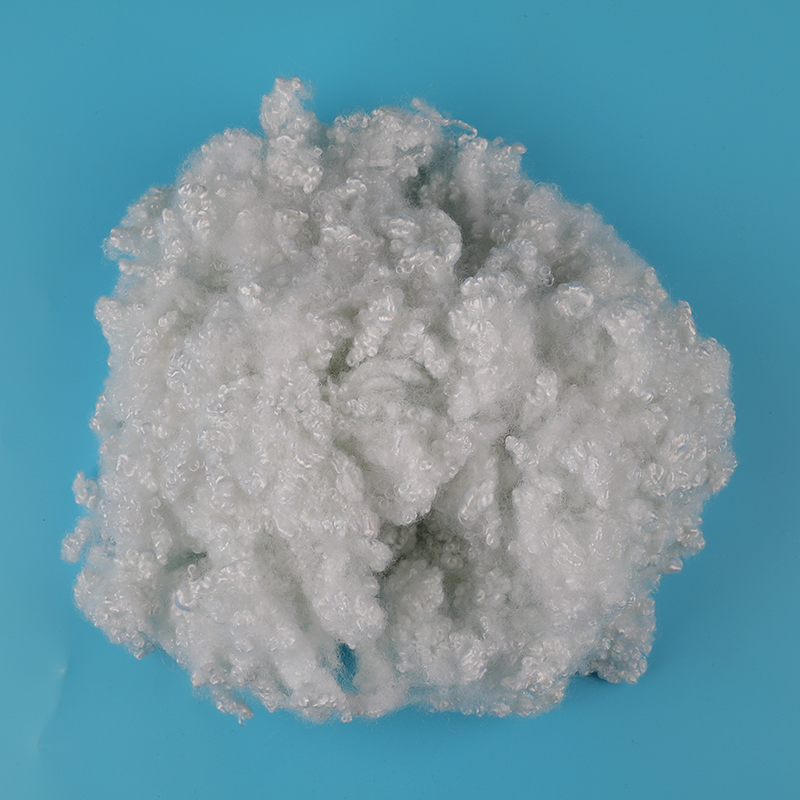
Hollow polyester staple fiber is polyester (PET) extruded through a spinneret with one or more internal voids, then drawn, crimped, heat-set, and cut to a fixed staple length. The void runs the full length of the filament, so the fiber stores air inside its own cross-section instead of depending only on the gaps between fibers in a batt.
Air does the insulating. Polyester conducts heat about as well as any other textile polymer, so a 100 percent polyester quilt is warm only because of the still air it traps. A hollow cross-section raises the volume of trapped air per kilogram, and that is the entire commercial argument.
Definition: hollow polyester staple fiber is a cut-length PET fiber with a single-void or multi-void cross-section, supplied in siliconized or non-siliconized finishes and specified by denier and cut length in millimetres.
Two structural choices dominate home textile specifications. A single large void, the classic 6D to 15D filling fiber, maximizes air volume and loft. Multiple smaller voids hold shape under repeated compression, which matters in mattress pads and cushion wraps. The surface finish then decides processing behaviour: siliconized fiber slides against itself and springs back quickly, while non-siliconized fiber keeps the friction that needle-punched webs need in order to bond.
Home textile manufacturers are switching for four measurable reasons: warmth-to-weight ratio, loft recovery after washing, hygiene and allergen positioning, and access to certified recycled grades.
The difference between hollow and solid polyester staple fiber shows up in six places on a technical data sheet, and only one of them is the price per kilogram.
| Property | Solid round PSF | Hollow PSF, siliconized |
| Cross-section | Solid round | Single or multi-void |
| Air volume per unit mass | Baseline | 15 to 25 percent higher |
| Fill weight for equal thermal resistance | Baseline | 15 to 25 percent lower |
| Loft retention after five washes | 70 to 75 percent | 88 to 92 percent |
| Moisture regain at 65 percent RH | About 0.4 percent | About 0.4 percent |
| Finish | Standard spin finish | Silicone or non-silicone |
| Relative fiber price per kilogram | Baseline | 3 to 8 percent higher |
| Cost per unit of warmth | Baseline | 10 to 18 percent lower |
The first-price objection disappears once the calculation moves from cost per kilogram to cost per unit of warmth. A filling that costs 5 percent more per kilogram but needs 20 percent less material per quilt leaves the factory cheaper and the parcel lighter.
Most specification errors in filling come from copying a denier that worked for a different product. A 6D fiber that fills a quilt well can feel coarse in a pillow, and a fine denier that feels soft in a pillow can collapse inside a mattress topper.
Siliconized hollow conjugated fiber at 6D to 7D, cut at 51 mm or 64 mm, is the workhorse specification for quilted bedding and standard pillow filling. The larger void and the crimp give the batt its spring, and the two cut lengths serve different lines: 51 mm suits air-laid forming, while 64 mm holds loft better in carded webs. A typical pillow uses 400 to 800 g of fill, and a quilted topper runs at 200 to 350 gsm.
Down-alternative products blend a fine denier hollow, usually 2.5D to 4D, with a coarser downlike hollow of around 9D. The fine fiber supplies softness and the 9D component supplies bulk and rebound, which is how a synthetic fill approaches the hand of natural down without the allergen risk. Cut lengths in these blends sit between 32 mm and 51 mm.
If the filling is resin-bonded, needle-punched, or thermally bonded, choose non-silicone hollow fiber. Silicone lowers inter-fiber friction and can weaken a mechanical bond inside a nonwoven structure, while non-silicone grades keep the web cohesive from the carding line through the needle loom.
In mattress pads, quilted nonwoven layers, and cushion wraps, hollow fiber is not loose filling. It is a needle-punched batt, and the specification rules change.
The mechanics of batt formation are covered in more detail in the producer's technical note on needle-punched fibers in nonwoven felt, which is worth reading before a new mattress programme is specified.
Recycled hollow polyester staple fiber is produced from PET bottle flakes instead of virgin chips, and it is now a purchasing requirement in several European retail programmes rather than a niche line.
The chain matters: collection, flake washing, decontamination, and spinning. Jiaxing Fuda's Huaibei plant recycles 50,000 tonnes of PET bottle chips a year, feeding the same hollow and nonwoven lines that also run on virgin polymer. Three practical points for buyers:
Regulatory pressure sits behind most of this. European textile sustainability rules, extended producer responsibility proposals, and supply chain carbon reporting all push brands to document recycled content and traceability, and hollow fiber sits directly in the middle of that documentation.
Five checks separate a supplier who can hold your specification for three years from one who can hold it for three orders.
Per unit weight, yes. A hollow cross-section traps more still air per kilogram, which is why fill weight drops by 15 to 25 percent for the same thermal resistance. Per unit volume at identical packing density the gap narrows, so a hollow batt and a solid batt of the same thickness feel closer than the weight figures suggest.
Siliconized hollow conjugated fiber at 6D to 7D, cut at 51 mm or 64 mm, covers most pillow programmes. Softer or lighter pillows move toward 4D to 6D, and firmer support pillows stay at 7D and above.
Siliconized hollow fiber typically recovers about 90 percent of its original loft after five home wash cycles, against roughly 75 percent for solid, lightly crimped filling. Lower wash temperatures and a full drying cycle before reuse protect that recovery.
Yes. Bottle flakes are washed, decontaminated, and melt-spun into the same hollow cross-sections, and GRS-certified grades are commercially available at production scale. The producer behind this guide recycles 50,000 tonnes of PET chips a year at its Huaibei plant.
The shift toward hollow fiber is not a fashion cycle in home textiles. The arithmetic is straightforward: less material for the same warmth, better loft retention across a five-wash life, hygiene claims that survive an audit, and recycled grades that satisfy procurement requirements. Manufacturers who specify denier, cut length, finish, and void structure against their own product data collect the benefit, and those who buy on price per kilogram alone usually pay it back in complaints.
Your email address will not be published. Required fields are marked *

Focusing to the research and production of differentiated fiber. Applying recycle-material processing scientifically.
 86-18457317878
Zhulinjizhen, Xinfeng Town, Jiaxing City, Zhejiang Province
Copyright @ 2023 Jiaxing Fuda Chemical Fibre Factory All rights reserved
Polyester Staple Fiber Manufacturers

Friendship link - Anhui Fulin Environmental Protection Technology Co., Ltd.:https://www.ahflhb.com