en
 English
 中文简体
 Español
 عربى

Product Consultation
Your email address will not be published. Required fields are marked *
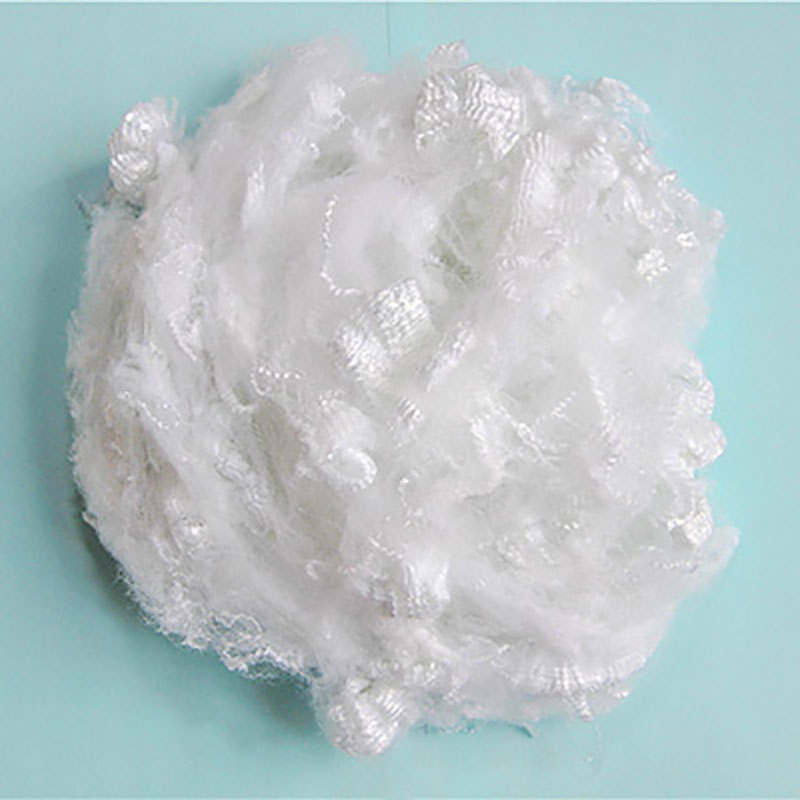
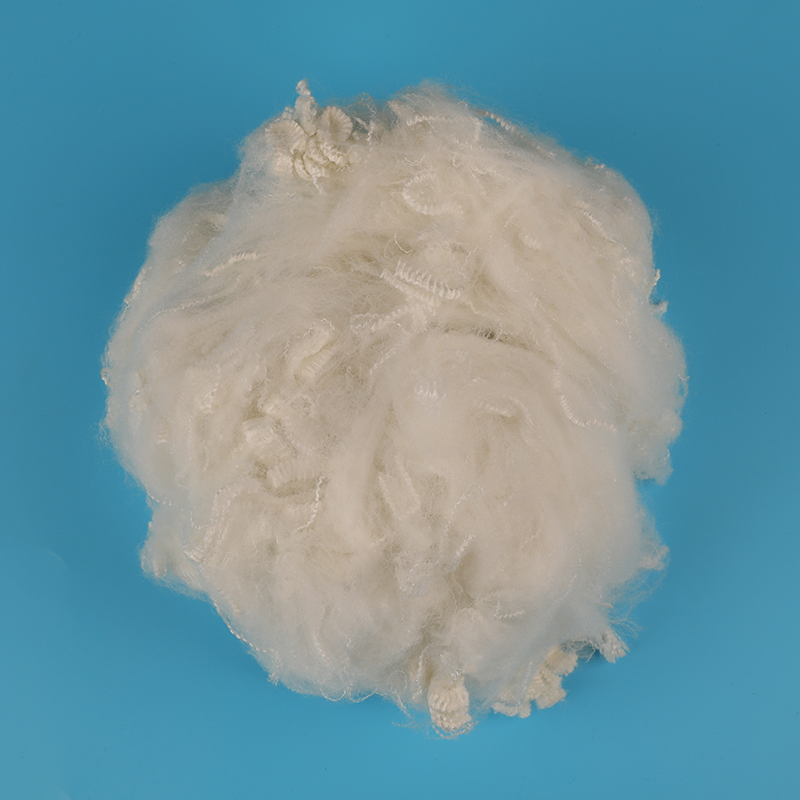
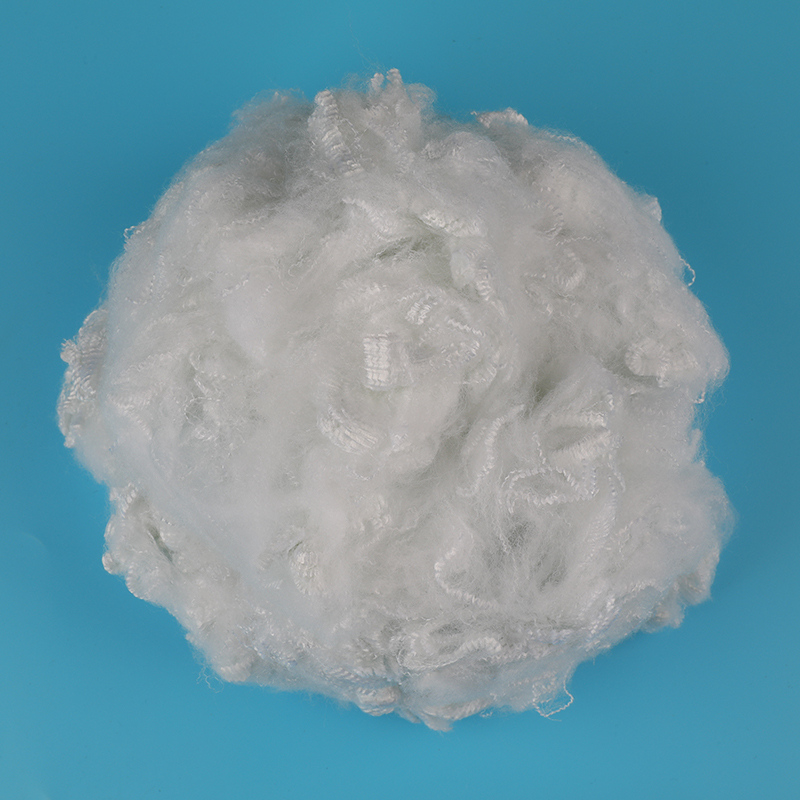
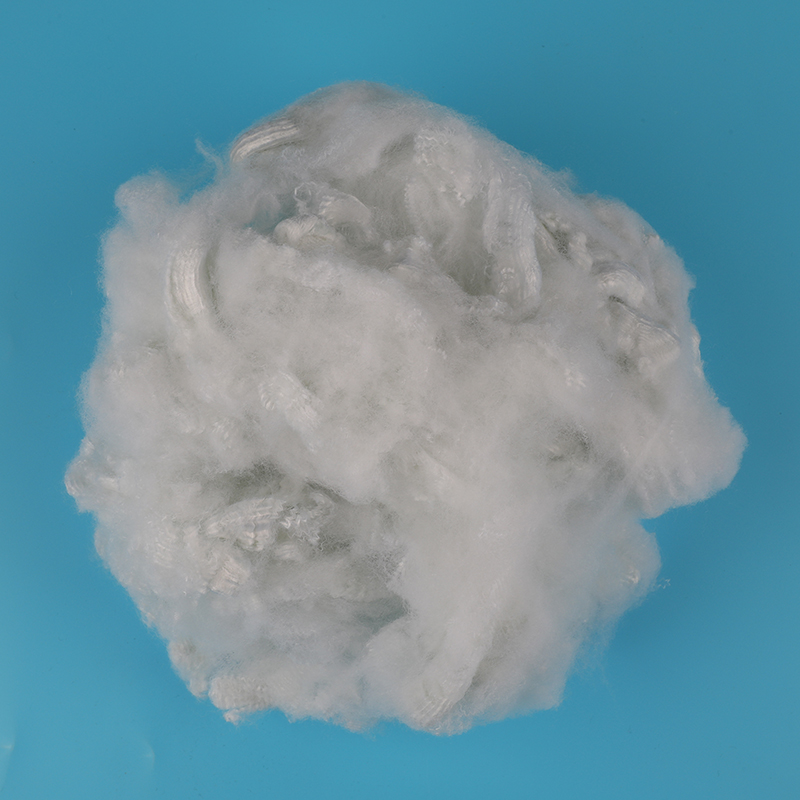
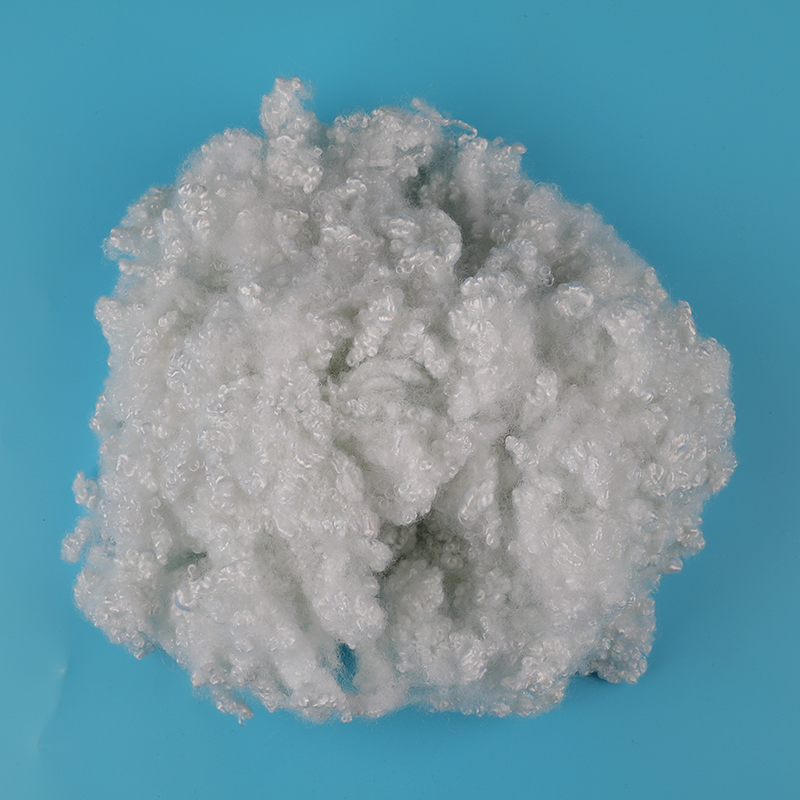
Hollow conjugated fiber is a polyester staple fiber that carries two structural features at once: a hollow channel running along the fiber axis, and a permanent spiral crimp created inside the spinning process instead of being added later by mechanical stuffing.
The hollow core is created in the spinneret and the quench zone. An annular orifice shape, combined with a controlled cooling gradient, keeps a small channel open in the centre of the filament as it solidifies. Commercial grades usually run a hollow ratio between 15 and 30 percent, and that ratio is the biggest lever on density and thermal resistance, because more trapped still air per kilogram of fiber means less material is needed to reach a given thickness.
The crimp is called conjugated because two components with different shrinkage contract at different rates after drawing. The mismatch forces the filament into a helix, and that helix survives carding, needle punching, and repeated washing. Mechanically crimped fiber, by contrast, is pressed into a wave shape and loses most of it under the same handling.
| Parameter | Typical range | Effect downstream |
| Hollow ratio | 15 to 30 percent | Sets density, warmth, and fill weight per unit of thickness |
| Crimp type | Permanent spiral, conjugated | Loft returns after compression, transport, and laundering |
| Denier | 1.8D to 25D | Fine deniers feel soft in nonwovens, coarse deniers hold loft in filling |
| Cut length | 25 mm to 64 mm | 32 to 38 mm suits carding and spinning, 51 to 64 mm suits needle punching and filling |
| Finish | Silicon or nonsilicon | Silicon helps opening and slickness, nonsilicon suits bonding and coating lines |
| Colour and lustre | Raw white, super white, semi-dull, bright, black | Determines whiteness and shade consistency after dyeing |
The hollow core and the conjugated crimp do two different jobs, and buying only one of them almost never delivers the performance a buyer is promised.
The difference is easiest to see in needle-punched felt. Every crimp in the fiber acts like a small spring between the barbed needles, so the felt keeps its thickness under load instead of compacting into a thin mat. Felt producers describe the result in the same terms: a hollow conjugated fiber that behaves as a three-dimensional, flexible element inside the fabric rather than a flat filler.
The measurable benefit of hollow conjugated fiber is bulk retention, which is how much of its original thickness it keeps after repeated compression. Bulk retention, not denier, decides warmth, hand feel, and how a finished product looks after a season of use.
Spec selection follows the production process, not the price list. Denier sets support and hand feel, cut length sets how the fiber runs on the card or needle loom, and the finish sets how it opens, bonds, and coats.
| Application | Denier | Cut length | Finish | Selection note |
| Pillow and quilt filling | 6D to 15D | 32 to 64 mm | Silicon, downlike | Coarser deniers hold loft, downlike grades imitate natural fill |
| Needle-punched felt and wadding | 2.5D to 6D | 51 to 76 mm | Silicon | Longer cut lengths entangle better in the needle zone |
| Spun yarn blends | 1.4D to 3D | 38 to 51 mm | Nonsilicon | Fine denier keeps yarn evenness and drape |
| Furniture and mattress padding | 7D to 15D | 51 to 64 mm | Silicon | Needs high bulk recovery under repeated static load |
| Filtration and thermal wadding | 3D to 6D | 51 to 64 mm | Nonsilicon | Nonsilicon finish avoids interference with bonding and coatings |
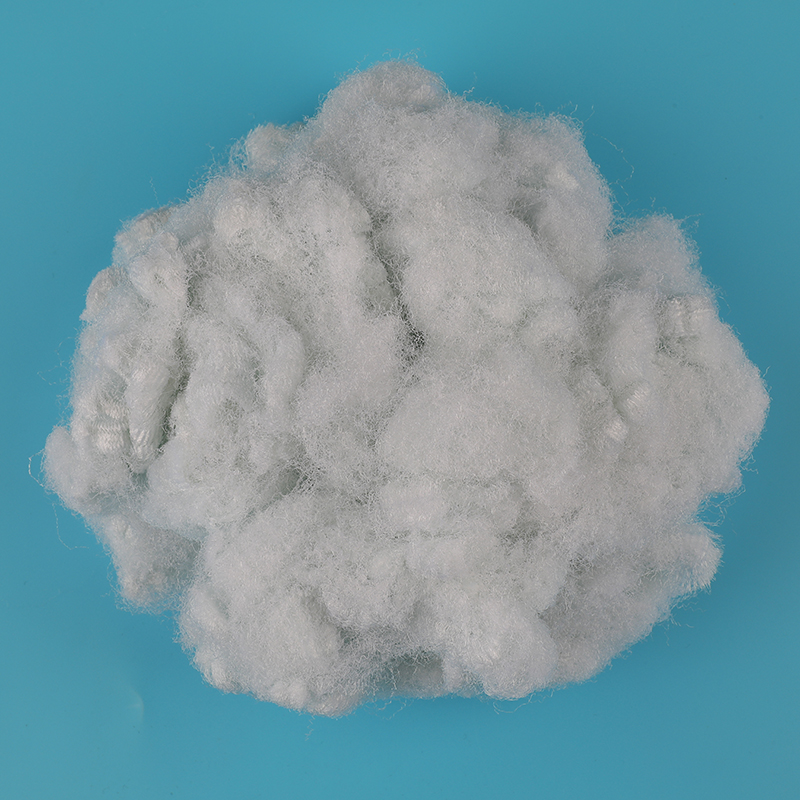 Use For Hard Cotton FibersNon-Silicon Hollow Polyester Staple Fiber 45D×64mmView Product →
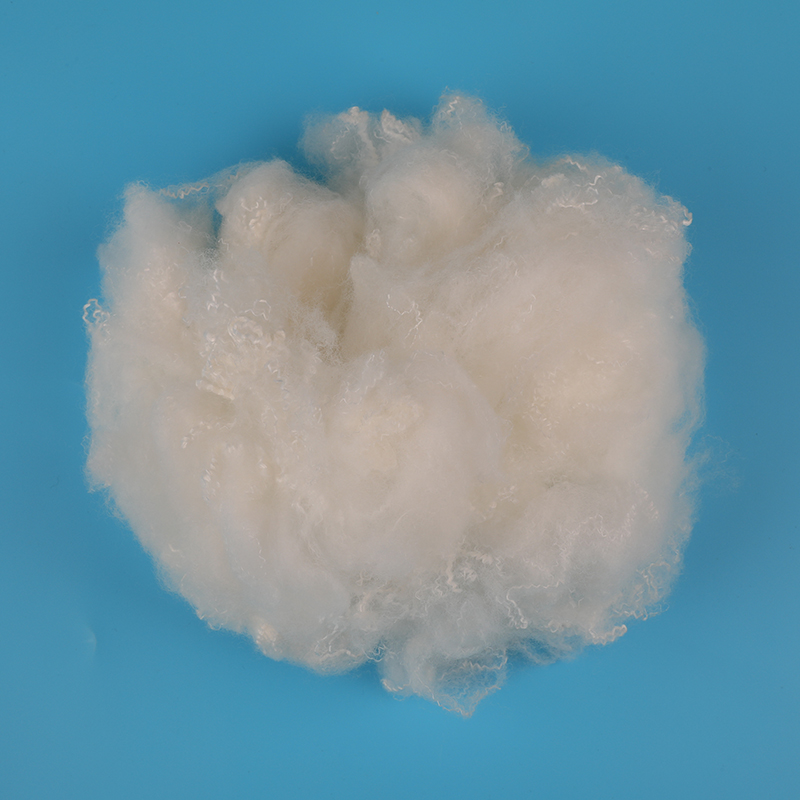
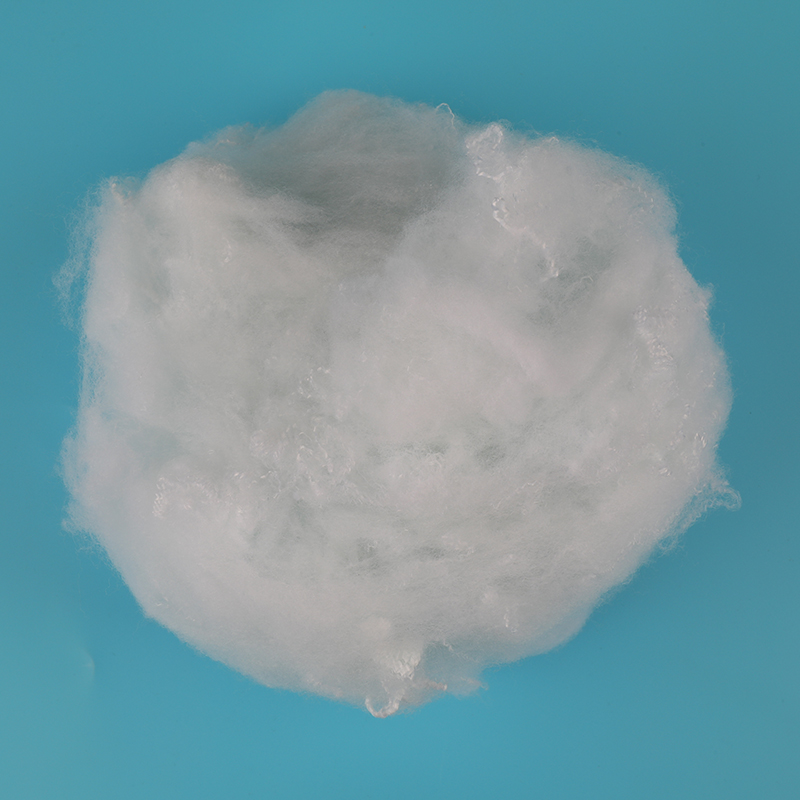
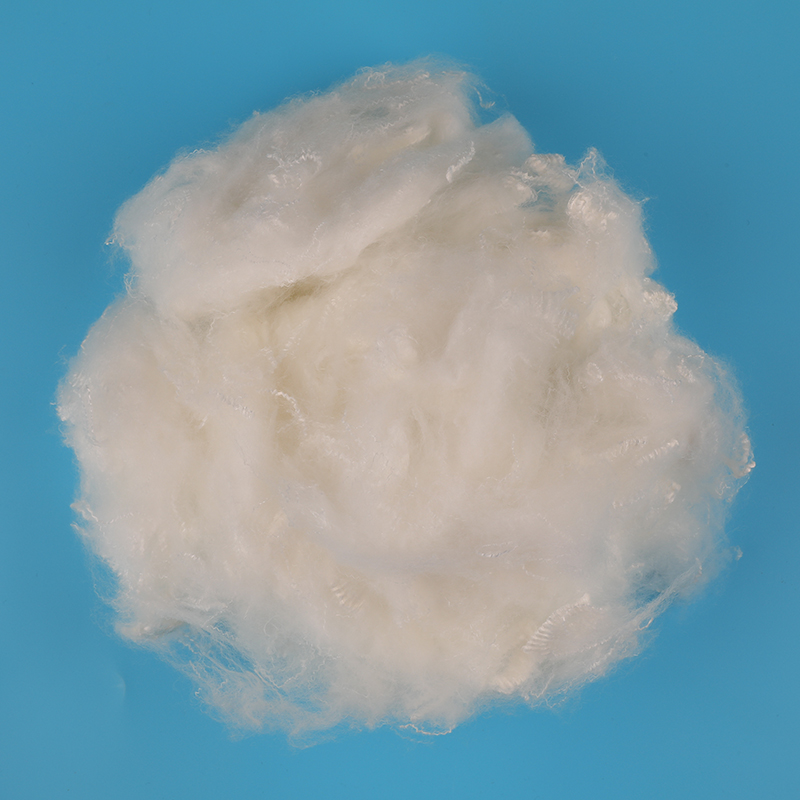
For downlike filling, a practical starting point is the 9D x 51 mm white downlike hollow polyester staple fiber, which pairs a coarse denier with a tight spiral crimp so the blend keeps its volume inside a pillow or quilt shell.
Source on measured performance rather than denier alone, because two fibers with identical denier and cut length can differ by 20 percent in loft retention depending on hollow ratio, crimp stability, and finish level.
 Non-Silicon Hollow Conjugated Polyester Staple Fiber 15D×64mmHigh fluffiness, good resilience, strong warmth retention, high rigidity, and good coverageView Product →
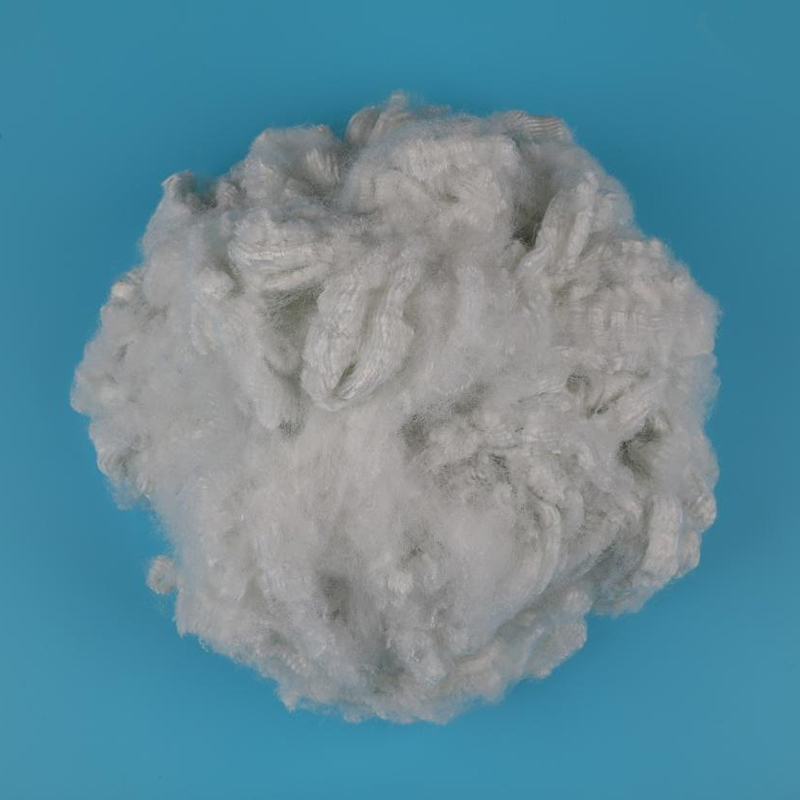
Where silicon interferes with bonding or coating, a nonsilicon grade such as the 15D x 64 mm nonsilicon hollow conjugated polyester staple fiber is the usual starting point, and it runs on the same filling lines with no change to the opening sequence.
Confirm two document sets at quotation stage: recycled content certification and restricted substance compliance. Missing paperwork delays shipments more often than production capacity does.
Recycled polyester has moved from a marketing preference to a purchasing requirement in several markets. European textiles regulation now pushes recycled content and traceability down the supply chain, and buyers increasingly want to know the recycling route behind the fiber. A supplier with its own PET bottle-chip recycling line, such as Jiaxing Fuda Chemical Fibre Factory, can trace a fiber lot back to the recycled raw material instead of buying certificates on the open market.
No. Hollow fiber only describes the air channel inside the filament. Conjugated refers to the permanent spiral crimp created by differential shrinkage during spinning. A hollow fiber can be mechanically crimped, and such fiber holds loft far less well than a hollow conjugated grade under the same compression and washing conditions.
For pillows and quilts, 6D to 15D is the working range. A 9D hollow downlike grade gives a soft hand feel with good loft recovery, while 15D is used where a firmer and more supportive fill is required. Finer deniers below 6D tend to feel dense rather than lofty in a filling application.
Yes. Recycled polyester staple fiber uses the same spinning and crimping routes as virgin polymer, and hollow conjugated grades are produced from recycled PET bottle chip. Hollow ratio, crimp stability, and finish control performance far more than the origin of the polymer itself.
Compression and moisture do the damage. Bales stacked under heavy load for months lose loft in the bottom layers first. Specifying a higher hollow ratio, reviewing bulk recovery in the batch report, and letting the fiber relax before filling restores most of the loss, which is why a short conditioning period before the filling line is worth the floor space.
Your email address will not be published. Required fields are marked *

Focusing to the research and production of differentiated fiber. Applying recycle-material processing scientifically.
 86-18457317878
Zhulinjizhen, Xinfeng Town, Jiaxing City, Zhejiang Province
Copyright @ 2023 Jiaxing Fuda Chemical Fibre Factory All rights reserved
Polyester Staple Fiber Manufacturers

Friendship link - Anhui Fulin Environmental Protection Technology Co., Ltd.:https://www.ahflhb.com