en
en  English
 中文简体
中文简体 Español
 عربى
عربى
Product Consultation
Your email address will not be published. Required fields are marked *
A through-air bonding line running PE/PET bicomponent staple fiber needs only a 130-155°C air stream and a 3-8 second dwell to turn a loose batt into a dimensionally stable nonwoven. No latex bath, no powder dispensing unit, no curing oven. The adhesive function is built into the fiber itself through its sheath-core architecture. This article explains the mechanism behind binder-free thermal bonding, the process variables that control bond strength, and the supplier checks that separate reliable sheath-core fiber from off-spec material.
Sheath-core architecture is a bicomponent fiber construction in which a low-melting polymer sheath fully encloses a higher-melting core, giving a single filament two distinct thermal behaviors. The sheath is the bonding agent; the core is the structural member. Because both polymers are co-extruded into one continuous filament, the fiber behaves as a self-contained adhesive system.
The most common combinations use PET as the core and either PE or PP as the sheath:
Sheath-core fiber is a bicomponent filament in which a low-melting polymer sheath surrounds a high-melting polymer core. During thermal bonding the sheath melts and fuses to neighboring fibers while the core preserves fiber shape and bundle strength.
Sheath-core thermal bonding works because the oven air temperature is set between the melting point of the sheath and the melting point of the core. The outer polymer flows and welds fiber intersections, while the inner polymer stays solid and keeps the web open.
A latex system needs a wide temperature band to dry and crosslink. A PE or PP sheath works in a much narrower, more controllable window.
Air temperature, dwell time, and fiber fineness control bond quality more than any other variables. Each must be matched to the sheath polymer, the batt weight, and the intended end use of the nonwoven.
| Parameter | Typical range | Result if out of range |
| Oven air temperature | 130-155°C for PE sheath; 160-185°C for PP sheath | Too low: dusty web with low tensile strength. Too high: core flattening and stiff hand feel. |
| Dwell time | 3-8 s in the heated zone | Too short: incomplete sheath flow. Too long: polymer oxidation and embrittlement. |
| Through-air flow | 0.5-2 m/s across the batt | Low flow creates cold spots in the center of heavy batts. |
| Fiber fineness | 1.5-6 denier | Finer fiber adds contact points but raises raw material cost. |
Replacing chemical binders with sheath-core thermal bonding removes the three most expensive elements of a nonwoven line: binder dosing, drying energy, and VOC abatement. The contrast between the two approaches goes beyond energy savings.
| Factor | Latex chemical binder | Sheath-core thermal bonding |
| Adhesive material | Acrylic or styrene-acrylic latex | PE or PP sheath polymer |
| Application equipment | Spray, foam, or saturation bath | None |
| Drying and curing | Multi-zone oven at 110-185°C | Single through-air oven pass |
| Emissions | VOC exhaust treatment required | No delivered solvents added |
| Web recyclability | Binder separation is difficult | Remelt without removing additives |
Latex is flexible, forgiving, and well understood after decades of use. Lines already fitted with drying capacity rarely switch for chemical reasons alone.
Stricter VOC rules, longer oven chains, and demand for recyclable nonwovens tip the balance. A binder-free web is easier to certify and simpler to reprocess.
PE/PET and PE/PP are the two dominant sheath-core systems in staple-fiber nonwovens. The decision comes down to the temperature your process tolerates and the stiffness you want in the final web.
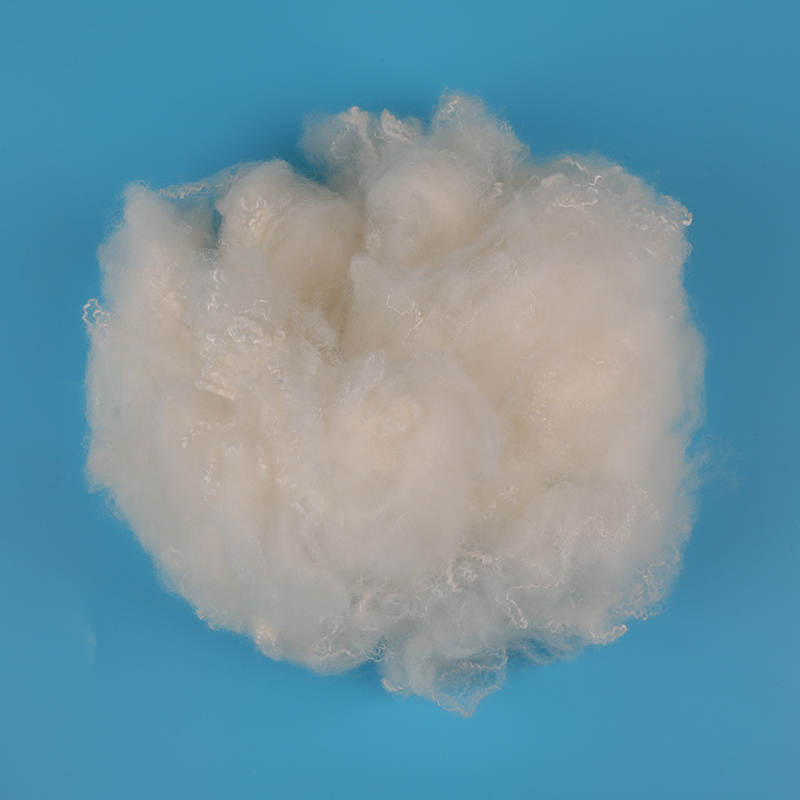
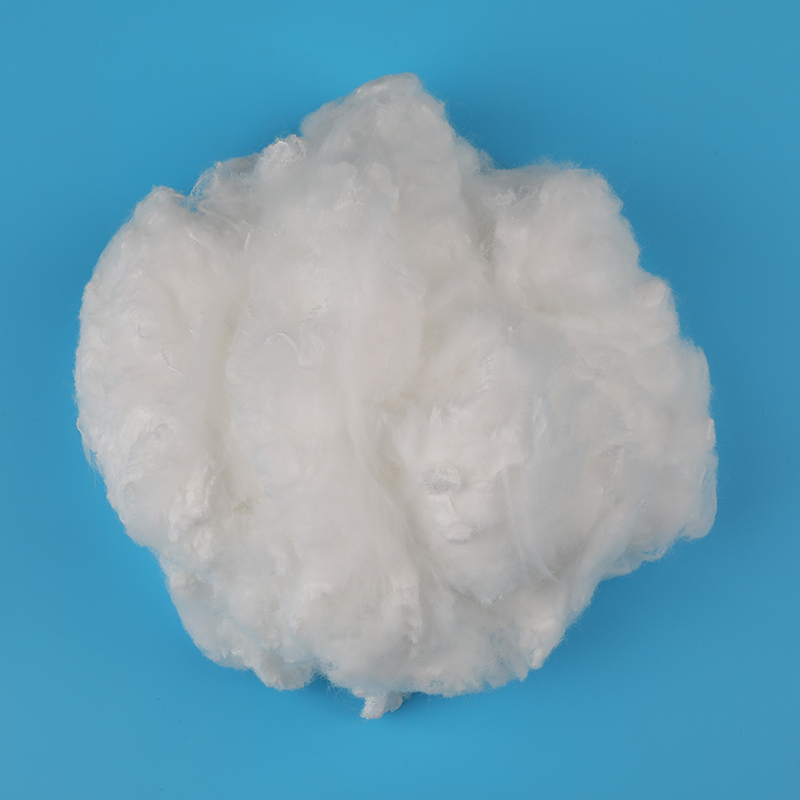
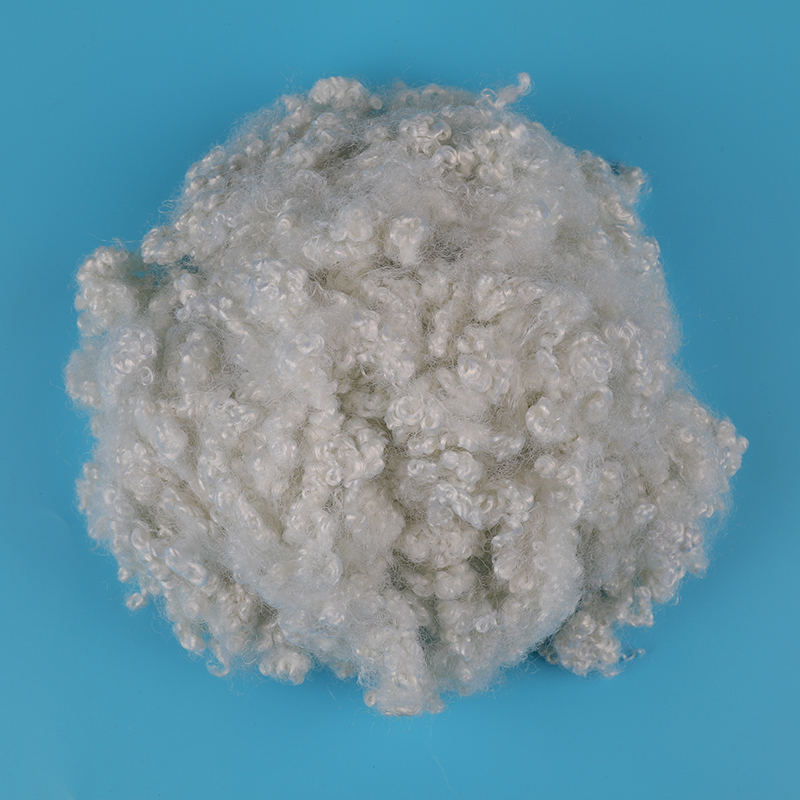
The PE/PET group includes fine deniers such as the 1.5D x 38mm single-hydrophilic white grade, which suits lightweight hygiene and filtration webs.
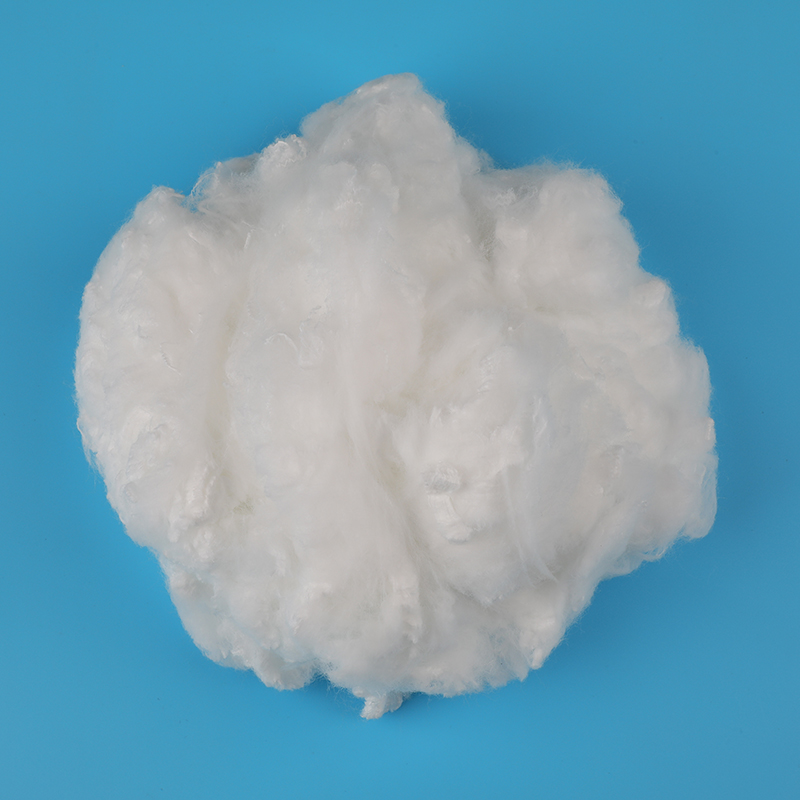 PE/PET Single Hydrophilic White 1.5D×38 Bi-Component FiberThis fine-denier PE/PET bicomponent fiber suits lightweight hygiene and filtration webs, offering single-hydrophilic properties for consistent bonding in lower-oven-temperature processes.View Product →
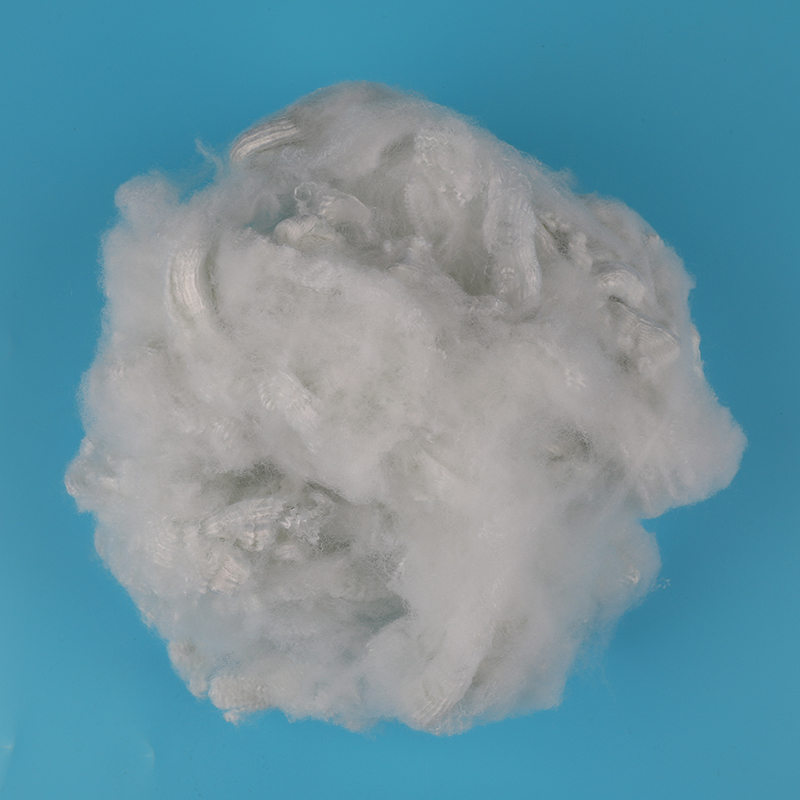
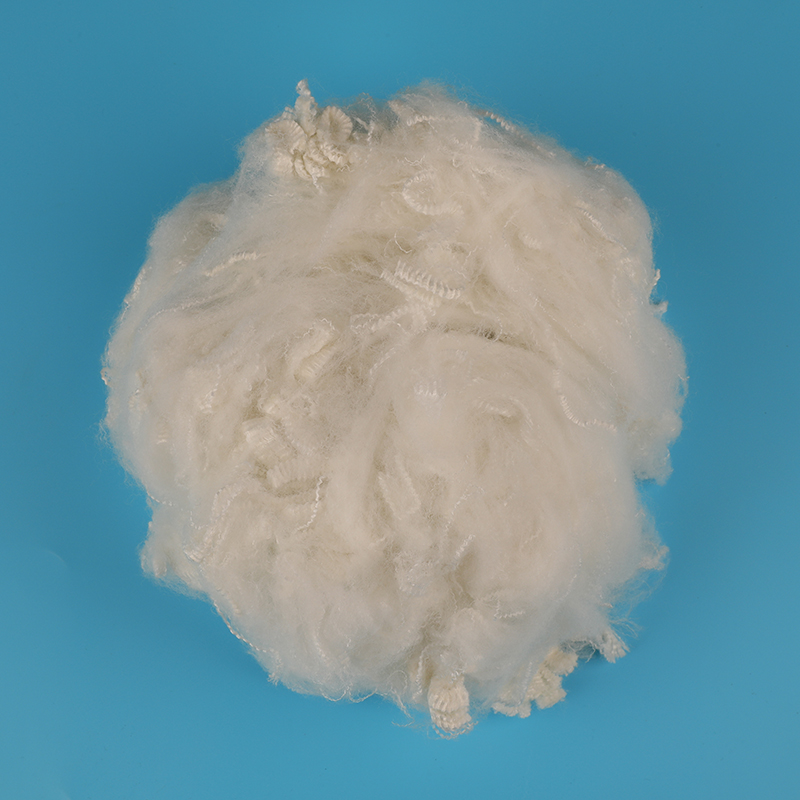
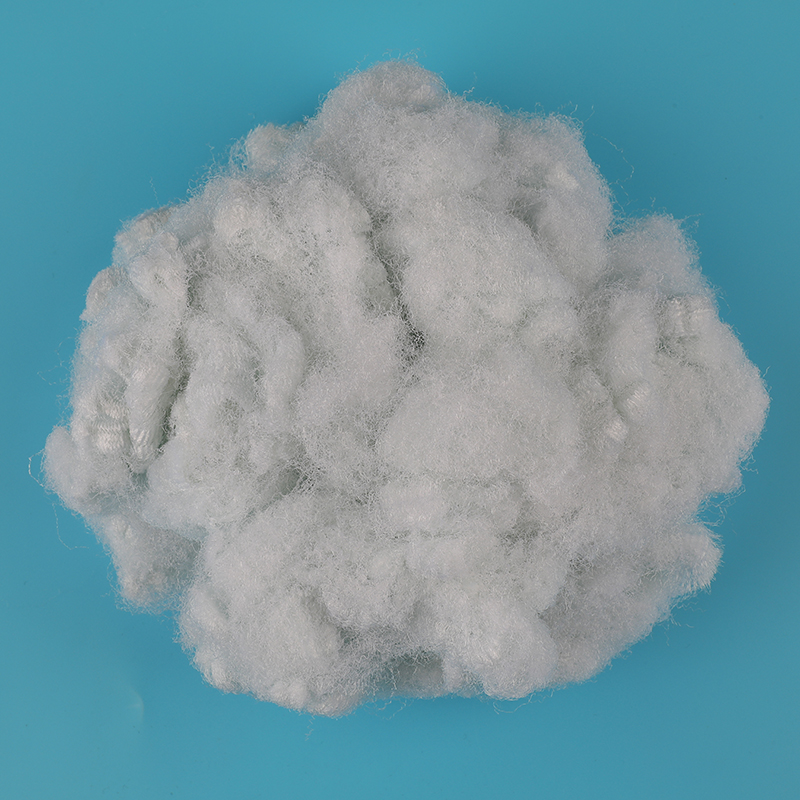
For the PE/PP side, the 2D x 38mm single-hydrophilic white grade is a workhorse for medium-weight industrial webs where higher oven temperatures are acceptable.
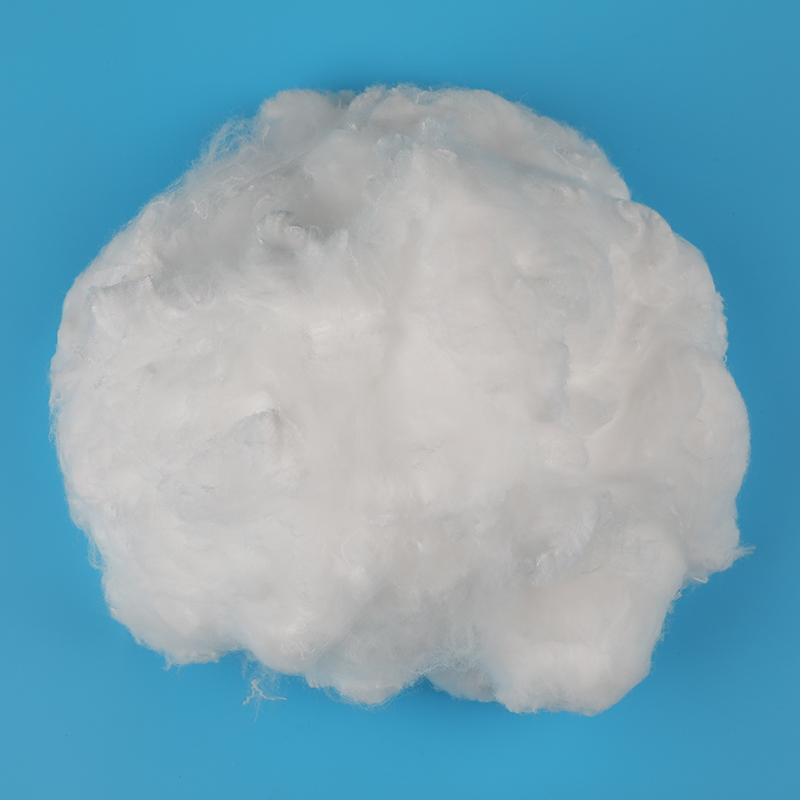 PE/PP Single Hydrophilic White 2D×38 Bi-Component FiberA medium-weight industrial web workhorse, this PE/PP bicomponent fiber tolerates higher oven temperatures, but sheath uniformity remains critical for reliable bonding and web tensile strength.View Product →
Sheath uniformity is the first quality signal to audit. Any break in the sheath creates a fiber that cannot bond, which shows up later as pilling, delamination, or web tensile failure.
A producer with dedicated bicomponent lines, such as Jiaxing Fuda Chemical Fibre Factory, can hold stable sheath-core profiles across large batches and supply cross-section images and denier certificates with samples.
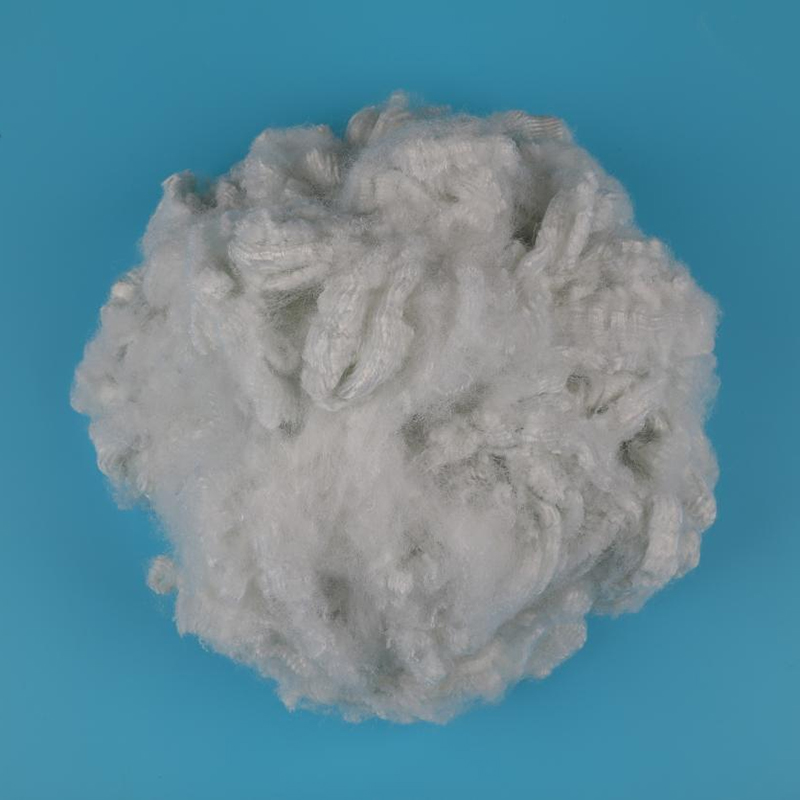
For webs that must reject moisture, a water-repellent sheath variant keeps bond points dry and prevents capillary wicking. The 2D x 38mm water-repellent whitening grade is one example from that range.
These four questions cover the most common decisions when designing a binder-free nonwoven with sheath-core bicomponent fiber.
A through-air oven temperature of 130-155°C is typical for PE/PET sheath-core fiber. The PE sheath melts while the PET core stays solid. Start at 145°C with a 5-second dwell and adjust in 2-3°C steps.
Yes. The sheath polymer is the binder, so no latex, acrylic, or powder binder is added. The line needs no dosing station, no curing oven, and no VOC abatement for binder chemistry.
The sheath polymer determines the bonding temperature and the final stiffness. PE/PET bonds at 130-155°C and produces a softer web. PE/PP requires 160-185°C and produces a stiffer, stronger web.
Yes, when the fiber carries GRS certification. Because the adhesive is part of the fiber polymer, the whole web can be re-melted without separating latex or other additives.
Your email address will not be published. Required fields are marked *

Focusing to the research and production of differentiated fiber. Applying recycle-material processing scientifically.
 86-18457317878
Zhulinjizhen, Xinfeng Town, Jiaxing City, Zhejiang Province
Copyright @ 2023 Jiaxing Fuda Chemical Fibre Factory All rights reserved
Polyester Staple Fiber Manufacturers

Friendship link - Anhui Fulin Environmental Protection Technology Co., Ltd.:https://www.ahflhb.com