en
en  English
 中文简体
中文简体 Español
 عربى
عربى
Product Consultation
Your email address will not be published. Required fields are marked *
Polyester is by far the world's most produced synthetic fiber, but "polyester" covers two fundamentally different physical forms that are not interchangeable in production: staple fiber and filament. Understanding the difference between them matters because the choice between staple and filament is made at the product design stage and determines what production equipment, what spinning or nonwoven process, and what end-product characteristics are achievable. Switching between them isn't a simple substitution — it's a different manufacturing pathway.
Polyester filament is produced as continuous strands of polymer extruded through spinnerets, drawn to the required fineness, and wound onto packages without being cut. Each filament runs uninterrupted from the package to the fabric — hundreds of meters or kilometers long. When multiple filaments are bundled together, they form a multifilament yarn that can be woven or knitted into fabric directly, or textured (false-twist textured, air-jet textured) to add bulk and stretch before weaving.
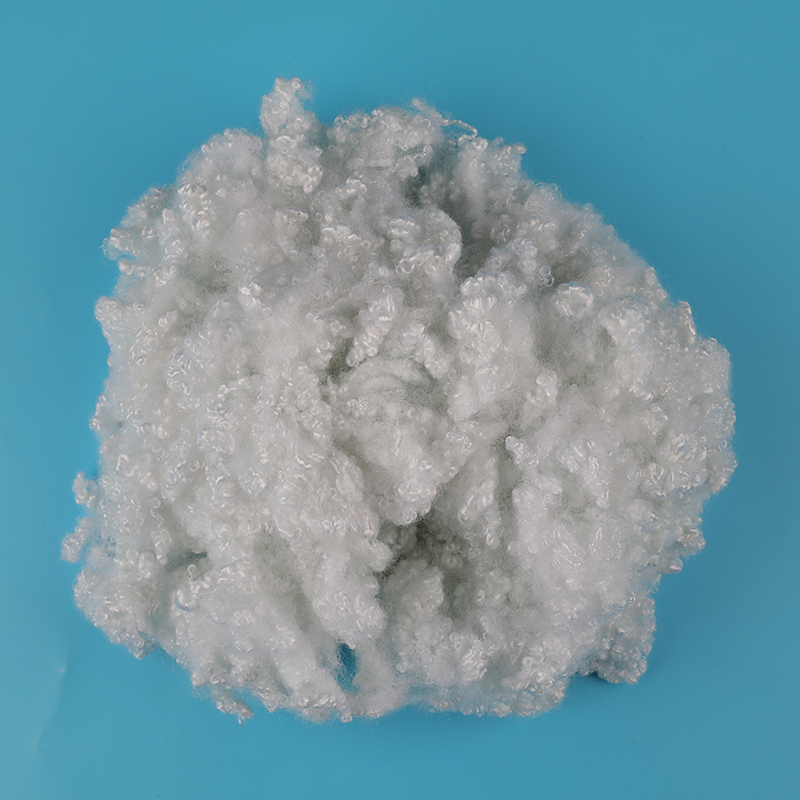
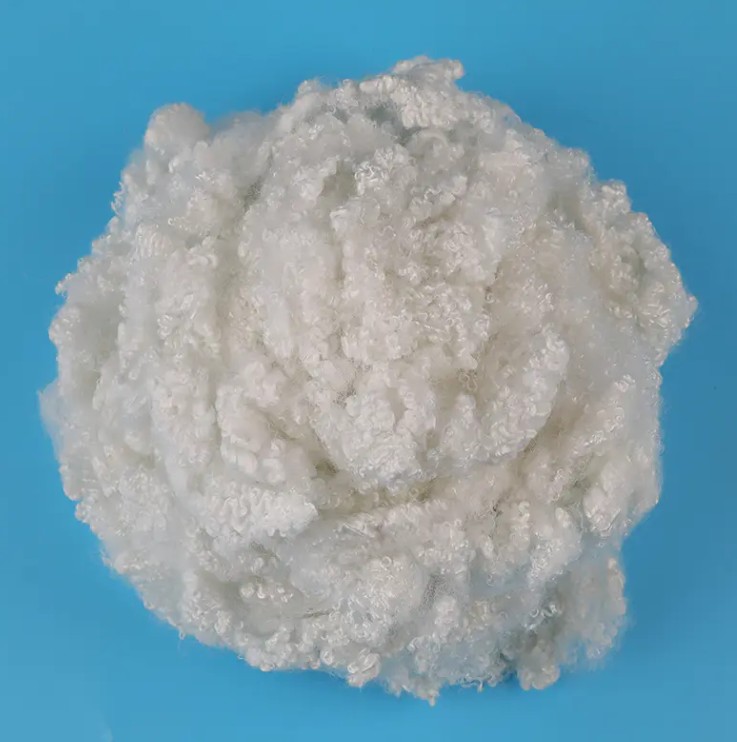
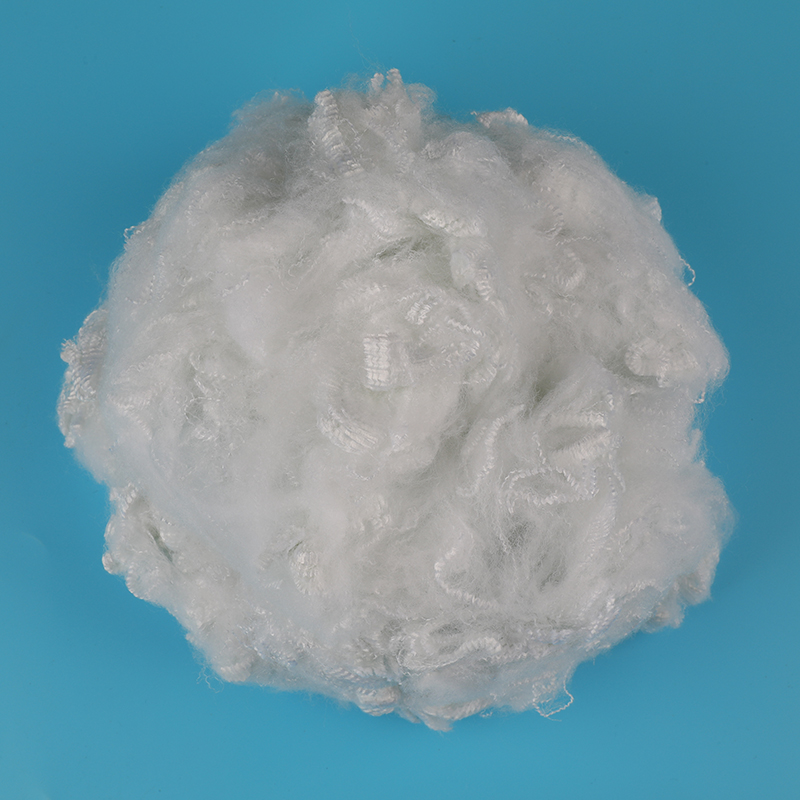
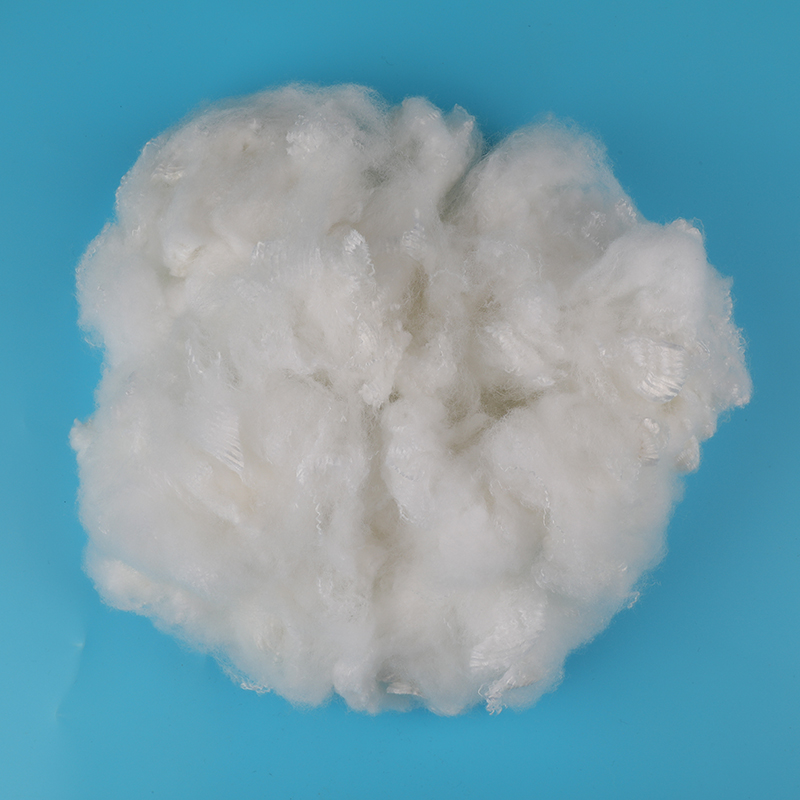
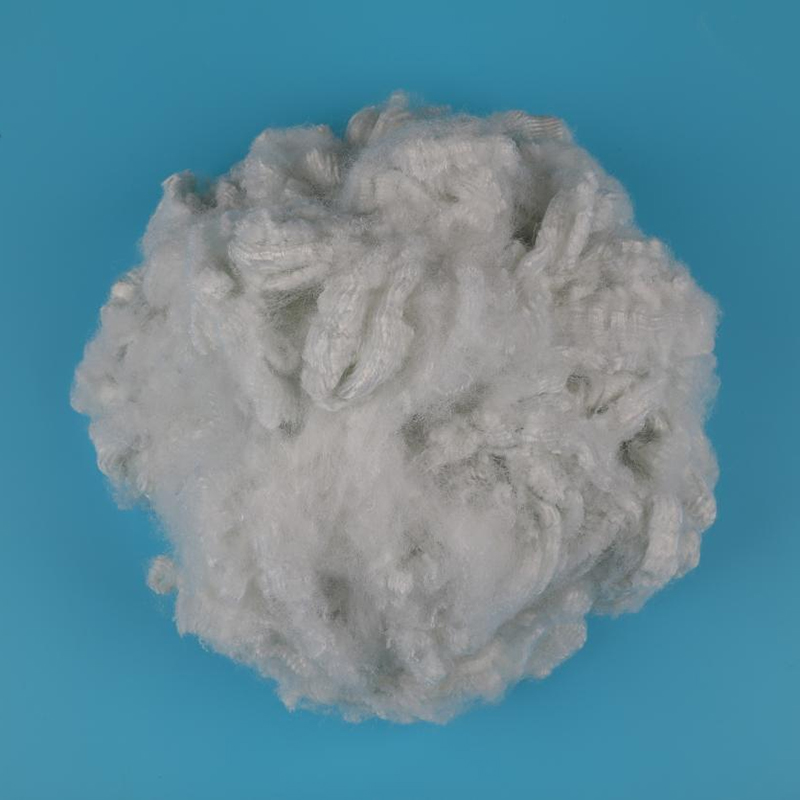
Polyester staple fiber (PSF) starts the same way — polymer extruded through spinnerets, drawn to fineness — but after spinning, the continuous tow is collected, crimped, and cut into short lengths called staples. Standard cut lengths for textile spinning are 38mm and 51mm; nonwoven applications use various lengths from 5mm (for airlaid processes) to 64mm or longer for specific carding applications. These short fibers are then processed on systems designed for discontinuous fiber: carding, combing, and spinning for yarn production, or carding and bonding for nonwoven fabric production.
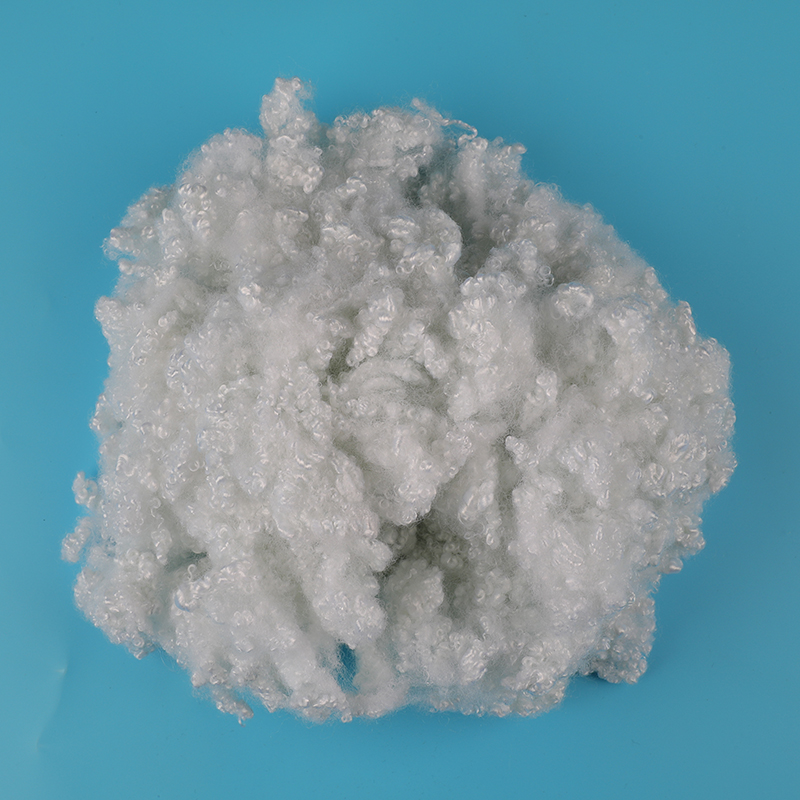
The crimping step applied to staple fiber before cutting is absent in filament production. Crimp — the waviness built into the fiber — provides cohesion during carding and spinning by allowing fibers to interlock, and contributes to bulk and texture in finished products. Filament products achieve their bulk and texture through different means: texturing processes that add a false-twist or air-entanglement crimp to the continuous strand.
Polyester staple fiber feeds into the short-fiber processing systems that have produced textile products for centuries — the same carding and ring spinning machinery that processes cotton and wool, adapted for synthetic fiber. This compatibility is the primary commercial advantage of polyester staple fiber: it can be processed on existing textile manufacturing infrastructure designed for natural short fibers, either as 100% PSF or in blends with cotton, wool, viscose, or other natural and synthetic staples.
The cotton/polyester blend shirt fabric used globally is produced from a blend of cotton staple and polyester staple fiber — typically 35/65 or 65/35 — spun into ring-spun or open-end spun yarn, then woven. Neither cotton filament (which doesn't exist in commercial quantities) nor polyester filament (which is smooth, slippery, and not amenable to cotton ring spinning machinery) produces this blend. Only staple forms of both fibers, which can be blended and processed together in the same short-fiber spinning system, make cotton/polyester blend fabrics possible.
For nonwoven fabrics, polyester staple fiber is processed through carding lines to form a web, then bonded thermally, chemically, or mechanically to produce the final fabric. The nonwoven industry's largest product categories — hygiene nonwovens, geotextiles, automotive interior fabrics, filtration media — primarily use staple fiber because the carding-and-bonding process handles short fibers efficiently and produces fabrics with the bulk, thickness, and isotropy that continuous filament spunbond cannot easily achieve in all specifications.
For filling applications — pillow fill, cushion batting, sleeping bag insulation, toy stuffing — polyester staple fiber is the only viable form. Hollow fiber, conjugated fiber, and silicon-treated siliconized fiber are all staple forms. Filament cannot be used for these applications because it cannot be opened, carded, or distributed as lofty fill material.
Polyester filament is the raw material for woven and knitted fabrics requiring a smooth, lustrous, and often stretch-capable surface: polyester taffeta, chiffon, satin, crepe, and stretch fabrics use textured or flat multifilament yarn. The continuous strand of filament produces a fabric with a different aesthetic and drape than staple-spun yarn fabrics — filament fabrics tend to be smoother, shinier (depending on the filament's cross-section geometry), and have less natural texture than staple-spun equivalents. These are the characteristics required for formal wear fabric, lining fabrics, umbrella fabrics, and technical fabrics, where smooth, continuous surface coverage is the specification.
High-tenacity polyester filament — where the filament is drawn to very high orientation and tensile strength — is used for technical applications that require strength in a continuous strand: tire cord, conveyor belt reinforcement, seatbelts, industrial webbing, and ropes. The continuous strand structure of the filament allows load to be distributed along the full length of the fiber without the stress concentration points that occur at fiber-to-fiber contacts in staple yarn. No staple fiber product achieves the tenacity levels of industrial high-tenacity filament.
Spunbond nonwovens — the continuous filament nonwoven process where filaments are extruded, drawn, and deposited directly onto a moving conveyor belt — use polyester filament rather than staple fiber. Spunbond PET fabric (commonly used as geotextile, agricultural cover fabric, and carrier substrate in composites) is a filament product, not a staple product, despite being nonwoven.
| Parameter | Polyester Staple Fiber (PSF) | Polyester Filament (POY/FDY/DTY) |
|---|---|---|
| Physical form | Discrete cut lengths (5–64mm typical) | Continuous strand of indefinite length |
| Crimp | Mechanical or bicomponent crimp applied before cutting | No crimp (flat) or texturing applied as a separate process |
| Processing systems | Carding, ring spinning, open-end spinning, airlaid, needle punch | Winding, warping, weaving, knitting, spunbond extrusion |
| Blending with natural fibers | Yes — blends with cotton, wool, viscose in staple spinning | Not applicable — incompatible with staple blending systems |
| Fabric texture | Softer, more natural feel — resembles cotton/wool texture | Smoother, more uniform — characteristic synthetic luster |
| Tensile strength (per unit area) | Moderate — fiber-to-fiber contacts are load transfer points | High — continuous strand distributes load along the full length |
| Pillow/cushion fill suitability | Yes — core application for hollow and conjugated PSF | No — cannot be processed as lofty fill material |
| Nonwoven suitability | Excellent — primary feedstock for carded nonwovens | Spunbond only — different nonwoven process |
| Recycled versions available | Yes — recycled PSF from bottle flake, widely available | Yes — recycled filament available, but narrower selection |
| Typical markets | Apparel blends, home textiles, nonwovens, filling, automotive | Apparel fabrics, industrial technical textiles, spunbond |
Both polyester staple fiber and polyester filament are specified by fineness in denier (the weight in grams of 9,000 meters of fiber) or dtex (the weight in grams of 10,000 meters). The scales are the same, but the typical ranges used commercially differ.
Polyester staple fiber for textile and nonwoven applications typically ranges from 0.9 denier (ultra-fine, for soft nonwovens and fine blended yarns) through 1.5D, 2D, 3D, 4D, 6D, 7D, 15D, and heavier deniers for increasingly coarse applications (coarse nonwovens, geotextiles, heavy batting). For pillow fill and cushion applications, 3D–7D is the typical range depending on the desired softness/loft balance.
Polyester filament uses a different terminology for its forms: POY (partially oriented yarn) is the as-spun intermediate product; FDY (fully drawn yarn) is fully processed flat filament for smooth fabric applications; DTY (draw-textured yarn) is textured to add bulk and stretch. These are not terms used for staple fiber. When a specification calls for "150D/48F DTY," it's describing a 150-denier textured filament yarn consisting of 48 individual filaments — a filament product with no staple equivalent.
Both polyester staple fiber and polyester filament have established recycling supply chains, with polyester from recycled PET bottles (rPET) being the dominant feedstock for both. The recycling pathways differ slightly: rPET bottle flake is more commonly processed into PSF than into filament because the relatively lower intrinsic viscosity of bottle-grade rPET is adequate for staple fiber spinning but may require IV upgrading for some filament applications. This is why the global supply of GRS-certified recycled polyester staple fiber is larger and more established than the equivalent recycled filament supply.
For brands and supply chains targeting recycled content claims under GRS or OEKO-TEX standards, recycled PSF products are widely available at competitive prices with full certification documentation. The recycled content in PSF products is auditable back to the bottle collection stage through the GRS chain-of-custody system.
Yes — polyester staple fiber is spun into yarn (through ring spinning, open-end spinning, or air-jet spinning), and that spun yarn is then woven into fabric. The fabric produced from staple-spun polyester yarn has a different surface character than fabric woven from polyester filament yarn: spun staple yarns have a slightly fuzzy surface from protruding fiber ends, a softer hand feel, and less luster. This is why cotton-feel polyester apparel fabrics use staple fiber processed to imitate cotton's natural short-fiber character, while smooth polyester lining fabrics and taffeta use filament yarn for its smoothness and sheen.
Hollow fiber — staple fiber with a hollow channel running through its cross-section — provides better thermal insulation (the trapped air in the hollow acts as an insulator) and higher loft for a given weight, because the hollow cross-section displaces more volume with less mass than a solid fiber of the same outer diameter. Solid polyester staple fill is heavier for equivalent loft. For premium pillow and bedding products where thermal comfort and weight-to-loft ratio are selling points, hollow fiber is the preferred specification. For cost-sensitive filling applications where the performance difference doesn't justify the price premium, solid polyester staple is used. Conjugated hollow fiber — combining hollow cross-section with bicomponent spiral crimp — represents the highest-performance pillow fill specification, combining the thermal advantages of hollow fiber with the superior loft recovery of bicomponent self-crimp.
Denier selection for nonwoven PSF is determined by the target fabric weight, porosity, and application requirements. Finer fibers (0.9–2D) produce denser, softer fabrics with finer pore structure — appropriate for coverstock in hygiene products, medical nonwovens, and fine filtration. Coarser fibers (6D and above) produce more open, bulkier fabrics with larger pore structure — appropriate for geotextiles, drainage fabrics, and heavyweight batting. Medium deniers (2–4D) balance softness and structural stability for general industrial and technical nonwoven applications. The nonwoven equipment's carding capacity also constrains denier selection — carding lines designed for fine fiber may not process heavy denier efficiently, and vice versa.
Non-Woven Fibers Series | Hollow Fibers Series | Bi-Component Fiber Series | Cotton Type Fibers Series | Contact Us
Bicomponent Fiber: Which Applications Need Them?
2026-03-15
What Are the Industrial Applications of Polyester Staple Fiber?
2026-04-01Your email address will not be published. Required fields are marked *

Focusing to the research and production of differentiated fiber. Applying recycle-material processing scientifically.
 86-18457317878
Zhulinjizhen, Xinfeng Town, Jiaxing City, Zhejiang Province
Copyright @ 2023 Jiaxing Fuda Chemical Fibre Factory All rights reserved
Polyester Staple Fiber Manufacturers

Friendship link - Anhui Fulin Environmental Protection Technology Co., Ltd.:https://www.ahflhb.com