Bi-Component Fiber Series
Engineered for high-performance nonwoven and hygiene applications
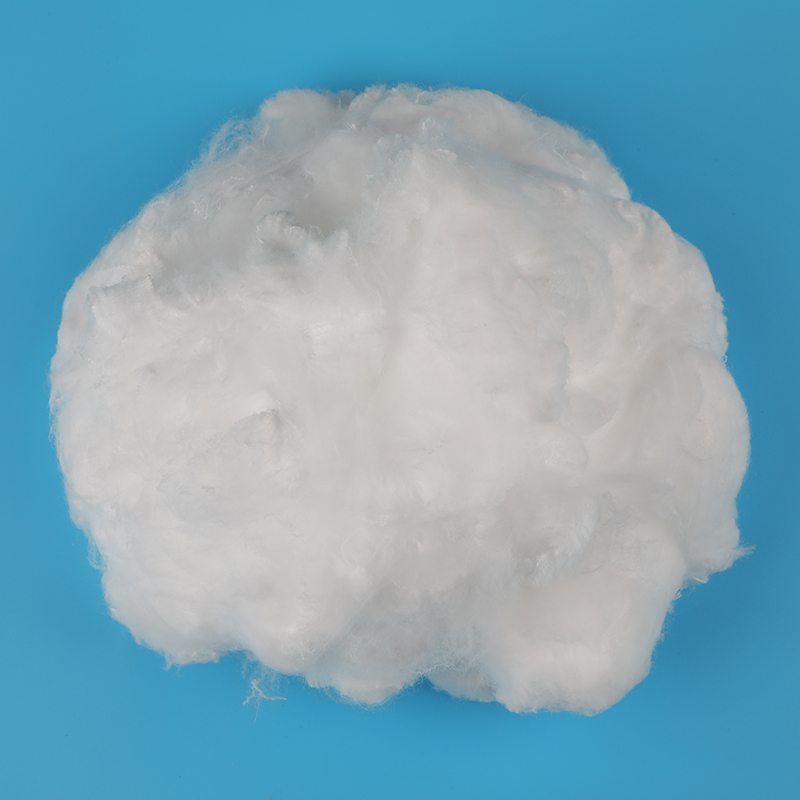
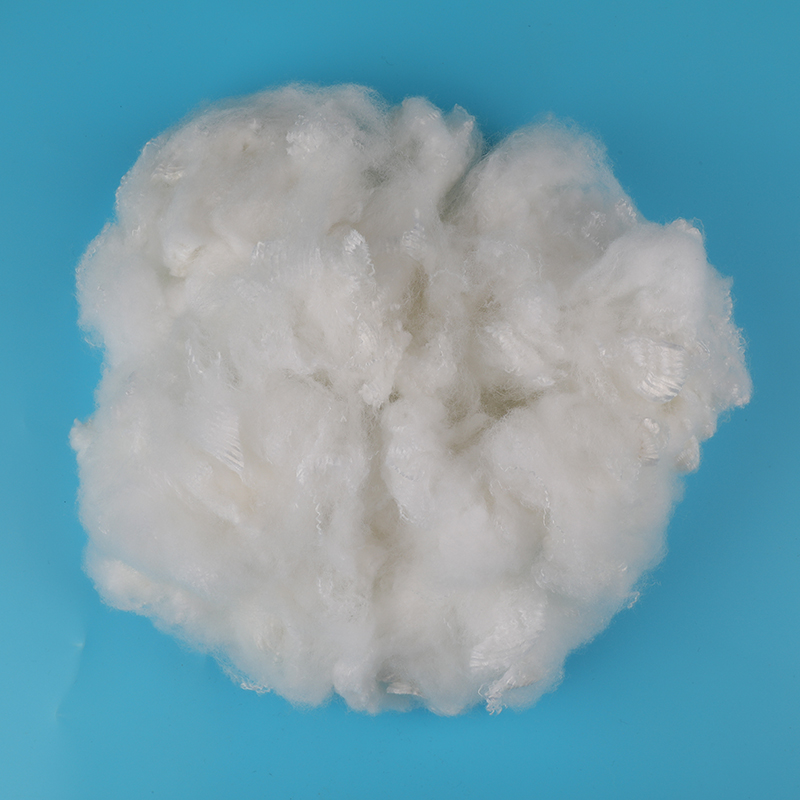
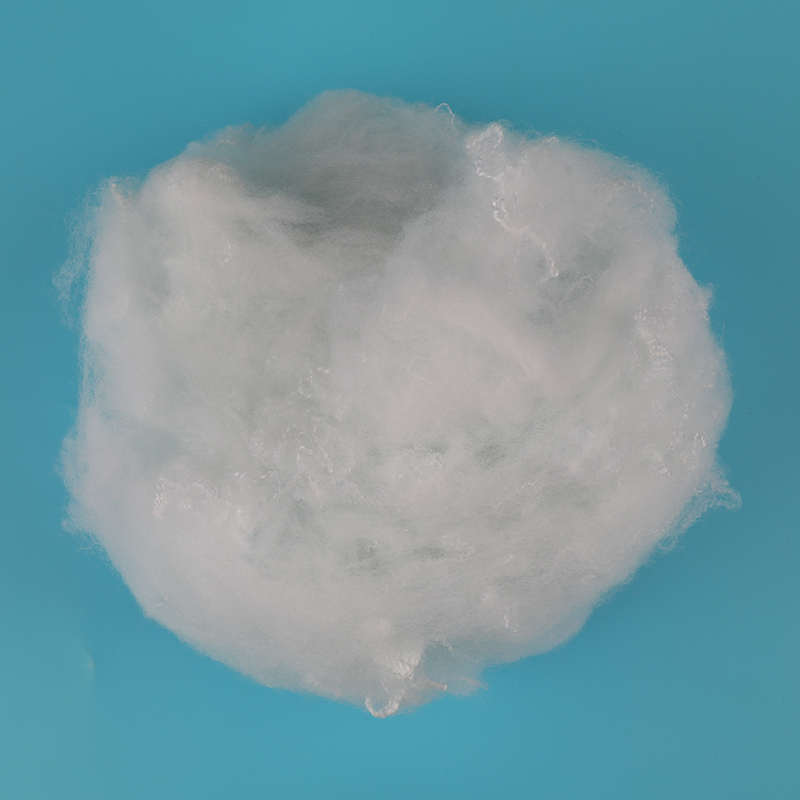
As a Bi-Component Fiber Series manufacturer, Jiaxing Fuda Chemical Fibre Factory supplies PE/PET and PE/PP staple fibers designed for demanding production environments. Our bicomponent fibers combine a low-melting-point sheath with a higher-melting-point core, enabling thermal bonding without additional adhesives. This makes them essential for absorbent hygiene products, filtration media, and specialty nonwovens where liquid management, softness, and strength are critical.
With four dedicated bicomponent production lines and an annual output of 40,000 tons, we support converters and nonwoven producers with consistent quality and reliable supply. Our range includes single-hydrophilic, multi-hydrophilic, water-repellent, and whitening variants in 1.5D to 4D with cut lengths of 38mm and 51mm. We also offer customization to match your specific web formation and bonding requirements.
Available Product Range
Our bicomponent series is organized by polymer pair and finish type. Each configuration is engineered for a specific role in the nonwoven structure:
| Product Type |
Polymer Pair |
Typical Finish |
Primary Application |
| PE/PET Single Hydrophilic |
PE sheath / PET core |
Hydrophilic, whitening |
Top sheet for diapers and sanitary napkins |
| PE/PET Multi-hydrophilic |
PE sheath / PET core |
Enhanced hydrophilic, whitening |
Acquisition distribution layer (ADL) |
| PE/PET Water-Repellent |
PE sheath / PET core |
Hydrophobic, whitening |
Back sheet or leg cuffs |
| PE/PP Single Hydrophilic |
PE sheath / PP core |
Hydrophilic, whitening |
Cost-effective hygiene and filtration media |
For detailed specifications of each product, please refer to our PE/PET Water-Repellent Whitening 1.5D×38 and PE/PP Single Hydrophilic Whitening 2D×38 product pages.
Application Fit and Functional Design
Bicomponent fibers are not a one-size-fits-all solution. The choice of polymer pair and finish determines how the fiber performs in your nonwoven line. Our PE/PET grades offer superior softness and comfort, making them the preferred choice for skin-contact layers in baby diapers and adult incontinence products. The PET core provides higher thermal resistance and dimensional stability, which is beneficial in processes that involve higher bonding temperatures.
PE/PP grades, with a PP core, deliver excellent chemical resistance and lower density, which can reduce basis weight while maintaining bulk. They are often selected for filtration media and industrial wipes where cost efficiency and durability are priorities.
We produce both hydrophilic and hydrophobic finishes. Hydrophilic fibers are treated to promote rapid liquid strike-through and distribution, essential for keeping the skin dry. Water-repellent fibers are used as a barrier layer to prevent leakage. Whitening agents are added to achieve a bright, clean appearance for visible outer layers.
Critical Specifications and Quality Control
Each lot is manufactured to tight tolerances on fineness (denier), cut length, crimp, and finish add-on. Our quality system includes in-house laboratories and advanced testing equipment to verify fiber properties before shipment. We also hold GRS and OEKO-TEX certifications, ensuring that our recycled and virgin materials meet international standards for safety and sustainability.
Typical specifications we control include:
- Fineness: 1.5D, 2D, 3D, 4D (custom available)
- Cut length: 38mm, 51mm (other lengths on request)
- Tenacity and elongation tailored to nonwoven strength requirements
- Finish type: hydrophilic, multi-hydrophilic, water-repellent
- Whiteness index and optical brightness
- Crimp level for bulk and cohesion
Configuration and Customization
We understand that every nonwoven line has unique parameters. Our technical team works with you to adjust fiber cross-section, denier, and finish to achieve the desired balance of softness, strength, and liquid handling. We can also develop custom formulations for new products, leveraging our in-house R&D capabilities.
For example, in hygiene products, the top sheet often uses a single-hydrophilic fiber for rapid fluid intake, while the acquisition layer may use a multi-hydrophilic fiber with higher capillary action. We can supply different grades to match each layer's function.
Production Capacity and Supply Reliability
Our factory in Jiaxing, China, operates four dedicated bicomponent lines with a combined annual capacity of 40,000 tons. We also have seven lines for recycled polyester staple fiber, giving us flexibility to respond to market demands. Our location near Shanghai port ensures efficient sea freight to major global markets, including Vietnam, Brazil, the United States, Germany, and Japan.
We maintain a stable supply chain by integrating PET bottle recycling in our Huaibei facility, which processes up to 50,000 tons of PET flakes annually. This vertical integration helps control raw material quality and supports our commitment to sustainable production.
Installation and Process Integration
Bicomponent staple fibers are supplied in bales, ready for opening, blending, and carding. We provide technical guidance on optimal processing parameters, such as carding speeds, bonding temperatures, and dwell times, to ensure consistent web formation and bonding. Our team can assist with trial runs and process optimization to minimize downtime.
Quality Assurance and Acceptance
Every shipment includes a certificate of analysis (COA) documenting key physical properties. We conduct routine testing for denier, length, crimp, and finish content. For critical applications, we can agree on acceptance criteria and provide samples for pre-production validation.
Information We Use to Configure Your Solution
To prepare an accurate quotation and product recommendation, we need the following details:
- Target application (e.g., diaper top sheet, ADL, filtration)
- Required fineness (denier) and cut length
- Desired finish (hydrophilic, water-repellent, whitening)
- Basis weight and line speed of your nonwoven process
- Bonding method (thermal, ultrasonic, etc.) and temperature range
- Any regulatory or certification requirements (e.g., OEKO-TEX, GRS)
- Estimated annual volume and delivery schedule
Maintenance, Service, and Support
We provide ongoing technical support after delivery, including troubleshooting and process optimization advice. Our team is available to discuss any issues that arise during production. We also offer consistent quality across batches, ensuring your final product remains stable.
Documentation and Training
Each order is accompanied by full documentation, including packing lists, COA, and any requested certifications. We can arrange training sessions for your production staff on handling and processing our fibers, either on-site or via video conference.
Packaging and Delivery
Fibers are compressed into bales and wrapped for protection during transit. Standard bale weights and dimensions can be adjusted to fit your handling equipment. We coordinate logistics to ensure timely delivery, with most exports shipped via sea from Shanghai port.
Frequently Asked Questions
Q1: What is the difference between PE/PET and PE/PP bicomponent fibers?
PE/PET fibers have a polyethylene sheath and a polyester core (melting point 255°C), offering higher thermal resistance and softness, ideal for hygiene products. PE/PP fibers use a polypropylene core (melting point 165°C), providing better chemical resistance and lower density, often used in filtration and cost-sensitive applications.
Q2: Can you customize the finish or denier of bicomponent fibers?
Yes, we can adjust denier, cut length, and finish type (hydrophilic, multi-hydrophilic, water-repellent) to meet your specific process and product requirements. Our R&D team can also develop new variants for special applications.
Q3: How do you ensure consistent quality across batches?
We operate in-house laboratories with advanced testing equipment and follow strict quality management procedures. Each batch is tested for key properties, and we provide a certificate of analysis with every shipment.
Q4: What is your minimum order quantity (MOQ)?
MOQ varies by product and specification. For standard grades, we can accommodate smaller trial orders. Contact our sales team to discuss your volume needs.
Q5: Do you provide samples for testing?
Yes, we can send samples for evaluation. Please provide your application details so we can recommend the most suitable grade.
Q6: What certifications do your fibers hold?
Our fibers are produced in facilities certified to GRS and OEKO-TEX standards, ensuring compliance with global recycling and safety requirements.


 en
en  English
 中文简体
中文简体 Español
 عربى
عربى