en
 English
 中文简体
 Español
 عربى

Product Consultation
Your email address will not be published. Required fields are marked *
Binder fiber ratio is the first variable worth locking on a needle-punched acoustic felt line, ahead of denier, punch density and oven setpoint, because it fixes how many thermal weld points exist between fibers. Run it too low and the sheet dusts, delaminates and loses shape at the die cut. Run it too high and the felt turns stiff, closed and reflective, which is the opposite of what an acoustic absorber is bought to do.
Jiaxing Fuda Chemical Fibre Factory has produced polyester staple fiber for needle-punched lines since 1995, and its nonwoven grades are cut at 2.5D × 51 mm, 2.5D × 64 mm, 3D × 64 mm and 6D × 76 mm and 15DX64mm for exactly this process. The ratio logic below applies whether the structural fiber is virgin polyester or GRS-certified recycled polyester from the company's PET bottle-flake plant in Huaibei.
Binder fiber ratio is the weight share of low-melt bicomponent fiber in the total fiber blend, and it decides how many thermal weld points a needle-punched acoustic felt carries after curing.
In a PE/PET bicomponent fiber the sheath is polyethylene with a melting range near 125–135 °C and the core is polyester that stays solid beyond 250 °C. Only the sheath flows. It wicks to the nearest fiber crossing, solidifies on cooling and locks the needled web into a plate. Each additional percentage point of binder adds weld points roughly in proportion, which is why the shape of the ratio curve matters more than the number printed on the bag.
Weight ratio is not filament ratio. A 2D binder fiber has one third of the cross-section of a 6D structural fiber, so at 25 percent by weight there are about three times as many binder filaments as the number suggests. A felt built with 2D binder therefore reads firmer and denser than the same 25 percent built with 4D binder, even though the oven never changed.
| Binder ratio | Bond behaviour | Typical acoustic use |
| Below 15% | Insufficient welds, fibre dust at die cutting | Only with latex or resin backup |
| 20–25% | Flexible, good drape, moderate peel strength | 3–8 mm interior trim and dash absorber |
| 25–30% | Balanced stiffness, open porosity | 10–20 mm wall, ceiling and HVAC absorbers |
| 30–40% | Dense, stiff, stronger low-frequency response | Heavy-layer decouplers, engine encapsulation |
| Above 40% | Brittle, closed surface, reflective | Avoid for absorption duty |
Needles entangle; the oven bonds. Punching builds density and vertical fibre locks, and the melted sheath then converts those contact points into a rigid network.
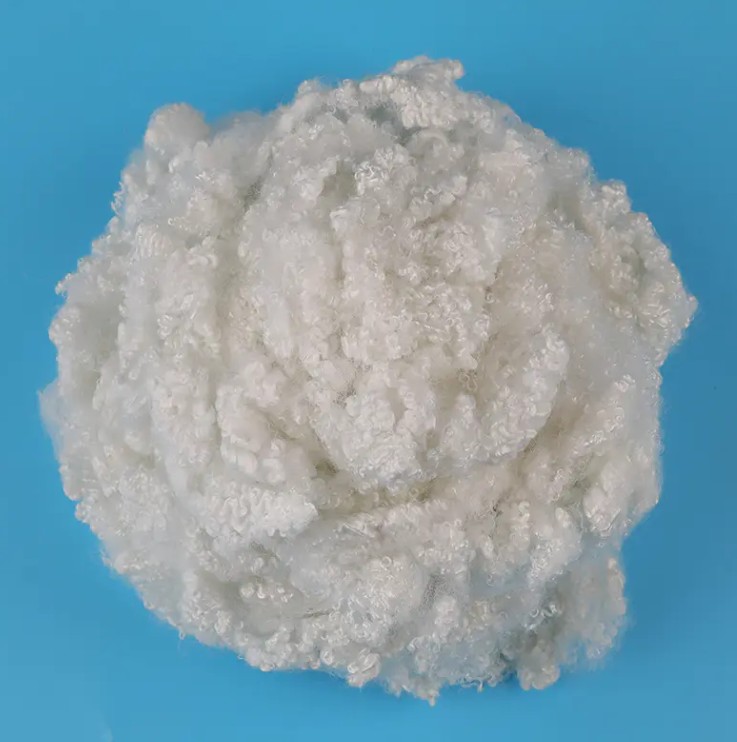
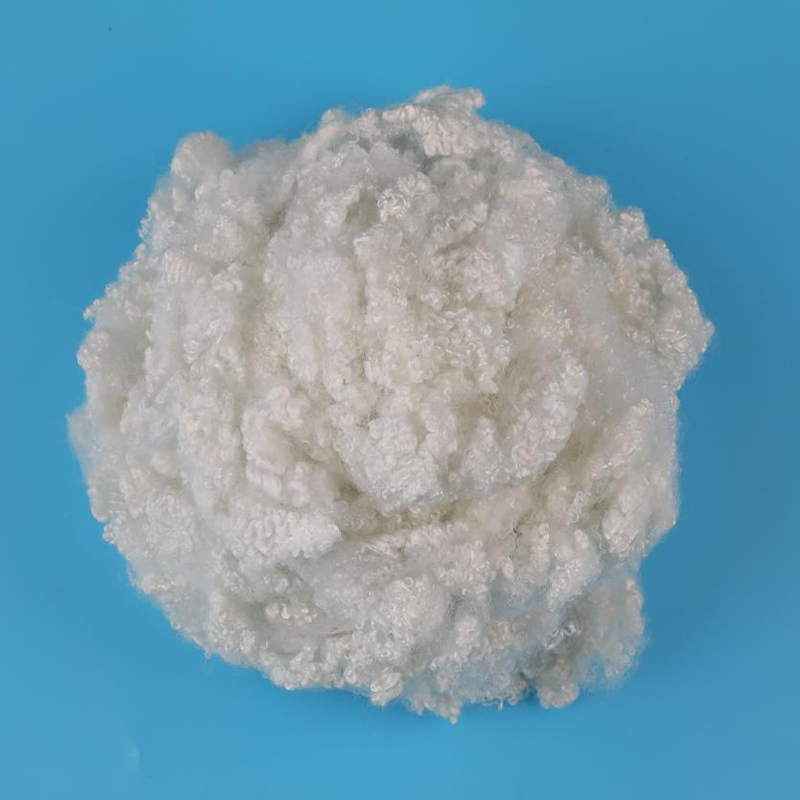
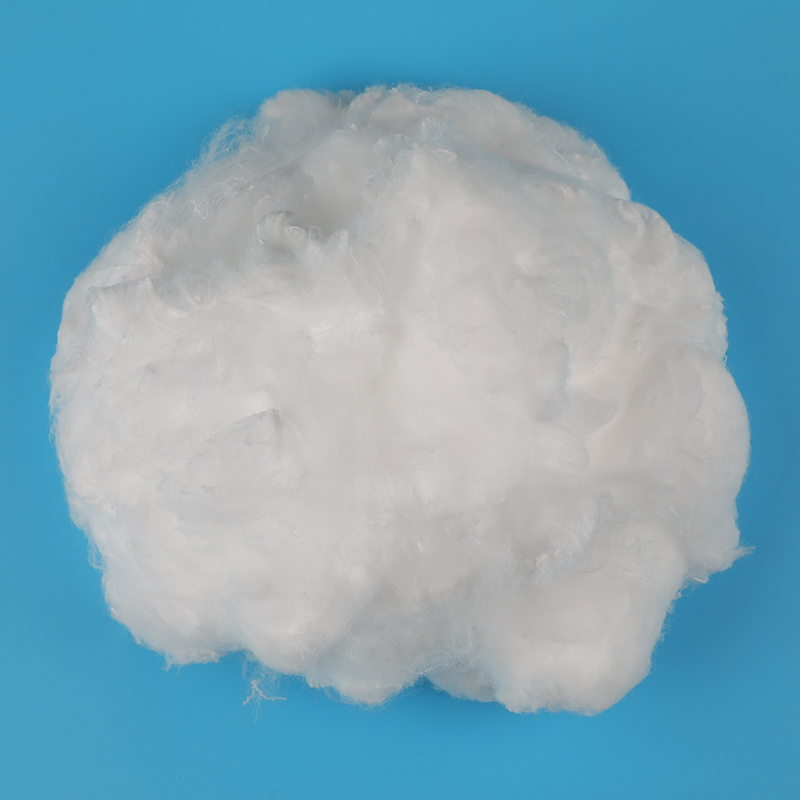 PE/PET Hydrophilic Bi-Component Fiber 2D×38White PE/PET bi-component fiber specified 2D×38 for nonwoven processing; a relevant reference when comparing thermal binder inputs for needle-punched felt.View Product →
For needle-punched acoustic felt between 5 and 20 mm thick, the practical binder window is 20 to 30 percent by weight; 25 percent is the standard starting point for absorbers, and 30 to 35 percent is used where stiffness outranks airflow.
The curve flattens because bonding stops being the limiting factor above roughly 32 percent. Porosity becomes the limit. A 10 mm felt at 400 g/m² with 25 percent binder usually sits at 8–15 kPa·s/m² airflow resistivity; push the binder toward 40 percent and resistivity climbs toward 25 kPa·s/m², the surface turns reflective and the absorption peak shifts downward while mid-band NRC falls.
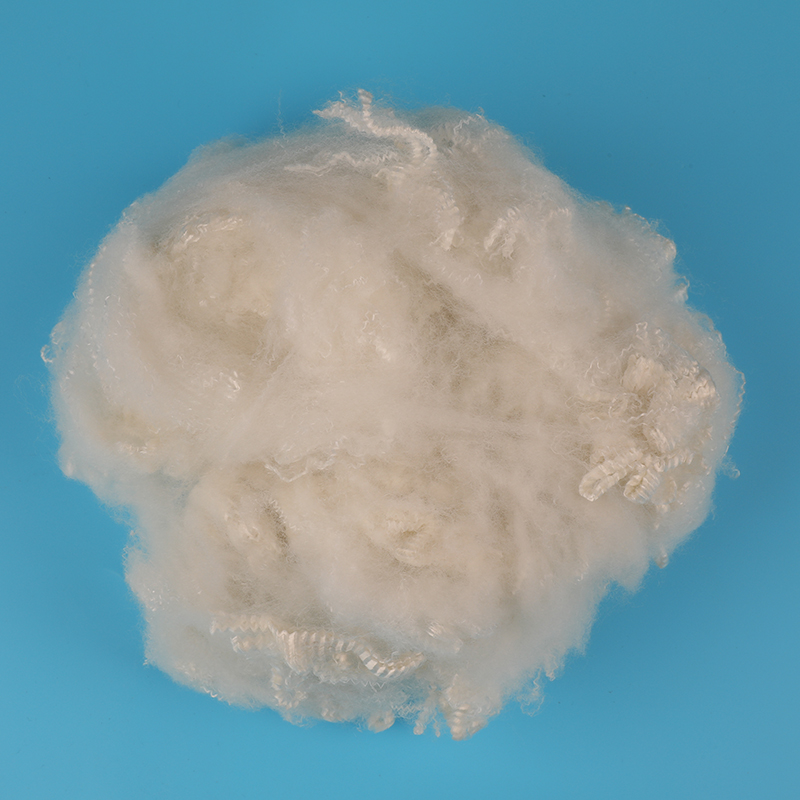
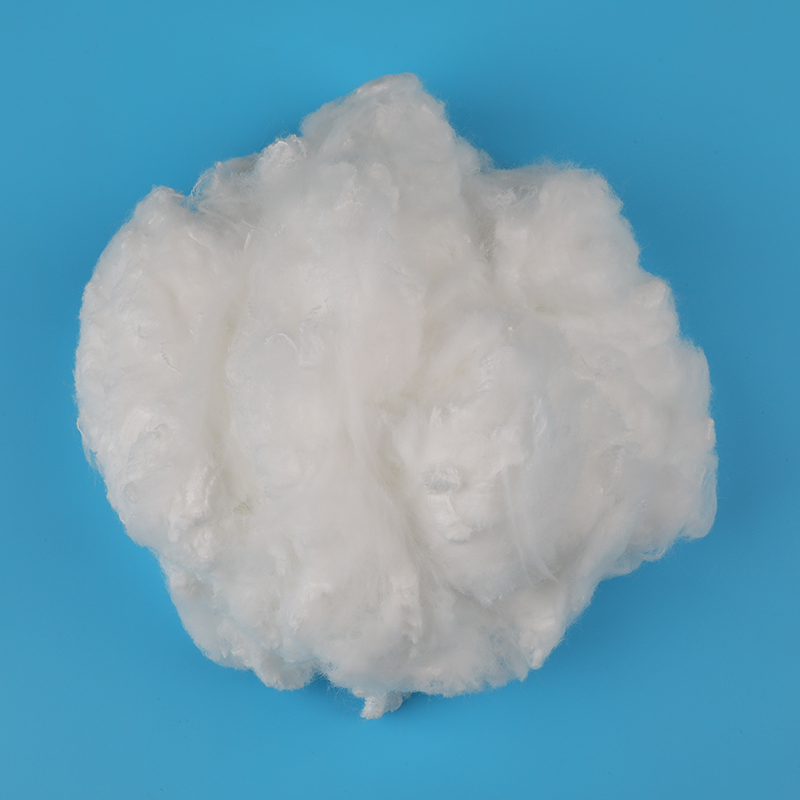
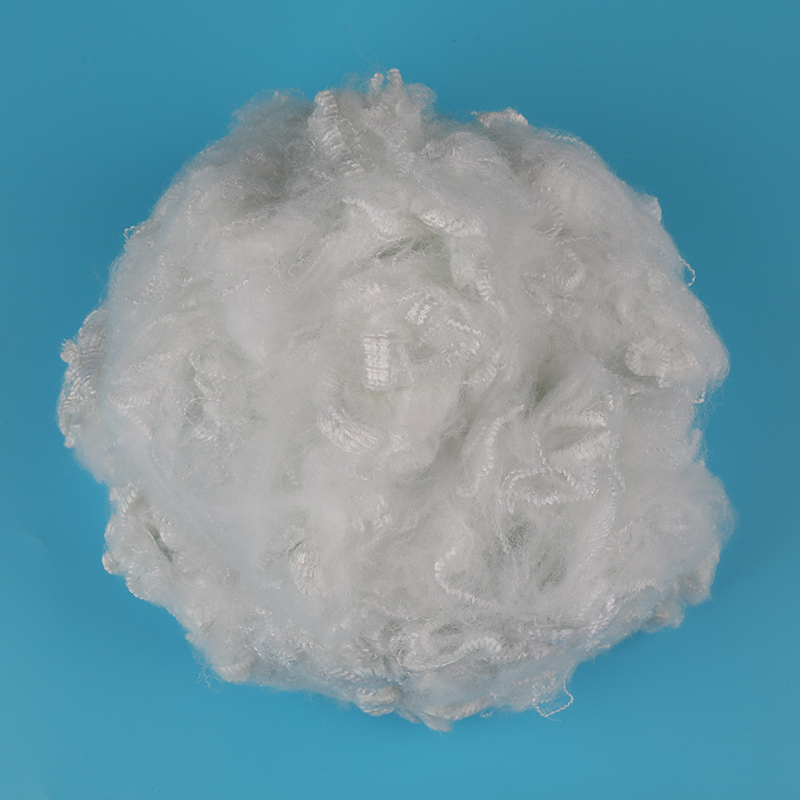
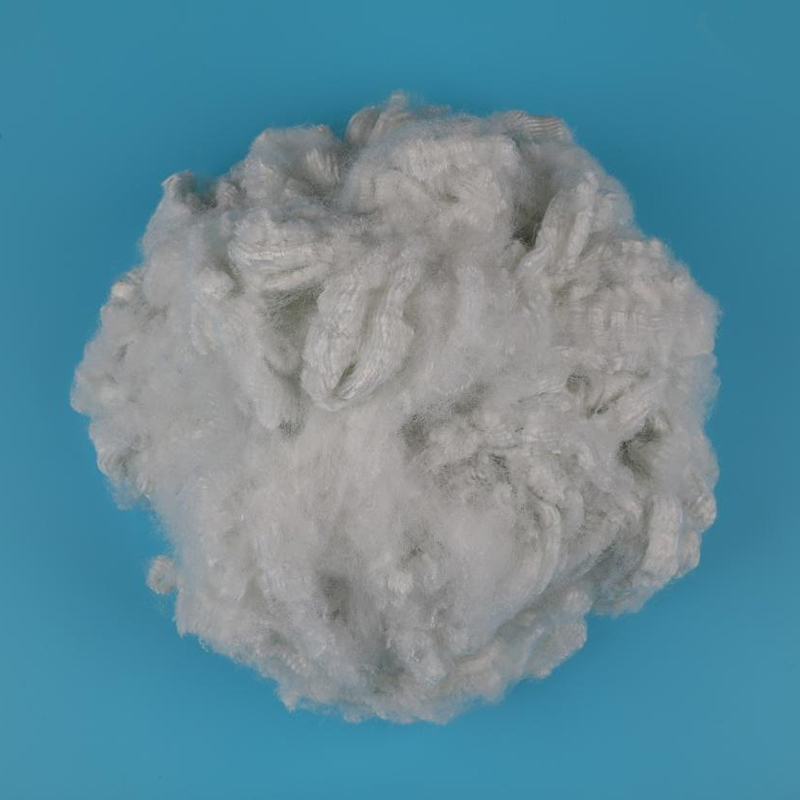
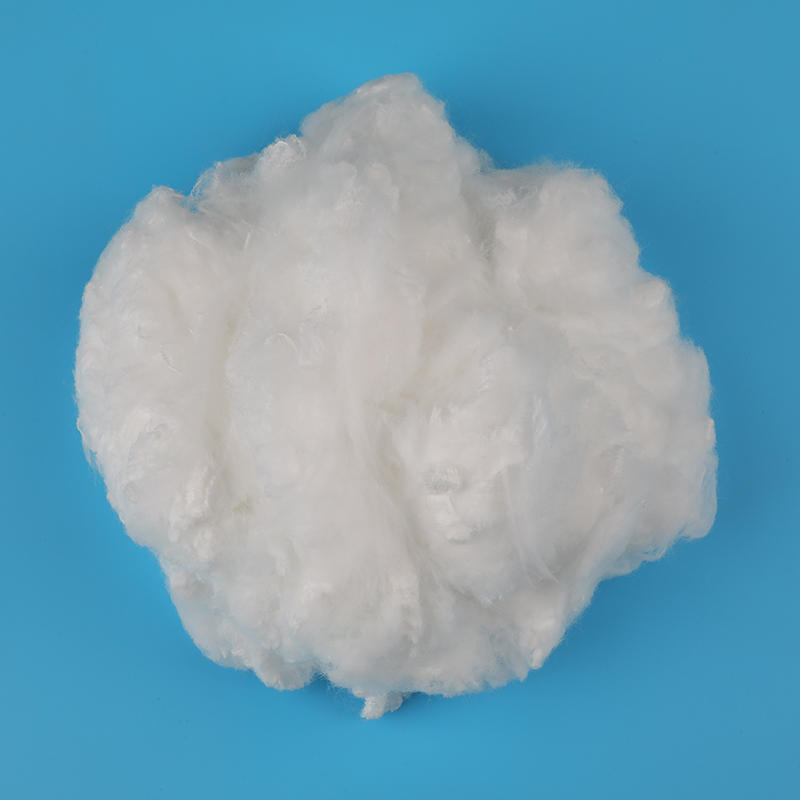
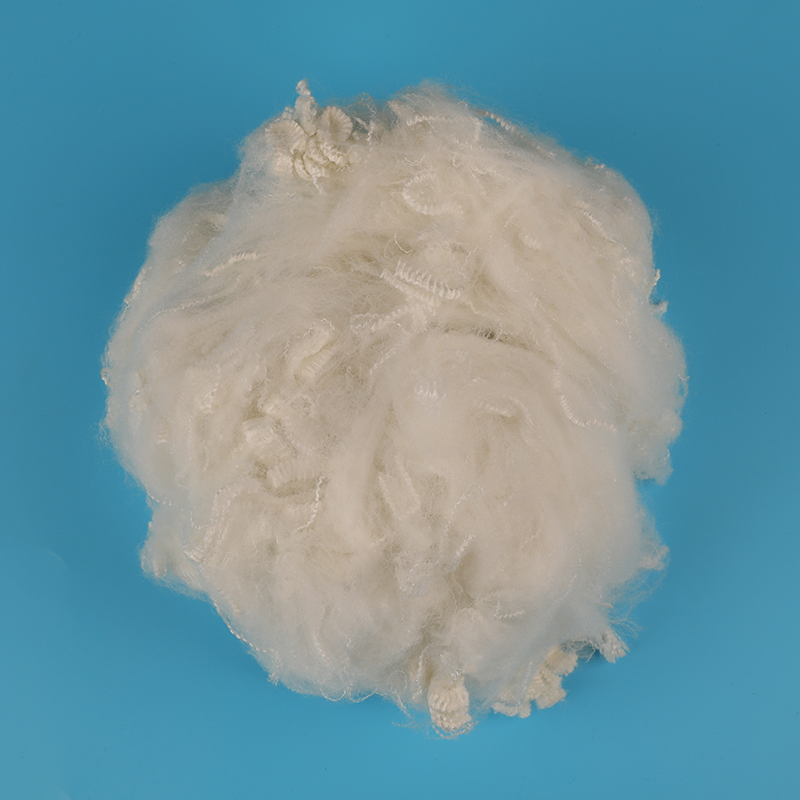 Raw White Needle-Punched Polyester Staple Fiber 2.5D×51mmRaw white 2.5D×51mm polyester staple fiber for needle-punched nonwovens; useful when reviewing fiber inputs alongside binder levels and airflow.View Product →
A 25 to 30 percent bicomponent binder normally replaces latex saturation outright in needle-punched acoustic felt, and it does so without water, drying energy or extra acrylic mass sitting in the pores.
Binder ratio is confirmed by three independent checks: feeder records, differential scanning calorimetry on the blend, and thermal or solvent separation of the finished felt.
Fuda's nonwoven fiber series lists denier, cut length and colour for each needle-punch grade, and the site's note on needle-punched fibers in nonwoven felt explains how punch density interacts with binder share before the oven stage.
It can be, but only with a hotter oven and a slower line. At 20 percent the felt reaches usable peel strength around 165–168 °C, where polyester crimp begins to relax, so expect 10 to 15 percent thickness loss and a firmer hand than the same felt at 25 percent.
No. Absorption rises with binder content up to roughly 30–35 percent because the web gains integrity and keeps its thickness, then falls as melted sheath closes pore throats and airflow resistivity climbs past 20 kPa·s/m².
Only where the part needs polypropylene's chemical resistance. A PP core melts near 160–165 °C, so the gap between sheath flow and core softening narrows and the oven window becomes far less forgiving than the standard PE/PET system.
State it as weight percentage of bicomponent fiber in the total blend, name the sheath polymer and melting range, and add the test method for verification. A ratio figure without a test method is an invitation to argue at goods-in.
Your email address will not be published. Required fields are marked *

Focusing to the research and production of differentiated fiber. Applying recycle-material processing scientifically.
 86-18457317878
Zhulinjizhen, Xinfeng Town, Jiaxing City, Zhejiang Province
Copyright @ 2023 Jiaxing Fuda Chemical Fibre Factory All rights reserved
Polyester Staple Fiber Manufacturers

Friendship link - Anhui Fulin Environmental Protection Technology Co., Ltd.:https://www.ahflhb.com