en
 English
 中文简体
 Español
 عربى

Product Consultation
Your email address will not be published. Required fields are marked *
A calender line bonding a 100 percent polyester staple web usually holds its rolls between 180 C and 200 C before the fabric develops usable strength. Change the blend to a PE/PET bicomponent staple whose polyethylene sheath melts at 105 C to 115 C, and the same line bonds at 130 C to 145 C, runs faster, and keeps more of the load-bearing core intact. That temperature gap is why so many needle-punch, spunlace and airlaid converters now specify bicomponent fibers when they need to improve performance in thermal bonding nonwoven fabrics.
What follows is the mechanism behind that gain, the numbers you can measure on the line, and the specification choices that decide whether you capture the benefit or lose it to a poorly matched denier, cut length or finish.
Bicomponent fibers improve performance in thermal bonding nonwoven fabrics by separating the bonding job from the structural job inside a single filament: the low-melt sheath flows and fuses at fibre cross-over points, while the high-melt core stays solid and carries the tensile load.
Definition
A bicomponent fibre is one filament extruded from two polymers held in separate, continuous phases along the fibre axis, most often a polyethylene sheath around a polyester core. Because the sheath melts 100 C or more below the core, the fibre can be thermally bonded well under the melting point of its structural polymer.
A mono-PET web bonds differently. The calender has to soften the fibre itself, which means running hot enough to damage the very polymer that supplies tensile strength. Bond strength and fibre strength then compete for the same energy budget, and the process window stays narrow. Bicomponent construction removes that competition. In a 50/50 sheath-to-core PE/PET fibre the polyethylene sheath melts around 105 C to 115 C, roughly 140 C below the polyester core, so the web consolidates while the core is thermally untouched.
The practical result is a wider operating window and a fabric in which strength comes from the core and inter-fibre adhesion comes from the sheath, two independent variables a converter can tune separately.
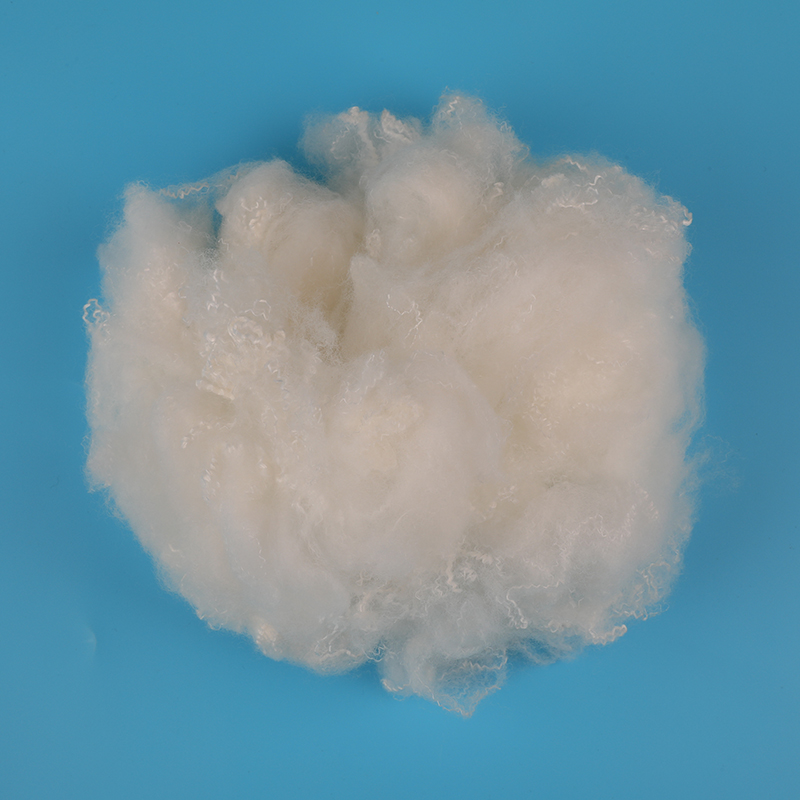
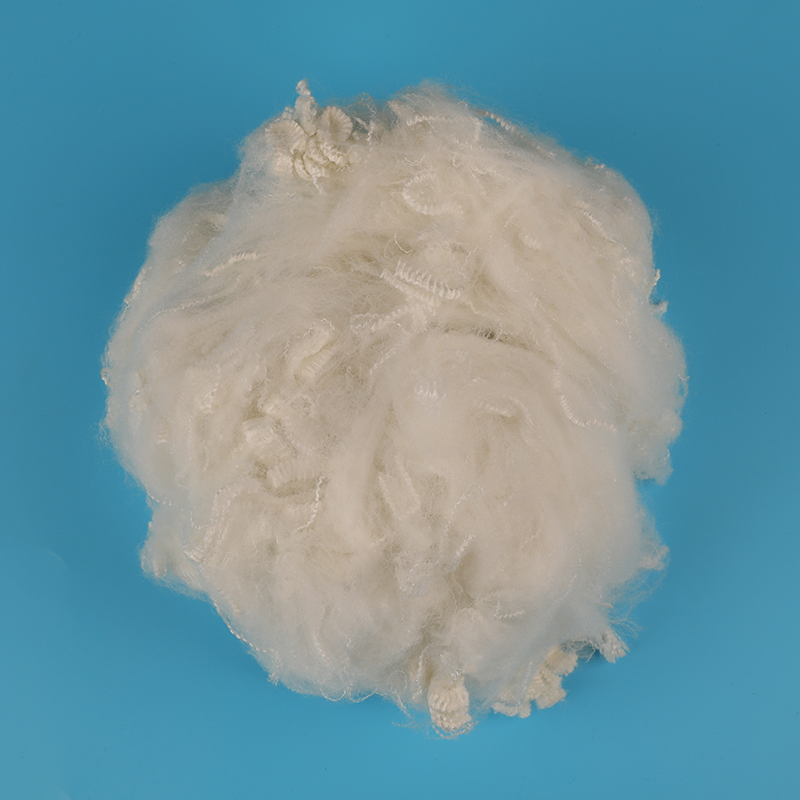
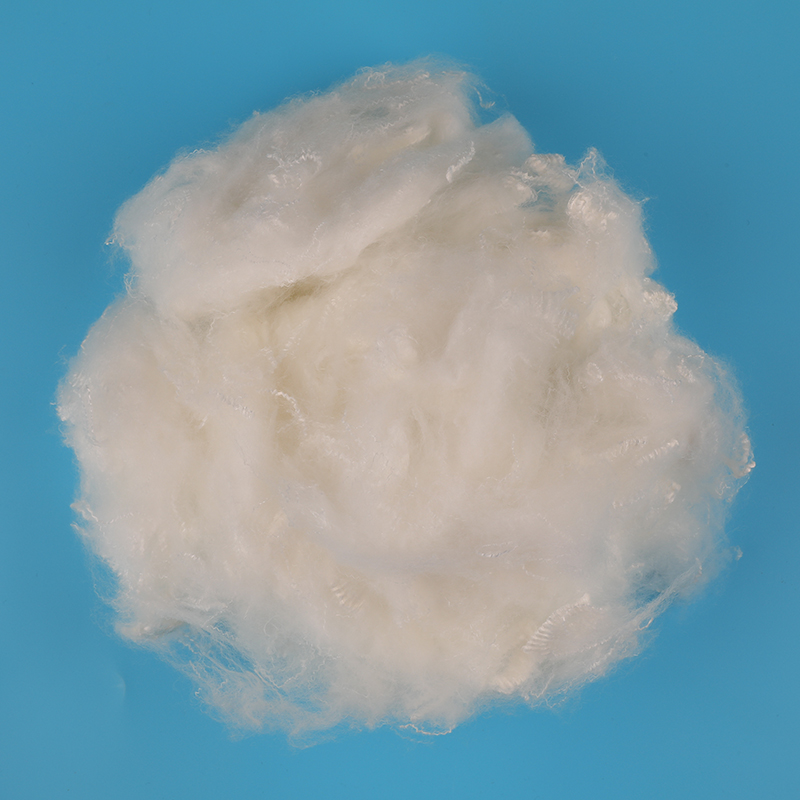
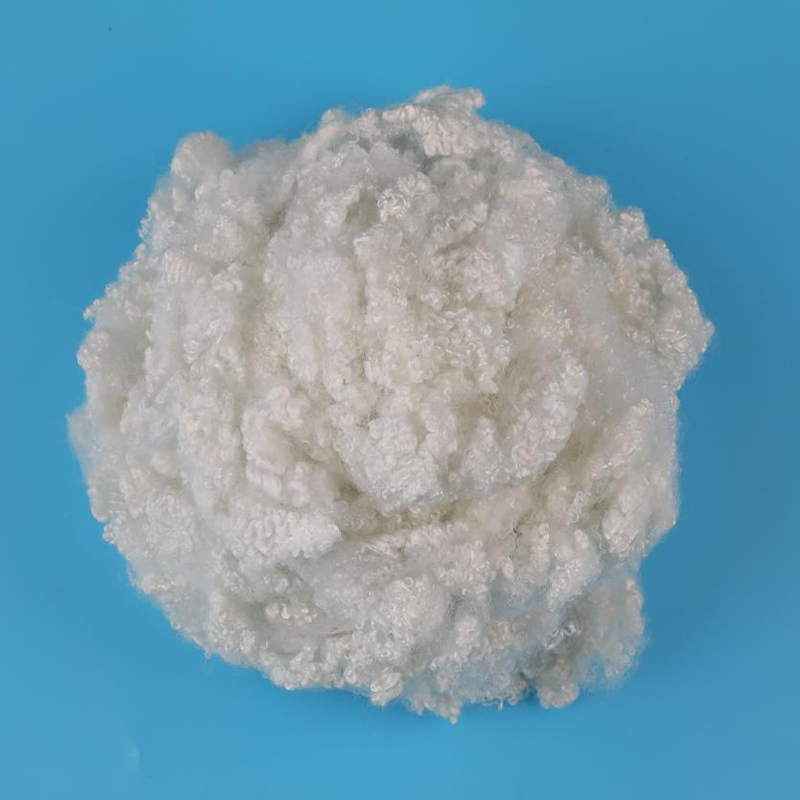
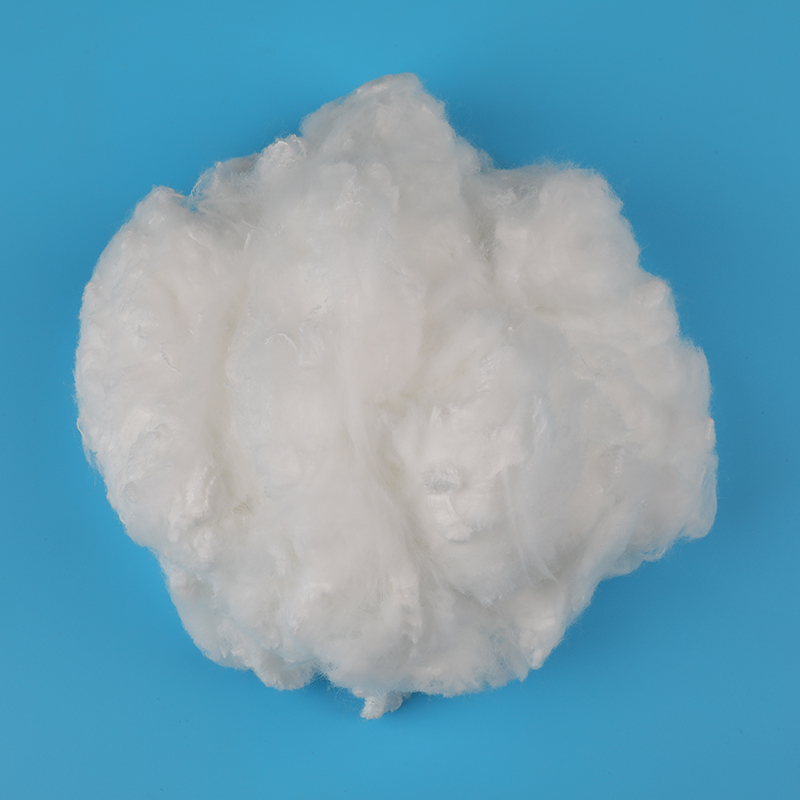 PE/PET Single Hydrophilic Whitening 1.5D×38 Bi-Component FiberInquiry Please fill in carefully, it will help us all!View Product →
The sheath polymer, not the fibre denier, sets the maximum usable bonding temperature on your line, and it also caps how fast you can run the calender.
| Fibre type | Sheath melting range | Core melting range | Practical bonding window | Relative line speed |
| PE/PET bicomponent, LDPE sheath | 105-115 C | 250-260 C | 130-145 C | Highest |
| PE/PP bicomponent, LDPE sheath | 105-115 C | 160-170 C | 120-138 C | High |
| PE/PET bicomponent, HDPE sheath | 125-135 C | 250-260 C | 140-158 C | Medium |
| Mono-PET staple, control grade | Not applicable | 250-260 C | 180-205 C | Lowest |
PE/PP bicomponent fibre looks attractive on price and bonds at temperatures 5 C to 10 C below PE/PET, but the polypropylene core softens near 165 C. Run a PE/PP web above roughly 140 C and the core begins to collapse, so the fabric loses loft and resilience even though the sheath has fused cleanly. Published characterization work on PE/PP bicomponent fibers documents the same core-softening behaviour under sustained calender heat. PE/PP therefore suits low-density, bulky, soft webs run at light calender pressure. PE/PET tolerates 150 C and above and delivers a stiffer, stronger, more dimensionally stable fabric for hygiene, filtration and geotextile structures.
Two further numbers matter almost as much as the polymer pair. Sheath-to-core ratio controls how much adhesive polymer is available: a 50/50 fibre gives generous bonding but a softer core, while a 30/70 fibre trades some bond strength for better recovery and loft. Finish level controls fluid management, and the same extrusion platform usually produces all three variants, so a supplier should be able to change finish without changing your fibre geometry.
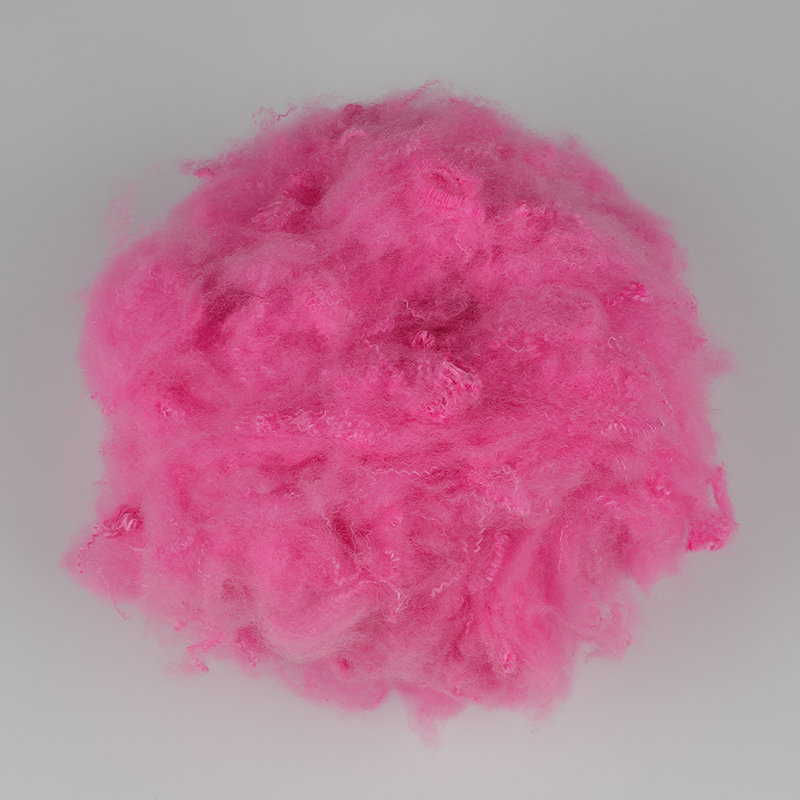
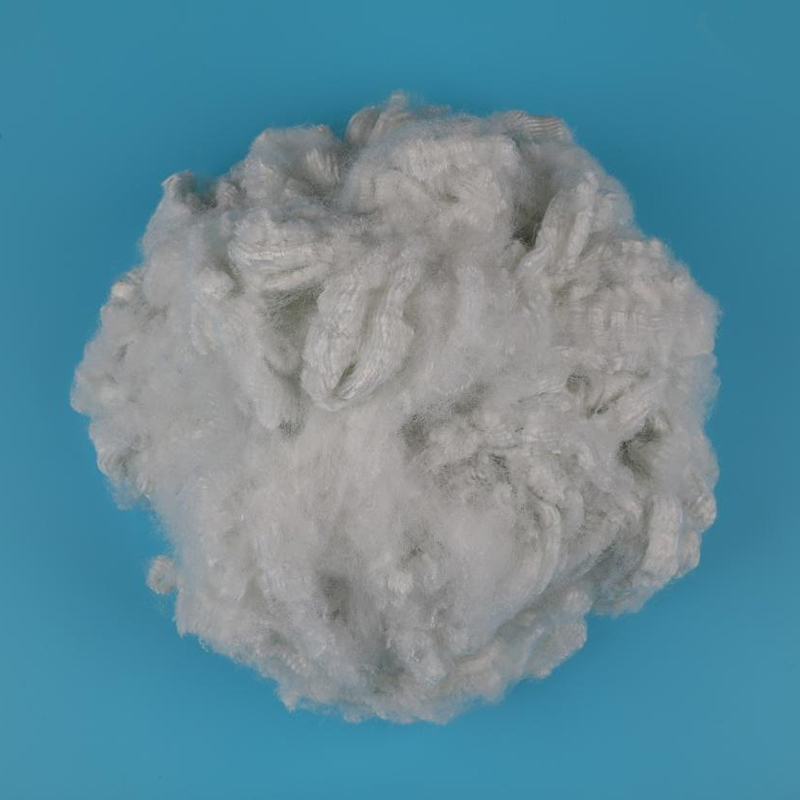
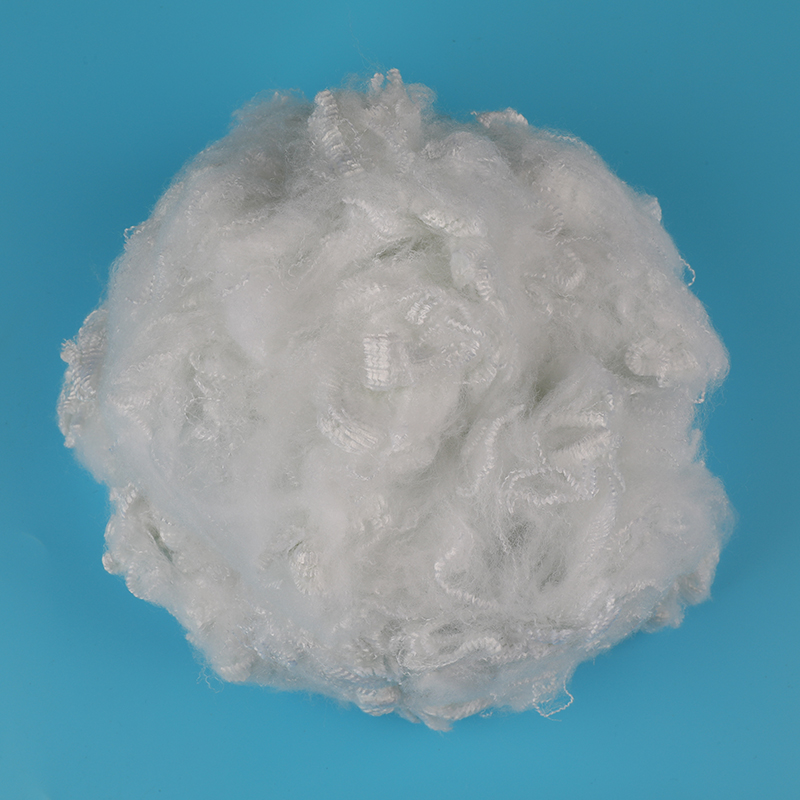
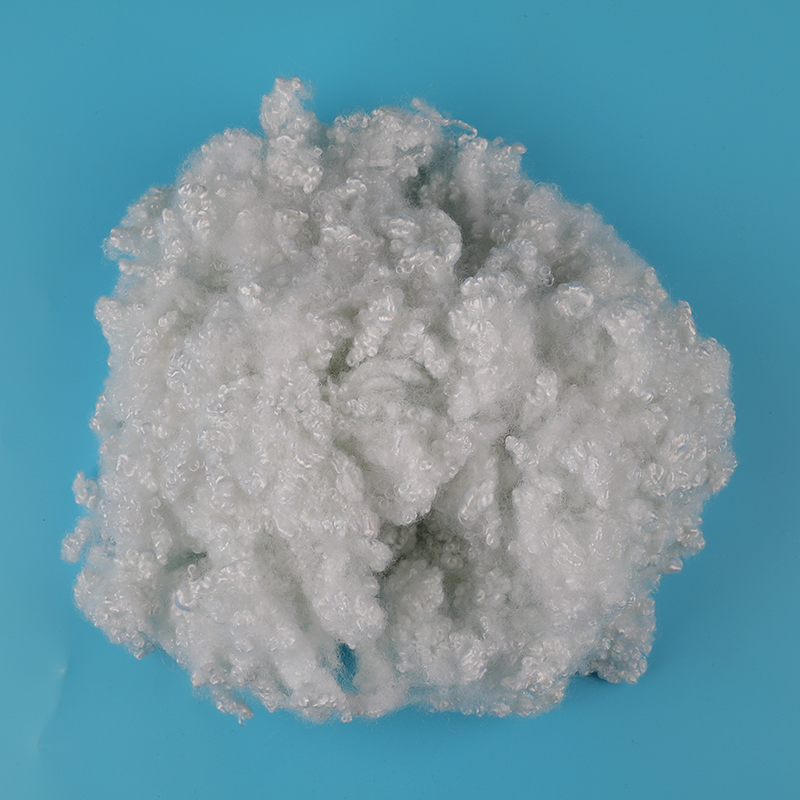
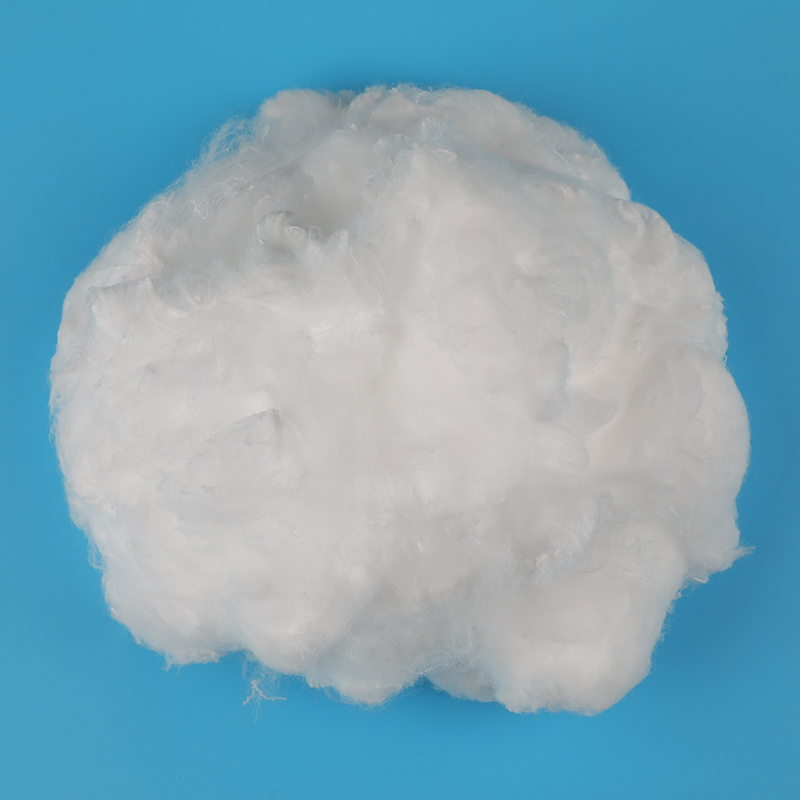 PE/PP Single Hydrophilic White 2D×38 Bi-Component FiberInquiry Please fill in carefully, it will help us all!View Product →
Converters moving from mono-PET to PE/PET bicomponent staple typically record four measurable changes within the first production run, and each one shows up in either the quality log or the energy meter.
Normalised nonwoven tensile index by fibre type and calender temperature
Specification errors cost more performance than polymer choice does, because denier, cut length and finish decide how evenly the web forms and how efficiently the sheath reaches the cross-over points.
| Target fabric | Recommended denier | Cut length | Finish |
| Light hygiene top sheet, 15-25 gsm | 1.5D-2D | 38 mm | Single hydrophilic |
| Carded thermal bond, 30-60 gsm | 2D-3D | 38 mm | Single or multi-hydrophilic |
| High loft padding, 80-200 gsm | 4D-6D | 51 mm | Multi-hydrophilic |
| Repellent barrier layer | 1.5D-2D | 38 mm | Water repellent |
| Whitened visible surface | 1.5D-2D | 38 mm | Whitening |
Smooth and engraved rolls transfer heat differently, and the required sheath melting point shifts with surface geometry and nip pressure.
LDPE sheaths cover 130 C to 145 C, HDPE sheaths cover 140 C to 158 C, and PE/PP suits lines capped below 140 C.
Finer denier gives more bond points per unit area and a smoother surface; coarser denier gives loft, bulk and better air permeability.
38 mm suits standard carded webs; 51 mm raises web tenacity and reduces fly but demands better opening and a wider carding setting.
Single hydrophilic, multi-hydrophilic and water repellent finishes all change fluid behaviour without changing fibre geometry, so test them after the mechanical specification is fixed.
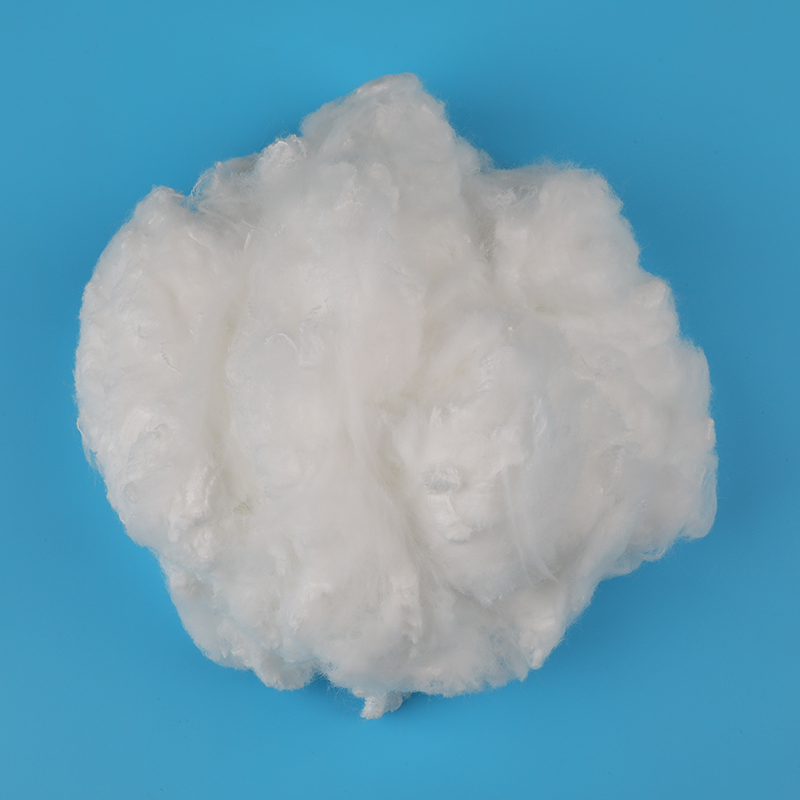
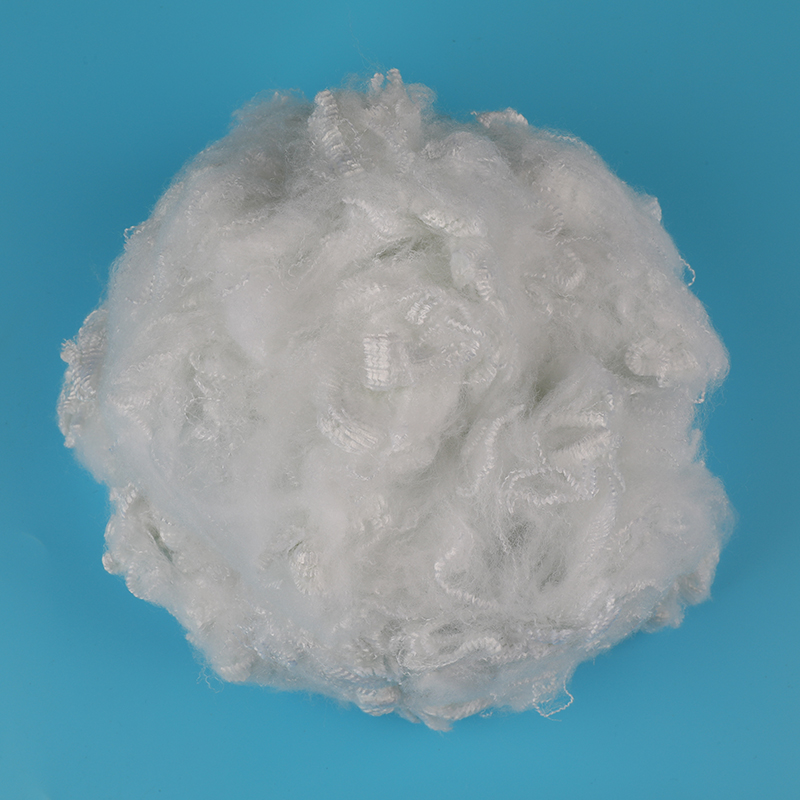
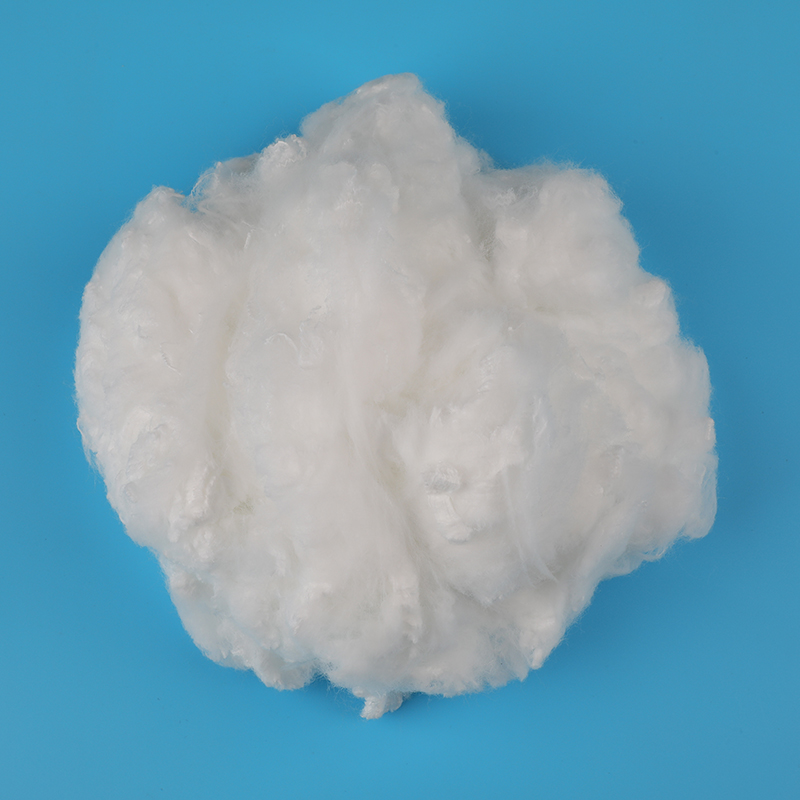 PE/PET Water-Repellent Whitening 1.5D×38 Bicomponent FiberInquiry Please fill in carefully, it will help us all!View Product →
Weak bonds in a bicomponent thermal bonded fabric almost always trace back to one of four causes: insufficient sheath content, calender temperature below the sheath melting range, dwell time that is too short, or a finish that interferes with sheath wetting.
Isolate the cause in order. Check sheath content on the certificate of analysis, then verify actual roll surface temperature with a contact probe rather than the machine readout, then confirm dwell time, and only then review the finish chemistry against the intended fluid behaviour.
Ask these six questions before you qualify a bicomponent fibre supplier, because each one maps directly to a failure mode on your line.
On the last point, capability matters. Jiaxing Fuda Chemical Fibre Factory, founded in 1995, runs two bicomponent fibre lines alongside six recycled polyester staple lines, with annual output of 40,000 tonnes of composite staple fibre and a PET bottle flake recycling plant in Huaibei rated at 50,000 tonnes per year. The full production and certification profile is set out on the company profile page. A supplier that controls both the composite extrusion and the recycled feedstock can hold sheath melting point and sheath ratio steady across large repeat orders, which is exactly what a calender line needs.
PE/PET bicomponent staple with a low-density polyethylene sheath bonds between 130 C and 145 C on a calender. HDPE-sheath grades need 140 C to 158 C, and PE/PP grades should stay below 140 C to protect the polypropylene core. All of these sit far below the 250 C to 260 C melting range of a polyester core.
No. They bond at similar temperatures, but the PP core softens near 165 C and collapses under sustained calender heat, which costs loft and resilience. PE/PET tolerates higher temperatures and delivers a stiffer, stronger fabric. Treat PE/PP as the choice for bulky low-density webs and PE/PET as the choice for strength and dimensional stability.
For 15 to 25 gsm hygiene top sheets use 1.5D to 2D at 38 mm. For 30 to 60 gsm carded thermal bond use 2D to 3D at 38 mm. For 80 to 200 gsm high loft padding use 4D to 6D at 51 mm. Finer denier raises bond point density; longer cut length raises web tenacity at the cost of tighter carding settings.
Yes, and the combination is common. A bicomponent fibre can be needle-punched into a mechanically entangled web and then through-air bonded or calender bonded to lock the structure. The sheath fuses at the entanglement points, which raises delamination resistance without adding binder chemistry or a separate adhesive web.
The performance gain from bicomponent fibers in thermal bonding nonwoven fabrics comes down to one decision made at the extruder: how much of the filament is adhesive and how much is structure. Get the sheath polymer, sheath ratio, denier, cut length and finish aligned with your calender, and the bonding window opens, throughput rises, and the finished fabric holds its strength at lower energy cost.
Your email address will not be published. Required fields are marked *

Focusing to the research and production of differentiated fiber. Applying recycle-material processing scientifically.
 86-18457317878
Zhulinjizhen, Xinfeng Town, Jiaxing City, Zhejiang Province
Copyright @ 2023 Jiaxing Fuda Chemical Fibre Factory All rights reserved
Polyester Staple Fiber Manufacturers

Friendship link - Anhui Fulin Environmental Protection Technology Co., Ltd.:https://www.ahflhb.com