en
en  English
 中文简体
中文简体 Español
 عربى
عربى
Product Consultation
Your email address will not be published. Required fields are marked *
A flocking plant in eastern China rejected a full batch of dashboard trim panels because backlighting exposed bare adhesive beads along the edges and the pile looked washed out. Line voltage, flocking distance, and paste viscosity were all inside process limits. The variable that had been overlooked was tow denier: the part was designed for 3D nylon 66 fiber, but the production run used a 4.5D tow carried over from the previous season.
Tow denier determines flocking density and surface coverage more directly than any other single specification, because it sets the maximum number of fibers that a given mass of tow can deliver into the adhesive layer. Choose the right denier and the surface reads dense, opaque and smooth; choose the wrong one and no amount of line tuning will compensate.
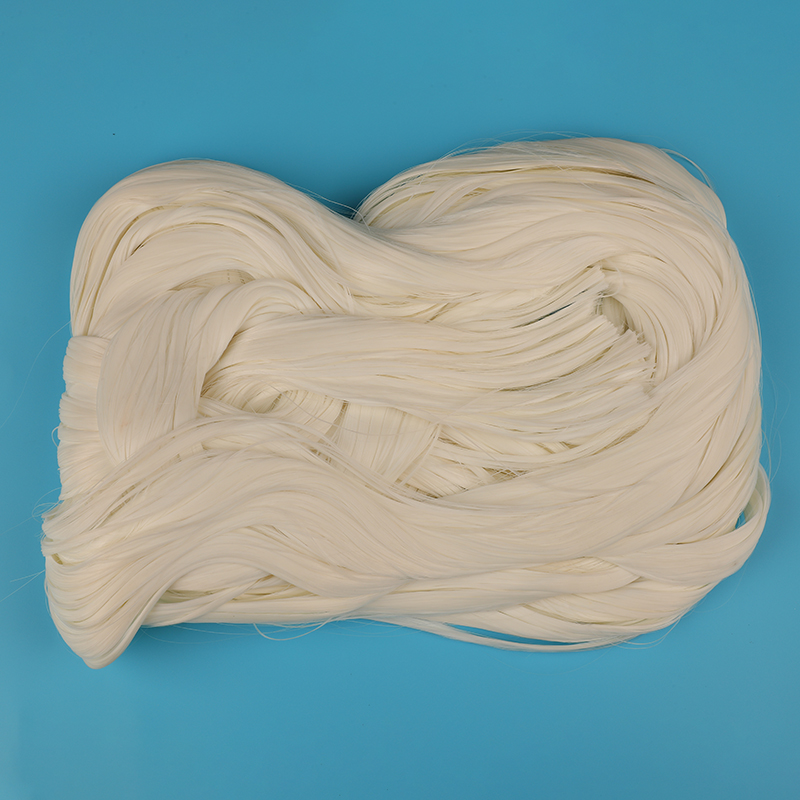
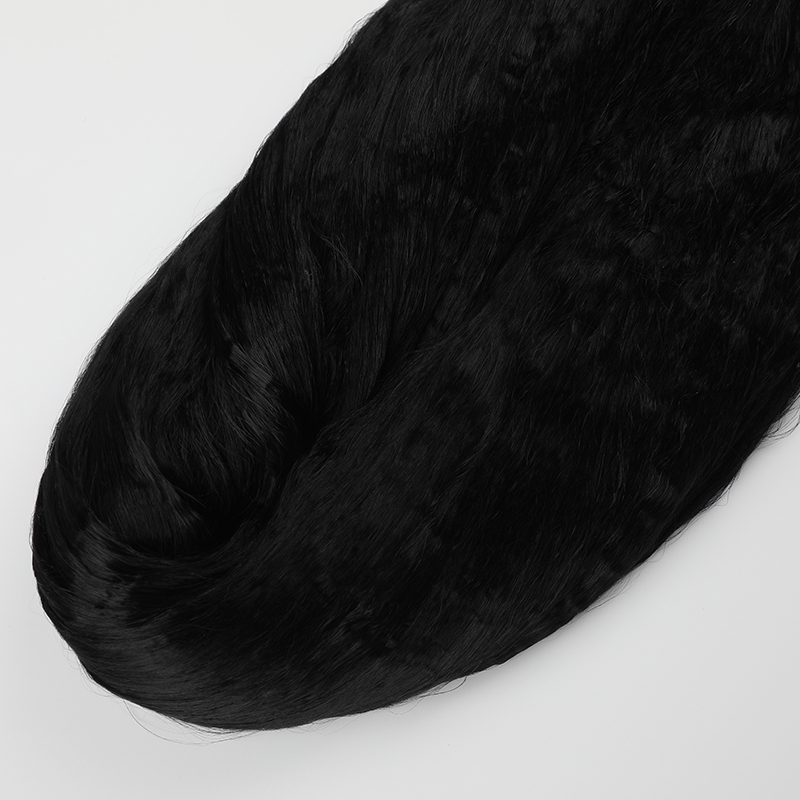
Tow denier is the standard measurement of filament fineness for flocking tow: one denier equals one gram of filament per 9,000 meters. A lower number means a finer fiber; a higher number means a coarser and heavier fiber. In electrostatic flocking, tow is supplied as a continuous bundle of nylon 6, nylon 66, or modified polyester filaments, and the denier of every filament is fixed during fiber spinning.
Jiaxing Fuda Chemical Fibre Factory produces electrostatic flocking tow across a range from 1.2D to 15D, in raw-black, glossy and semigloss finishes. Because denier cannot be corrected after the tow leaves the spinning line, it is a purchasing decision, not a process adjustment.
The practical consequence of denier is the length of fiber available per unit mass. Because denier is defined per 9,000 meters, meters per gram equals 9,000 divided by the denier value. A 1.2D tow delivers 7,500 meters per gram; a 4.5D tow delivers 2,000; and a 15D tow delivers only 600. For the same pile weight, a fine tow puts many more fiber ends into the adhesive bed.
Finer tow denier raises the ceiling on achievable flocking density at the same mass loading. Flocking density is a count, not a weight. If the target pile calls for 250 grams per square meter of fiber, a 3D tow supplies roughly twice as many fibers as a 6D tow at that identical pile weight.
Because fiber count per gram is inversely proportional to denier, every 10 percent reduction in denier increases the number of fibers per gram by about 11 percent. For a 1 mm flock length, the theoretical fiber count per gram equals 9,000,000 divided by the denier.
Pile height changes how that density reads. A short pile of 0.5 to 1.0 mm concentrates the same number of fibers in a smaller volume, so the surface looks denser and smoother. A pile above 2 mm needs either a finer denier or a higher mass loading to avoid an open, see-through appearance.
Surface coverage is the visible result of density, and denier shapes it through three mechanisms: packing, bending stiffness and shadowing. Fine fibers pack tightly, conceal the substrate and produce a smooth velvet hand. Coarse fibers are stiffer, wrap less completely around edges and leave larger gaps between neighbors, so the substrate shows through even at moderate density.
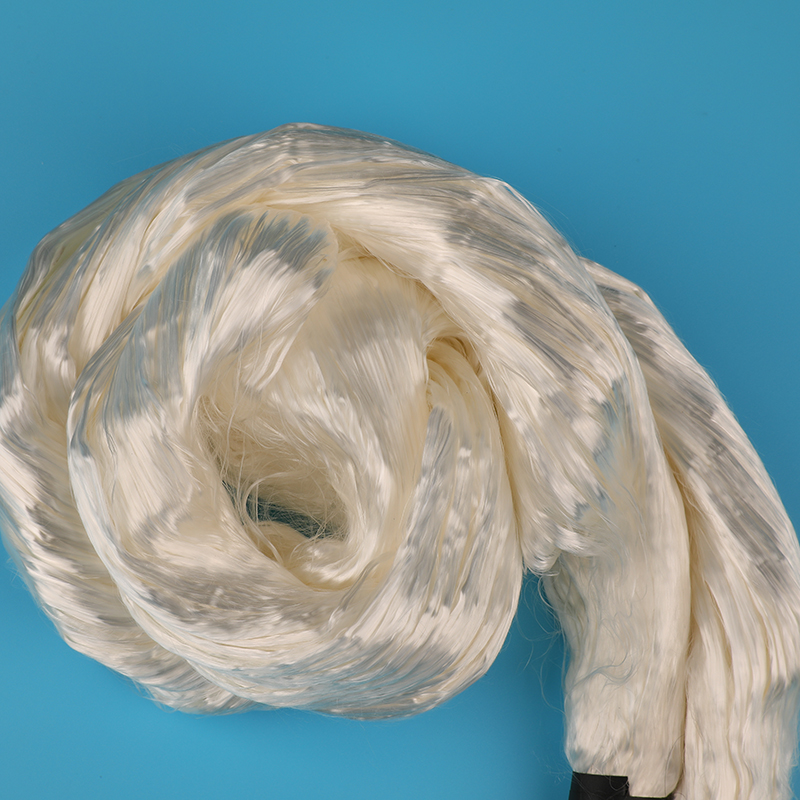 Modified Polyester Native Glossy 1.2D Flocking TowInquiry Please fill in carefully, it will help us all!View Product →
Adhesive interaction matters because fiber mass drives paste penetration. Fine fibers create a dense capillary structure that lifts adhesive off the substrate quickly, so a thin coat is enough. Coarse fibers leave an open network that allows more paste migration, which is why coarse flocking parts often need multiple passes or a thicker adhesive layer to survive rub testing.
In production trials across customer lines, a 1.2D modified polyester tow reached opaque coverage at roughly 180 to 220 grams per square meter, while a 15D nylon tow needed 400 to 500 grams for similar substrate hiding and still read as stiffer and more bristle-like.
The correct tow denier follows the required hand feel, wear resistance and part geometry. Applications that need a smooth, dense surface use fine denier; applications that need stiffness and abrasion resistance use coarse denier.
| Application | Recommended denier | Fiber type | Coverage behavior |
| Apparel suede, microfiber napping | 1.2D | Modified polyester | Dense, soft, fully opaque |
| Automotive interior trim | 3D | Nylon 66 | Balanced density, good abrasion resistance |
| General upholstery | 4.5D | Nylon 6 | Uniform coverage, open texture |
| Brush, industrial wiping | 15D | Nylon 6 | Stiff, spaced, wear-resistant |
Automotive flocking most commonly uses 3D nylon 66 because it balances pile density with the stiffness needed to survive repeated touch and light abrasion. Parts with sharp radii or deep draws benefit from a finer denier, because fine fibers follow contours more easily and leave fewer shadowed areas along the form line. The full range is covered by Jiaxing Fuda's electrostatic flocking tow series, which includes both nylon and modified polyester variants.
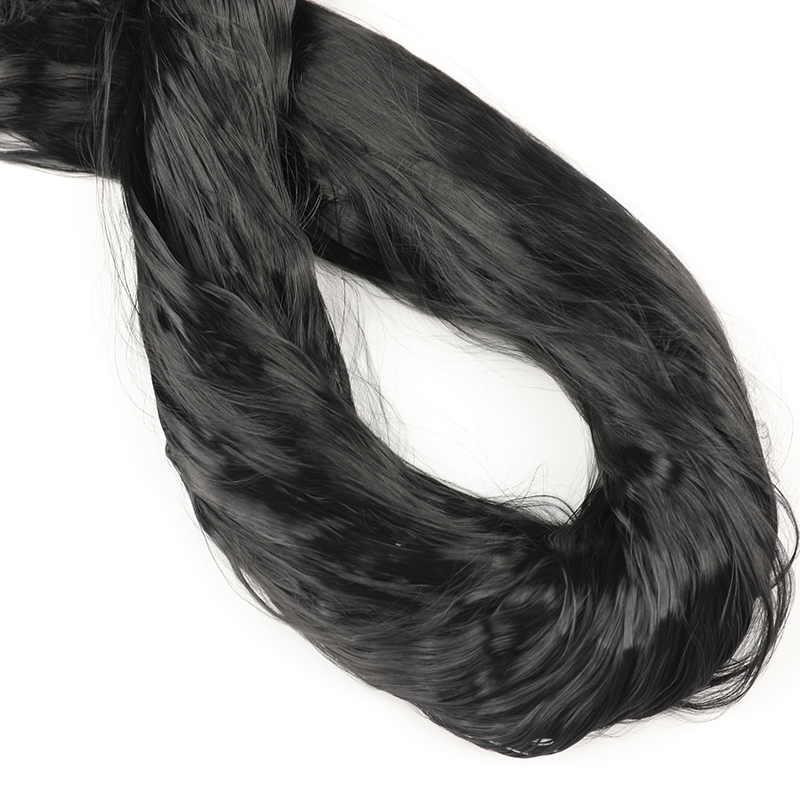 Raw Black Glossy 3D Flocked Tow Nylon 66Inquiry Please fill in carefully, it will help us all!View Product →
 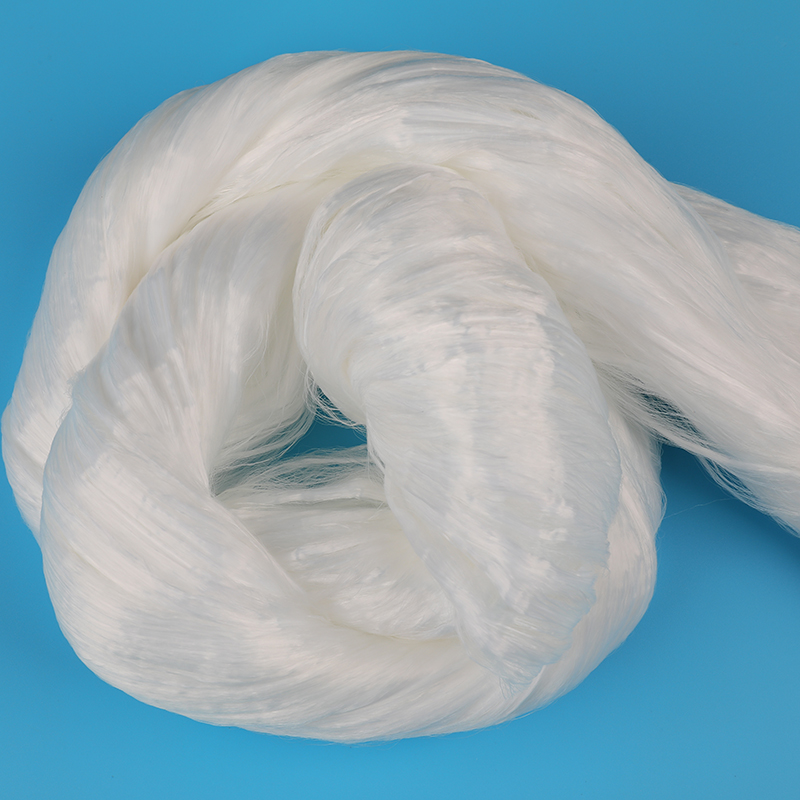 Native Semi-Gloss 4.5D Flocked Tow Nylon 6Inquiry Please fill in carefully, it will help us all!View Product →
Consistent denier across the full tow length matters as much as the average value, because density variation on a finished panel is usually a denier variation in the tow. If a 3D tow drifts to 3.4D within one lot, visible banding appears: areas of higher density next to areas of lower coverage, especially on flat panels.
Reliable suppliers control spinning parameters and test every lot. Recycled content adds another variable: GRS-certified recycled polyester and recycled nylon tows can hold the same denier as virgin material only when the polymer is properly filtered and re-polymerised, so ask for the lot-specific denier report before accepting a recycled product.
Jiaxing Fuda Chemical Fibre Factory has produced electrostatic flocking tow since 1995, with about 10,000 tonnes of annual flocking tow capacity within its total output of more than 160,000 tonnes. Its production history and scale are a practical part of the denier decision, because large-lot consistency reduces the batch-to-batch drift that causes coverage defects.
Request these three items from any tow supplier before ordering:
At equal pile mass, yes. Higher denier delivers fewer fibers per gram, so the fiber count per square centimeter drops. You can compensate by raising pile weight, but the surface will be stiffer, more open and more abrasive than a fine-denier surface at the same coverage.
3D nylon 66 is the most common starting point for interior trim because it balances surface density, abrasion resistance and the ability to follow curved parts. Softer-touch surfaces use 1.2D to 2.2D tows, while under-hood or non-visible wear areas can run coarser deniers.
Yes, at the same denier. GRS-certified recycled polyester tow produces the same fibers per gram as virgin material, so density is equivalent. The practical differences appear in thermal shrinkage and dye uptake, not in fiber count, and those differences can be managed with process adjustments.
Flock a sample card at the intended pile weight, then count the fibers in a 1 by 1 centimeter square under magnification and compare it with the theoretical value of 9,000,000 divided by the denier for a 1 mm flock. If the measured count falls below 80 to 85 percent of theoretical, review line losses before changing denier.
Prevent Wettability Drift During Bi-Component Fiber Carding: A Mill Guide
2026-09-24
Single-Hydrophilic vs Multi-Hydrophilic Bicomponent Fiber: Which Finish to Choose
2026-09-30Your email address will not be published. Required fields are marked *

Focusing to the research and production of differentiated fiber. Applying recycle-material processing scientifically.
 86-18457317878
Zhulinjizhen, Xinfeng Town, Jiaxing City, Zhejiang Province
Copyright @ 2023 Jiaxing Fuda Chemical Fibre Factory All rights reserved
Polyester Staple Fiber Manufacturers

Friendship link - Anhui Fulin Environmental Protection Technology Co., Ltd.:https://www.ahflhb.com