en
en  English
 中文简体
中文简体 Español
 عربى
عربى

Product Consultation
Your email address will not be published. Required fields are marked *
Wettability drift is driven by three mechanisms: spin finish migration into the fiber, humidity-driven displacement of finish molecules, and static charge redistribution on the fiber surface.
Bi-component fibers carry a dilute finish layer, typically 0.15% to 0.45% by weight, that provides lubricity, cohesion, and antistatic protection. That layer is not permanently fixed. Over time, finish components migrate into the polymer matrix, particularly in PE/PET sheath-core and side-by-side structures where polyethylene presents a low-energy surface. A mill storage study measured finish content dropping from 0.31% to 0.22% on PE sheath fiber after four weeks at 30°C, enough to shift fiber-to-metal friction coefficients by nearly 25%.
Humidity is the second variable. When relative humidity falls below 45%, the hydrophilic components of the finish cannot bind enough water vapor to neutralize triboelectric charge, so static builds and disturbs the carding web. When humidity exceeds 65%, condensed moisture competes with finish molecules for the fiber surface, causing finish molecules to aggregate into droplets and leave bare patches.
Static charge redistribution acts as a multiplier. Charged fiber surfaces attract polar dust, oligomers, and degraded finish fragments. These contaminants effectively block the finish and reduce wettability further.
| Trigger | Mechanism | First Symptom |
| Finish migration | Finish diffuses into the polymer bulk, especially in PE sheaths | Static cling and wrap on licker-in |
| Relative humidity below 45% | Finish cannot hold enough water film to dissipate charge | Web curling and edge splitting |
| Relative humidity above 65% | Condensed water displaces finish into droplets | Uneven bonding, press-through spots |
| Static contamination | Charged surface attracts dust, oligomers, degraded finish fragments | Neps, fiber wraps, periodic web thinning |
The fastest reliable indicators are finish content by solvent extraction, static decay time, and contact angle, checked against a rolling baseline rather than a single pass-fail limit.
Finish content by solvent extraction is the most direct measurement. Take grab samples from three positions across the card at shift start and every two hours afterward. A change of more than 0.04 percentage points from the lot certificate triggers investigation. Static decay time is the second signal: a charged-plate or Faraday pail reading above 5 seconds at 55% RH means the antistatic system is failing. Contact angle is the earliest warning; a rise from 65 degrees to 78 degrees precedes visible carding symptoms by roughly 20 minutes.
Stabilizing the carding environment at 22-25°C and 50-60% RH, combined with tighter bale conditioning and controlled finish replenishment, eliminates most wettability drift before it affects the web.
Finish level is a two-sided risk. Under-dosed fiber breaks and generates neps; over-dosed fiber wraps the licker-in and weakens thermal bonds. The useful operating window for most PE/PET and PE/PP bi-component staple is narrow, and the comparison below shows why both failure modes matter.
Specify the finish type, finish target as a percentage by weight, and storage tolerance in the fiber purchase contract, and verify each lot's certificate of analysis before bales reach the card room. Jiaxing Fuda Chemical Fibre Factory documents finish type and denier for each grade in its bi-component fiber range, so a mill can compare declared surface treatment against carding conditions before ordering.
Not all bi-component fibers behave the same under carding. A single-hydrophilic finish designed for thermal bonding will drift differently from a multi-hydrophilic finish intended for wet-laid or spunlace lines. Water-repellent grades are formulated with different friction modifiers that release charge faster but migrate sooner under heat. That is why the finish chemistry itself belongs in the specification, not just the denier and cut length.
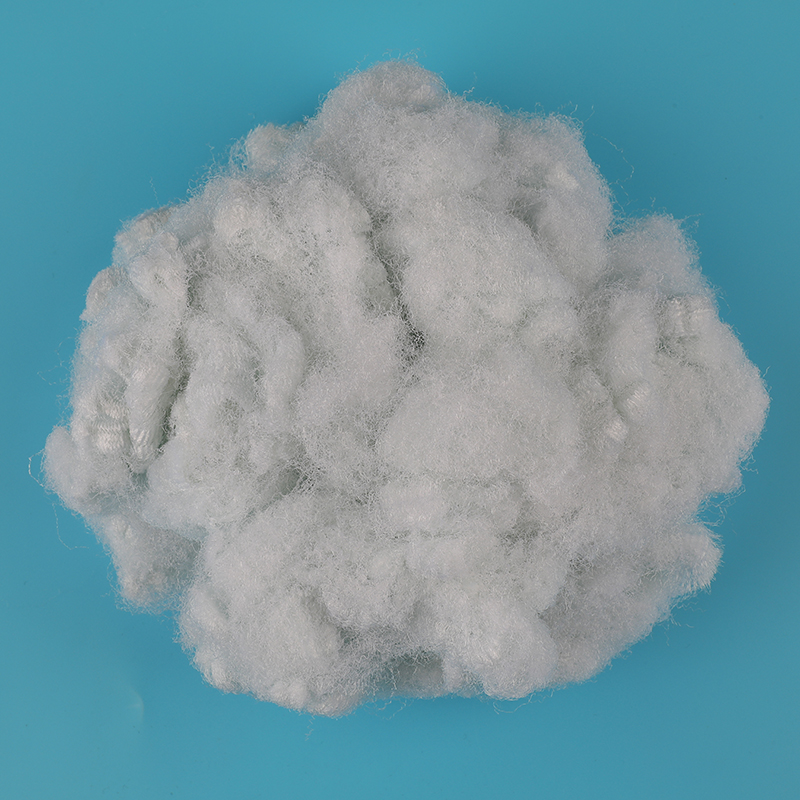
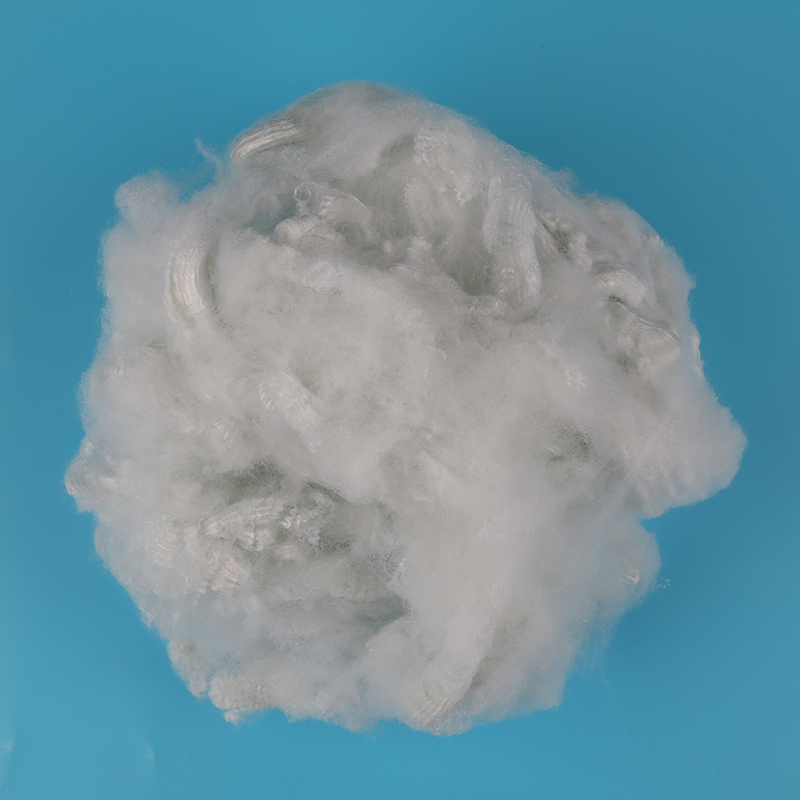
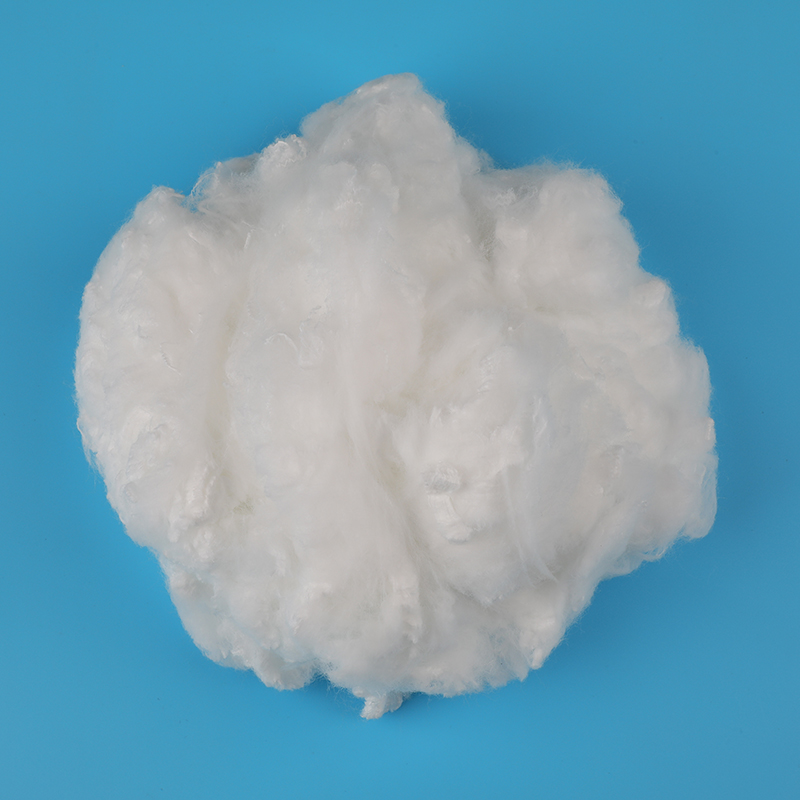 PE/PET Single Hydrophilic Whitening Bi-Component Fiber 1.5D×38This single-hydrophilic PE/PET grade is suited for thermal bonding lines, where its finish chemistry affects carding behavior and static control. Reviewing it alongside your processing conditions helps confirm the right finish choice.View Product →
Multi-hydrophilic PE/PET grades carry a higher surfactant load, which shortens wet-out time in spunlace but makes them more sensitive to humidity above 65%. PE/PP grades, with lower surface energy, migrate finish more slowly but lose antistatic performance faster in dry air. Reviewing the bi-component fiber series side by side with your carding conditions is the fastest way to match finish chemistry to the line.
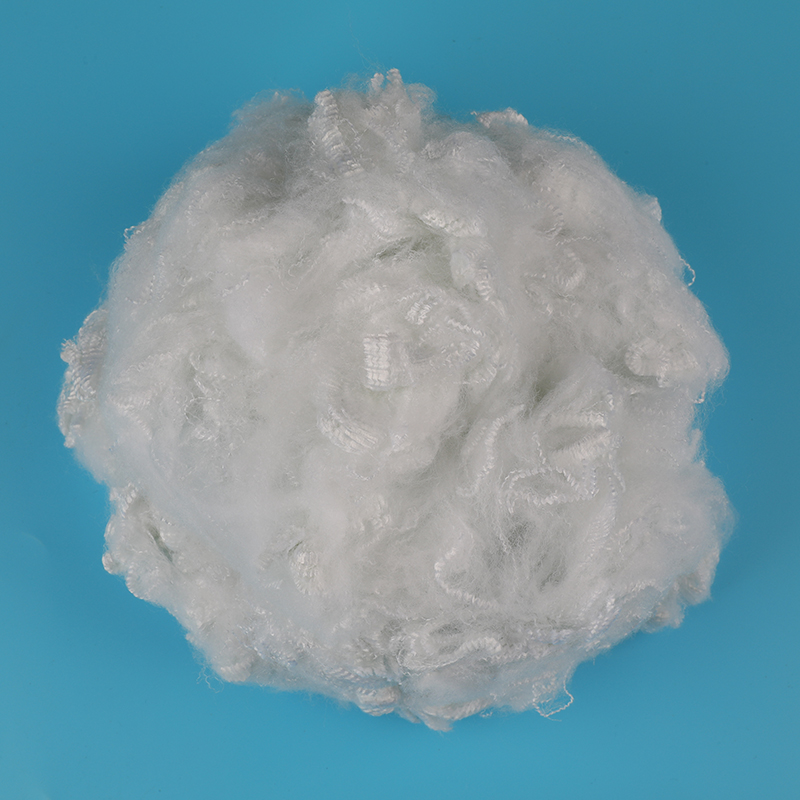
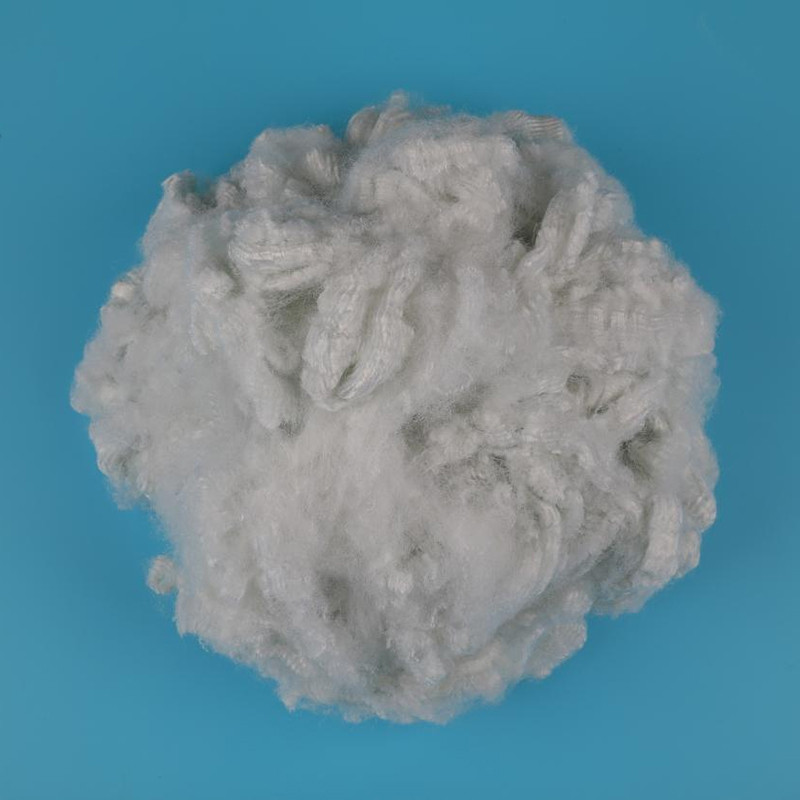
PE/PET Multi-Hydrophilic Whitening Bi-Component Fiber 1.5D×38Designed with a higher surfactant load for faster wet-out in spunlace, this multi-hydrophilic grade shortens processing time but requires humidity control above 65% to maintain consistent performance in your line.View Product →
Water-repellent PE/PET grades resist wetting by design, but their finish migrates faster under heat, so they require the tightest storage control of any bi-component grade. Use them only when downstream bonding can tolerate a 0.05 percentage point drop over a production run.
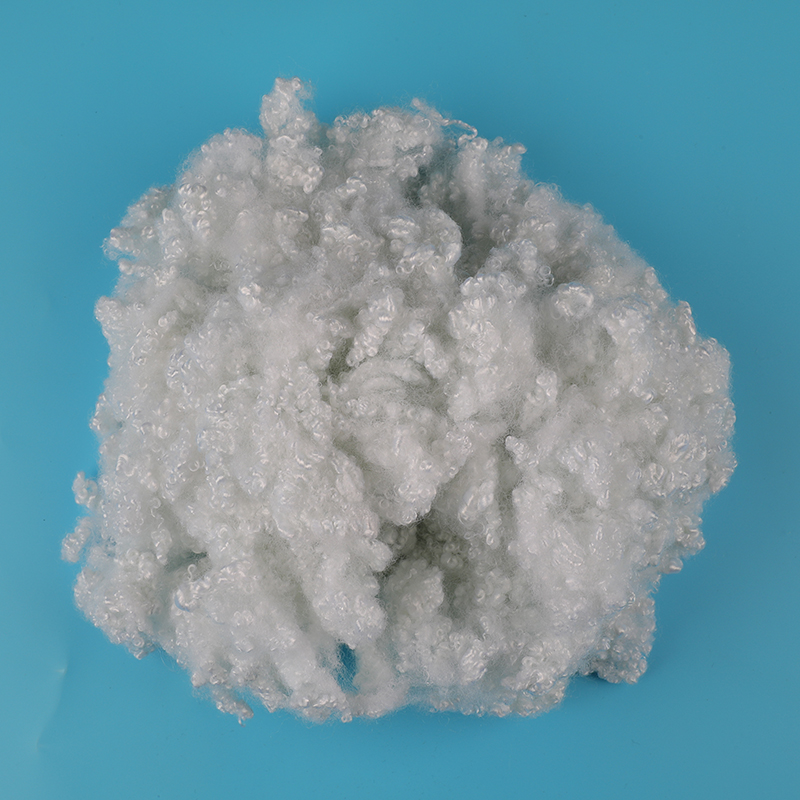
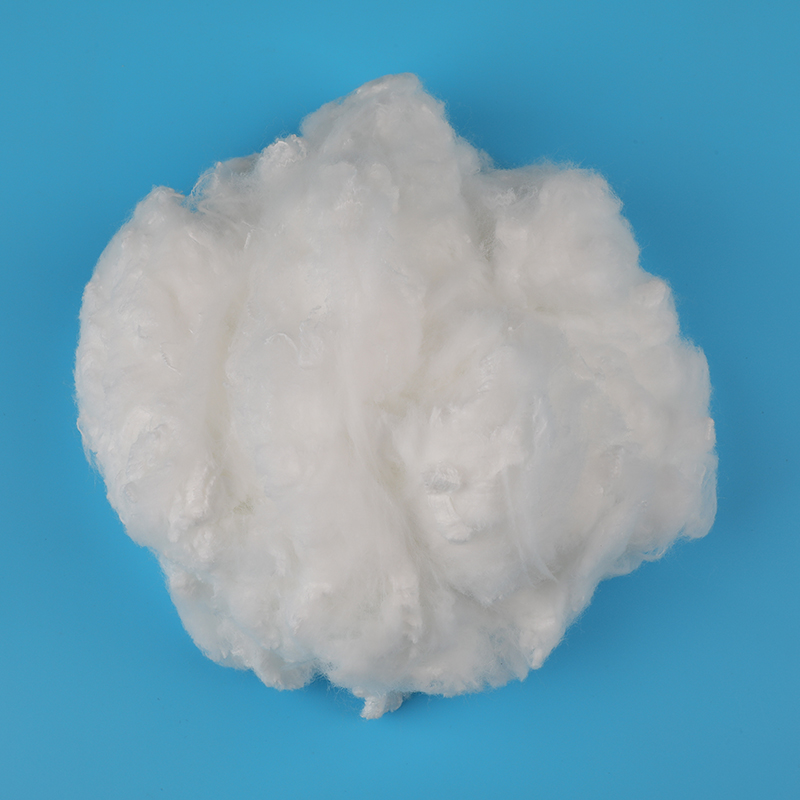 PE/PET Water-Repellent Whitening Bi-Component Fiber 1.5D×38This water-repellent PE/PET bicomponent fiber resists wetting but has a finish that migrates faster under heat, so storage control is critical. Use it when downstream bonding tolerates slight finish variation.View Product →
When web quality degrades unexpectedly, work through the protocol in this order: static decay, finish extraction, humidity, mechanical condition. Do not change the blend ratio or machine settings before the finish check is complete.
Drift can become visible within a single shift. Finish content fell from 0.30% to below 0.22% in 4 to 8 hours in mill trials when relative humidity dropped from 55% to 35% and bale temperature stayed near 30°C. The rate depends on finish chemistry, fiber surface energy, and storage history.
Most nonwoven processors run PE/PET bi-component fiber at 0.20% to 0.35% finish by weight. Below 0.20%, static and fiber breakage rise sharply; above 0.40%, licker-in wrapping and bonding defects dominate.
Yes. Bales stored above 30°C or above 65% RH for more than two weeks can lose enough finish for drift to appear in the first hour of carding. Wrap bales at 20-28°C and process them within one month of delivery.
Not exactly. PE/PP bi-component fiber has lower surface energy, so finish migrates more slowly, but antistatic performance drops faster at low humidity. PE/PET grades drift faster under heat, and water-repellent PE/PET is the most sensitive to humidity cycles.
Your email address will not be published. Required fields are marked *

Focusing to the research and production of differentiated fiber. Applying recycle-material processing scientifically.
 86-18457317878
Zhulinjizhen, Xinfeng Town, Jiaxing City, Zhejiang Province
Copyright @ 2023 Jiaxing Fuda Chemical Fibre Factory All rights reserved
Polyester Staple Fiber Manufacturers

Friendship link - Anhui Fulin Environmental Protection Technology Co., Ltd.:https://www.ahflhb.com