en
en  English
 中文简体
中文简体 Español
 عربى
عربى
Product Consultation
Your email address will not be published. Required fields are marked *
When evaluating textiles, the denier system provides the most straightforward and universally understood metric for assessing exactly what you are getting. A higher denier number consistently translates to a thicker, heavier, and more robust individual fiber, whereas a lower denier indicates a finer, lighter, and more delicate strand. Understanding this single metric allows manufacturers and consumers to accurately predict how a fabric will perform in real-world conditions, whether it needs to withstand extreme abrasion or feel weightless against the skin. Rather than relying on subjective descriptions like "heavy-duty" or "sheer," the denier measurement removes ambiguity and provides a concrete basis for material selection across all sectors of the textile industry.
To truly leverage the denier system, one must understand its precise scientific definition. Denier is a unit of measurement for the linear mass density of fibers. It is defined as the mass in grams per 9,000 meters of the fiber. Therefore, if you were to take a single, continuous strand of fiber and stretch it out to a length of 9,000 meters, and that strand weighed exactly one gram, it would be classified as a one-denier fiber. If that same 9,000-meter length weighed ten grams, it would be a ten-denier fiber.
This measurement is strictly tied to the individual fiber or filament, not the entire yarn or the finished fabric. This distinction is critical. A finished fabric's overall weight is typically measured in grams per square meter (GSM), which accounts for the density of the weave, the number of yarns used, and any finishing treatments. Denier, conversely, isolates the measurement to the raw building block of the textile. Because denier measures the thickness of the individual filament, it is the most accurate predictor of a fabric's fundamental structural integrity.
The denier of a fiber acts as a primary control dial for a fabric's physical properties. By altering the denier, textile engineers can precisely tune a material to meet highly specific performance criteria. The relationship between denier and performance manifests in several distinct ways that directly impact the end user.
The most prominent correlation is between denier and durability. High-denier fibers possess a greater cross-sectional area, meaning there is simply more physical material to tear, abrade, or puncture. For applications involving friction, heavy loads, or sharp edges, high-denier fibers are non-negotiable. A heavy-duty backpack, for instance, relies on high-denier fibers to ensure that the fabric does not fail when subjected to the constant scraping against rocks or the weight of dense gear.
Conversely, low-denier fibers excel in applications where the fabric must drape, flow, or feel soft against the skin. Because the individual filaments are incredibly fine, they can bend and flex easily without creating stiffness. Fabrics constructed from low-denier fibers exhibit a superior drape and a silky hand feel, making them ideal for intimate apparel, fine dress goods, and lightweight performance wear where restriction of movement is unacceptable.
Denier also plays a complex role in thermal regulation. Very low-denier fibers can be packed tightly together, trapping microscopic pockets of air that act as exceptional insulators without adding bulk. This is the principle behind advanced synthetic insulation used in cold-weather gear. On the other hand, high-denier fibers create fabrics with larger interstitial spaces, promoting high air permeability and breathability, which is desirable in heavy canvas or awning materials.
The textile industry generally categorizes fibers into distinct classes based on their denier ranges. These categories help streamline communication between designers, manufacturers, and suppliers, ensuring that the correct material is selected for a given application.
| Fiber Category | Denier Range | Primary Characteristics |
|---|---|---|
| Microfiber | Below 1.0 | Extremely fine, excellent drape, high moisture wicking |
| Fine Fiber | 1.0 to 3.0 | Soft hand feel, smooth appearance, standard apparel use |
| Medium Fiber | 3.0 to 15.0 | Balanced durability and flexibility, workwear, activewear |
| Heavy Fiber | Above 15.0 | High abrasion resistance, stiff, industrial and tactical use |
A common source of confusion in the textile industry is the difference between denier and other measurements of yarn or fabric weight. Clarifying these distinctions is essential for accurate material specification.
Both denier and tex measure linear mass density, but they use different base lengths. While denier uses 9,000 meters, tex uses 1,000 meters. Tex is part of the International System of Units (SI), making it the standard in many scientific and international trade contexts. To convert denier to tex, you simply divide the denier value by nine. Although tex is scientifically standardized, denier remains the dominant unit in the global synthetic fiber and apparel industries due to deep-rooted historical usage.
Thread count measures the number of threads woven together in a square inch, encompassing both the horizontal (weft) and vertical (warp) threads. Thread count says nothing about the thickness or quality of the individual threads themselves. A high thread count sheet made from thick, low-quality fibers will feel coarse and heavy, whereas a moderate thread count sheet made from extremely fine, low-denier fibers will feel exceptionally soft and luxurious. Denier focuses strictly on the quality and thickness of the ingredient, while thread count merely describes how densely those ingredients are packed together.
GSM measures the weight of a finished piece of fabric per square meter. GSM is heavily influenced by the fabric's construction—whether it is a loose knit, a tight weave, or a thick pile. A low-denier fabric can still have a high GSM if it is densely woven or brushed to create a fleece texture. GSM is excellent for determining how heavy a final garment or curtain will feel, but denier is required to understand the fundamental strength and nature of the filaments that make up that garment.
The selection of denier is not arbitrary; it is a highly calculated decision that dictates the success or failure of a product in its intended environment. Different industries have vastly different requirements, leading to extreme variations in the denier of fibers utilized.
In the outdoor industry, weight is the enemy, but durability cannot be sacrificed. Manufacturers often employ a hybrid approach. A lightweight rain jacket might use a high-denier yarn in high-wear areas like the shoulders and elbows, while using low-denier yarns across the main body panels to minimize overall weight. Ultralight tents and sleeping bags frequently rely on extremely low-denier silnylon or specialized polyesters to achieve pack weights that are manageable for long-distance hikers, accepting that the user must treat the gear with greater care to prevent tears.
When textiles leave the human body and enter the industrial sphere, the denier shifts dramatically toward the heavy end of the spectrum. Geotextiles used in road stabilization, erosion control, and landfill lining require fibers that can withstand immense geological pressures, chemical exposure, and UV degradation. These materials utilize extremely high-denier fibers woven into robust meshes. Similarly, industrial filtration systems rely on specific denier ranges to trap particulates of certain sizes without clogging or tearing under fluid pressure. In industrial contexts, high-denier fibers are selected not for comfort, but for their absolute resistance to mechanical failure.
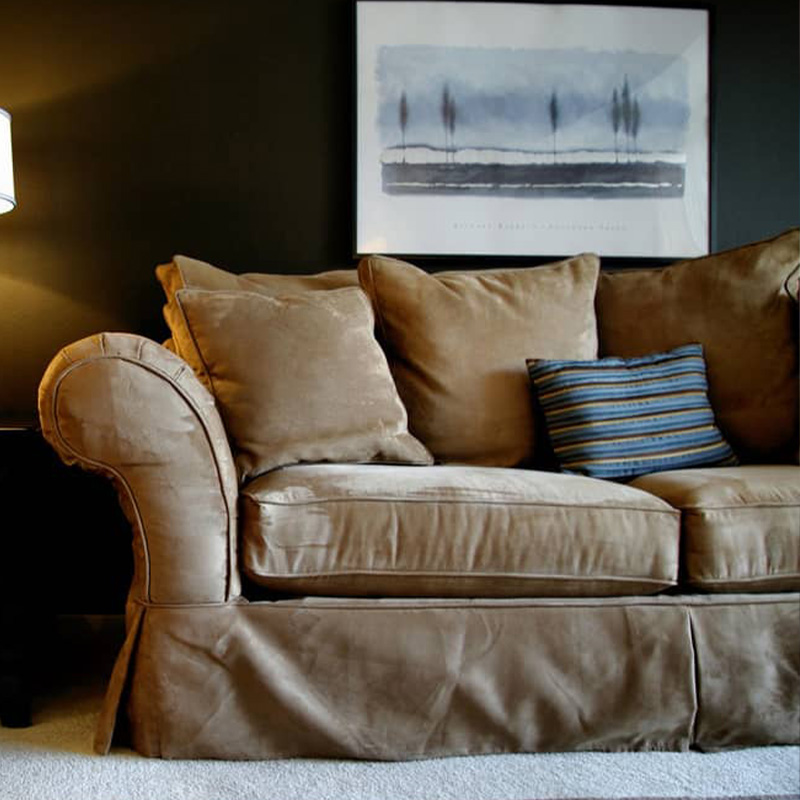
Upholstery fabrics must endure constant compression, friction from clothing, and exposure to sunlight and spills. Consequently, medium to heavy-denier fibers are the standard for sofas, dining chairs, and automotive interiors. A typical upholstery yarn might consist of dozens of individual filaments in the medium-denier range, spun together to create a total yarn denier that provides the necessary structural bulk. The use of appropriate denier ensures that the fabric does not pill excessively, thin out at high-contact points, or burst at the seams when sat upon repeatedly.
Moisture management is one of the most critical performance metrics in modern activewear, and denier plays an intricate role in how a fabric handles sweat. It is a common misconception that lower denier inherently means better moisture wicking. The reality is governed by capillary action and surface area.
When individual fibers are extremely fine, as in microfibers, a given volume of yarn contains significantly more individual filaments than a yarn made of thicker fibers. This creates a massive increase in the total surface area within the fabric. When moisture hits the fabric, this expanded surface area provides more pathways for capillary action to pull moisture away from the skin and spread it across the outer surface of the fabric, where it can evaporate.
However, if the denier is too low and the fabric is woven or knit too tightly, the capillary spaces become so small that they actually resist the flow of moisture, leading to a clammy feeling. Optimal moisture management is achieved by engineering a precise balance of low-denier fibers for surface area and specific fabric structures that maintain open capillary channels. High-denier fibers, having less surface area relative to their volume, generally do not wick moisture as effectively, which is why heavy canvas materials hold onto water rather than pulling it away from the skin.
Choosing the right denier is an exercise in managing trade-offs. Increasing denier increases durability but simultaneously increases weight, decreases packability, and reduces comfort against the skin. Decreasing denier improves comfort and weight but introduces vulnerability to abrasion and punctures. The following framework can guide the selection process.
By systematically evaluating these factors, specifiers can move beyond guesswork and select a denier that provides the exact performance envelope required without paying unnecessary weight or cost penalties. A well-specified denier ensures product longevity while perfectly aligning with the user's expectations for comfort and functionality.
The future of textile engineering lies not just in selecting a standard denier, but in manipulating denier within a single yarn or fabric to achieve unprecedented performance profiles. One of the most significant advancements in this area is the development of bicomponent and multidenier yarns.
In a multidenier yarn, the manufacturer intentionally spins together filaments of vastly different deniers. For example, a yarn might contain a core of high-denier filaments to provide tensile strength and structural integrity, surrounded by a sheath of ultra-low-denier microfibers to provide a soft hand feel and rapid moisture wicking. This creates a fabric that feels incredibly soft and comfortable against the skin, yet possesses a hidden backbone of extreme durability that resists tearing.
Furthermore, advancements in extrusion technology are allowing for the creation of fibers with irregular or shaped cross-sections rather than perfect circles. A low-denier fiber with a trilobal or star-shaped cross-section can wick moisture even faster than a round low-denier fiber, while also possessing better opacity to prevent the fabric from being see-through. The convergence of advanced denier blending and cross-sectional engineering is enabling a new generation of textiles that entirely bypass the traditional trade-offs between comfort and durability.
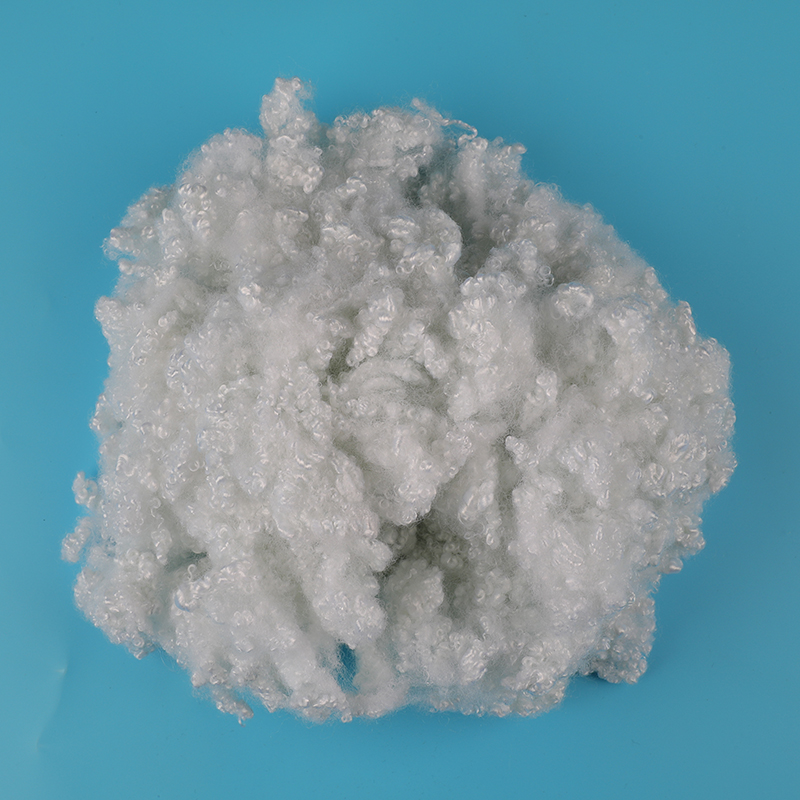
What Is the Production Process of Composite ES Fiber?
2026-04-08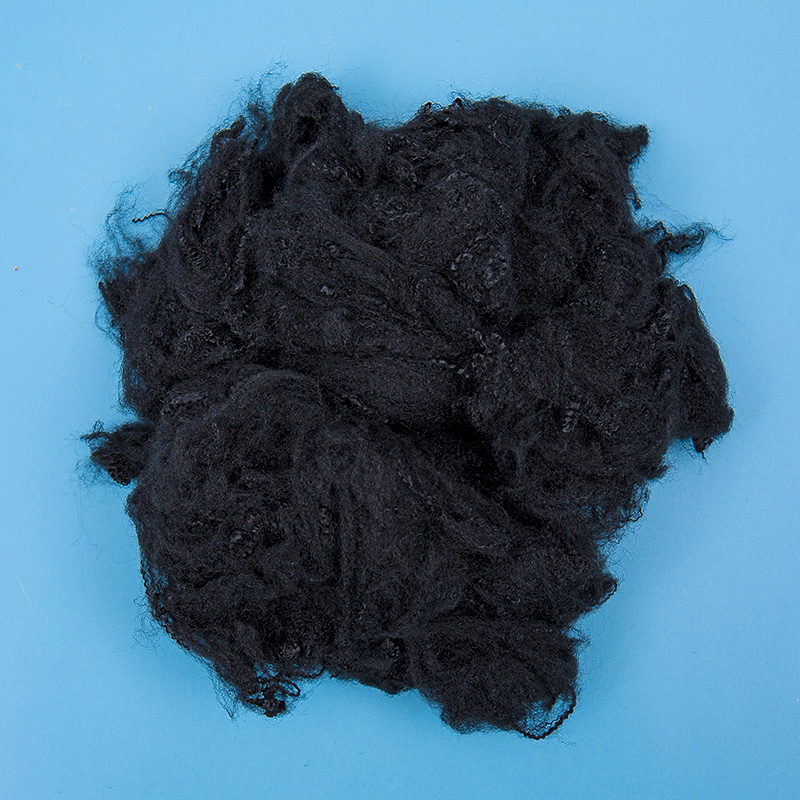
Why Is Recycling Non-Woven Fibers So Important for the Environment?
2026-04-22Your email address will not be published. Required fields are marked *

Focusing to the research and production of differentiated fiber. Applying recycle-material processing scientifically.
 86-18457317878
Zhulinjizhen, Xinfeng Town, Jiaxing City, Zhejiang Province
Copyright @ 2023 Jiaxing Fuda Chemical Fibre Factory All rights reserved
Polyester Staple Fiber Manufacturers

Friendship link - Anhui Fulin Environmental Protection Technology Co., Ltd.:https://www.ahflhb.com